


Introduction
Receiving a university offer can be a moment of joy and pride for many students, reflecting years of hard work and dedication. However, circumstances may arise that necessitate the need to decline a university offer. It is crucial to handle this decision thoughtfully and politely, as it can leave a lasting impression on the institution and maintain professional relationships for future interactions.
Students may find the need to turn down an offer for various emotional and practical reasons. A change in career goals, an acceptance from a preferred university, financial constraints, or even personal matters might lead a student to reconsider their options. Regardless of the justification, managing this process with respect and courtesy is essential.
The polite decline of a university offer is not merely a formality; it can have significant consequences. Failing to respond appropriately can result in a negative perception of the individual and potentially limit future opportunities within the academic community. Conversely, crafting a thoughtful response can reflect positively on the student, showcasing their professionalism and respect for the institution’s time and effort during the admission process.
Moreover, it is also beneficial for the university to know that an offer has been declined. This information allows them to extend the opportunity to other deserving candidates, thus ensuring that admission spots are filled efficiently. In this light, the act of declining an offer politely supports not only the student’s journey but also the broader university community.
Understanding Your Reasons
When faced with the decision to decline a university offer, it is essential to first reflect on the reasons behind this choice. Understanding your motivations will help you communicate your decision clearly and respectfully. There are various common reasons why students may choose not to accept an offer, and recognizing these factors can ultimately lead to a more considered decision.
One common reason is personal fit; prospective students may realize that the university’s culture, values, or academic programs do not align with their expectations or future goals. It is vital to assess whether the university environment and its offerings resonate with your academic interests and lifestyle preferences. This introspection can guide you toward the institution where you believe you will thrive.
Financial considerations are another significant aspect influencing the decision to decline a university offer. The cost of tuition, living expenses, and the availability of financial aid can play a crucial role in determining which institution is ultimately feasible. If one university’s financial package significantly outweighs another’s, it may lead to a reconsideration of your options.
Moreover, securing an offer from a preferred institution can also necessitate declining a previous offer. Educational aspirations may evolve, leading a student to accept a position that better aligns with their academic or career objectives. This reality underscores the importance of reflecting on your reasons thoroughly before making a final decision.
Overall, understanding your reasons for declining a university offer is paramount. A thoughtful analysis of your personal fit, financial aspects, and acceptance of other institutions will ensure that you make a choice that aligns with your long-term educational goals.
Crafting a Thoughtful Response
When faced with the decision to decline a university offer, it is paramount to do so in a manner that is both polite and respectful. Crafting a thoughtful response is vital and should be approached with care. The primary objective is to express gratitude while communicating your decision clearly.
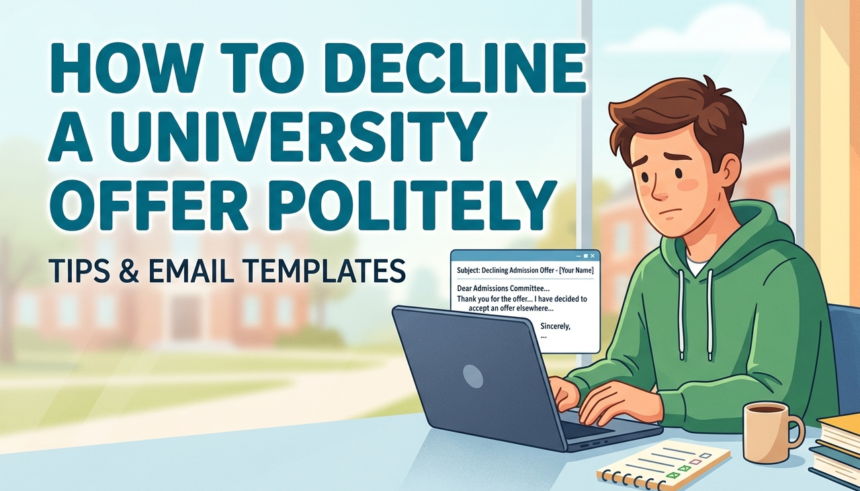
Begin your communication by addressing the admissions office or the specific individual who extended the offer. A respectful greeting sets a positive tone. Following this salutation, it is essential to express your genuine appreciation for the opportunity. You might say something like, “I would like to extend my sincerest thanks for the offer of admission to [University Name].” This acknowledgment is crucial in maintaining goodwill and professionalism.
Next, clearly state your decision to decline the offer. It is advisable to keep this part brief and to the point. For instance, you might write, “After careful consideration, I have decided to decline the offer.” While you do not need to provide an extensive explanation, mentioning that you have chosen a different path or institution can offer clarity without going into excessive detail.
Additionally, consider expressing your wish to stay connected. Universities appreciate positive relationships with prospective students, and there’s no harm in indicating interest in future opportunities. A phrase such as, “I hope to stay updated on future developments at [University Name]” could be beneficial.
Finally, close your email or letter with a professional sign-off, reiterating your gratitude. Statements like “Thank you once again for the opportunity” can leave a good impression. By structuring your decline in this way, you can maintain a polite and respectful tone while clearly communicating your decision.
Timing is Key
In the academic world, timing plays a crucial role when it comes to responding to university offers. After receiving an acceptance letter, candidates often find themselves in a position of elevation where they must make critical decisions about their future. A prompt acknowledgment of your acceptance or decline not only reflects professionalism, but also respects the institution’s process of filling its available slots.
Universities typically set clear deadlines for acceptance and enrollment deposits; adhering to these timelines is vital. If you have decided to decline an offer, it is advisable to communicate your decision as soon as possible. This not only clears your own pathway for future opportunities but also allows the institution to extend offers to other eligible candidates who may be waiting. Keeping in mind that many aspiring students are competing for limited spots, a timely response directly influences their chances of admission.
In many cases, universities will communicate a deadline that might be weeks or even months after the initial offer is made. However, it is often beneficial to inform them of your decision well before the deadline. Doing so will demonstrate your good manners and professional courtesy. When drafting your communication, keep it concise and polite, ensuring your message is clear to avoid any misunderstanding. Mentioning your gratitude for the offer and briefly outlining the reason for your decision can add a personal touch to your correspondence.
To summarize, responding to a university offer in a timely manner is essential for both yourself and the institution involved. Ensuring you adhere to crucial deadlines and maintain clear communication can reflect positively on you, as well as assist schools in their enrollment processes.
Choosing the Right Tone
When it comes to declining a university offer, maintaining a positive and respectful tone in your communication is crucial. This approach not only reflects well on you as a prospective student but also fosters goodwill between you and the institution. When framing your message, it’s essential to express gratitude for the opportunity while being clear about your decision. This balance ensures that the university feels appreciated, even if you choose not to enroll.
To convey appreciation effectively, consider starting your message with a courteous acknowledgment of the offer. For example, you might begin with, “I would like to extend my heartfelt thanks for the opportunity to join [University Name]. I truly appreciate the time and effort invested by the admission committee throughout the selection process.” This shows that you recognize the significance of the offer, which is important in maintaining a respectful tone.
Next, clearly state your decision to decline the offer. This can be done straightforwardly but kindly, such as: “After careful consideration, I have decided to pursue an alternative path that aligns more closely with my academic goals.” This way, you maintain clarity in your message without appearing abrupt or ungrateful. Remember, the use of polite phrases such as “I appreciate your understanding” or “Thank you again for this incredible opportunity” can help soften the inherent disappointment of declining an offer.
Rounding out the communication with a positive note, such as wishing the university future success in their endeavors, further reinforces a respectful closure to your correspondence. For instance, “I wish the university continued success in fostering future leaders and innovators” can leave the door open for future interactions. By choosing the right tone and expressing your gratitude while clearly communicating your decision, you will ensure that your response is professional and thoughtful.
Following Up with Questions or Concerns
When deciding to decline a university offer, it is vital for students to reflect on any lingering questions or concerns they may have about the institution or the admissions process. Although the offer may be declined, this does not preclude the opportunity for further engagement or discussion. Students can utilize this moment to address specific aspects of the university that were uncertain or unclear during their decision-making process.
Encouraging open communication is essential. For students wishing to maintain a positive relationship with the university, expressing any last thoughts can be beneficial. This could be anything from inquiries about specific programs, campus life, or opportunities for future reapplication. Demonstrating curiosity and interest may leave the door ajar for future correspondence, enhancing the likelihood of amicable relations. It is advisable to express gratitude for the offer before diving into questions, as this displays respect and acknowledgment of the admissions team’s efforts.
Moreover, this outreach can also serve as a valuable feedback mechanism for the university. By articulating questions or concerns, students provide insights that can inform the university’s practices and future applicant experiences. Whether it is about financial aid, student support services, or academic rigor, articulating such inquiries can benefit both the student and the institution.
In closing, maintaining this dialogue fosters potential avenues for future interactions. This approach not only exemplifies professionalism but also underscores a student’s continued interest in the university, which can be advantageous if circumstances change later. The foundation of cordial communication can keep the pathway open for future decisions or opportunities at the university, bridging any gaps that might arise from this initial decision to decline.
What Happens After Declining
Once you have formally declined a university offer, there are several critical steps you should consider taking to ensure a smooth transition to your new educational path. Firstly, it is important to concentrate on the offer that you have accepted. Review any deadlines related to enrollment, housing, and financial aid, as these can be time-sensitive. This can also be a good moment to start preparing any necessary documentation required by your new institution, such as transcripts or identification.
Secondly, engaging with your new university can be beneficial. Consider reaching out to academic advisors or departments to ask questions regarding course registration, orientation programs, and any other resources offered to new students. Familiarizing yourself with student organizations or clubs can also help in easing your adaptation to the new environment.
While it is wise to focus on your chosen institution, you may want to maintain a positive relationship with the university from which you have declined an offer. Expressing gratitude in your decline correspondence is a step in the right direction, as universities appreciate candidates who communicate professionally. Although you may not require their services immediately, there might come a time in the future when you wish to apply for graduate studies or collaborate on research projects. Maintaining an open line for communication can leave a lasting positive impression.
In summary, after politely declining a university offer, it is essential to prioritize your next steps with the institution you have chosen. By preparing thoroughly and fostering relationships with both your new university and the one you declined, you can create a positive and forward-looking approach to your academic journey ahead.
Tips for Effective Communication
Effectively communicating your decision to decline a university offer is crucial in maintaining professionalism and etiquette. Here are several practical tips to guide you through this process.
Firstly, it is advisable to draft your message well in advance. Taking the time to practice writing your response can help clarify your thoughts and ensure you convey your message accurately. Consider outlining the key points you wish to include, such as gratitude for the offer, a clear statement of your decision, and a closing remark wishing the institution continued success.
Additionally, reviewing your message for grammar and spelling errors is essential. A well-crafted correspondence reflects your professionalism and respect for the recipient. Utilize spelling and grammar-checking tools available in word processors to identify and correct any mistakes before sending the communication.
Equally important is verifying that the contact details are correct. Whether you are sending the email to an admissions officer or a specific department, double-checking the email address ensures your message reaches the right person. If the university has provided specific contact information for declining the offer, make sure to use that address.
Lastly, consider the timing of your communication. Sending your message promptly is courteous and allows the university to extend offers to other candidates without delay. Clear, direct, and respectful communication can go a long way in leaving a positive impression, which may benefit you in the future should you cross paths with the institution again.
Conclusion
Declining a university offer is undoubtedly a decision that can weigh heavily on prospective students. It is, however, crucial to approach this process with a sense of professionalism and respect. As we have explored, communicating your decision in a polite manner is not only a matter of good etiquette but also plays a significant role in maintaining relationships with institutions and their representatives. University admissions teams often appreciate candidates who take the time to express their gratitude, even when declining an offer.
Throughout this discussion, we have highlighted the key aspects of how to decline a university offer gracefully. Firstly, it is vital to notify the university as soon as you have made your decision, allowing them to extend the opportunity to other deserving candidates. Secondly, crafting a thoughtful response that conveys your appreciation for the offer and the time invested by the admissions staff helps to foster goodwill. Your message should reflect clarity and respect, ensuring that the institution understands your rationale without any ambiguity.
Although the task may feel daunting, especially when faced with the weight of expectations, it is essential to handle this situation with care. Understanding that this decision shapes your future academic journey, while also considering the implications it may have on the university, reinforces the importance of a diplomatic farewell. By adhering to these guidelines, you not only navigate this challenging scenario with grace but also leave room for future opportunities and connections in the academic realm.