
Introduction to Free Educational Resources
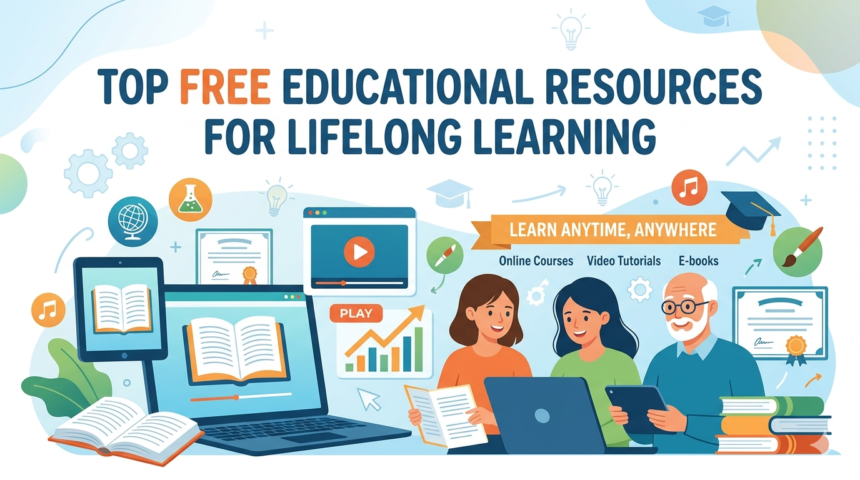
In today’s rapidly evolving digital landscape, free educational resources have become increasingly significant for individuals seeking to enhance their knowledge and skills. These resources encompass a wide range of materials, including online courses, e-books, podcasts, and videos, all aimed at supporting self-directed learning. With the rise of the internet, access to quality educational content has expanded, allowing learners of all ages to engage in lifelong learning.
Lifelong learning is the continuous, voluntary, and self-motivated pursuit of knowledge for personal or professional development. It is driven by the desire to stay competitive in the workforce and fulfill personal aspirations. In an era marked by rapid technological advancements and shifting job markets, the necessity for individuals to continually update their skills has never been greater. Free educational resources offer an accessible pathway for individuals to cultivate new competencies, improve existing ones, and even explore entirely new fields.
The proliferation of free educational resources has democratized education, breaking down barriers that once restricted access based on geographic, economic, or social factors. Learners can now engage with high-quality content created by reputable institutions, industry professionals, and experts from around the world, often at no cost. This accessibility fosters a more inclusive learning environment, encouraging diverse perspectives and promoting a culture of knowledge sharing.
As we delve deeper into the world of free educational resources, it is crucial to recognize their role in supporting individual growth and development. The commitment to lifelong learning is not only beneficial for personal achievement but also essential for adapting to the changing demands of society and the economy. By leveraging the power of free educational resources, individuals can embark on a fulfilling journey of continuous improvement.
Benefits of Utilizing Free Educational Resources
In an increasingly interconnected world, free educational resources offer numerous advantages that make learning more accessible to everyone. One of the primary benefits is accessibility. Individuals from various backgrounds can access quality educational materials without the financial burden typically associated with traditional education. With just an internet connection, learners can take advantage of a wealth of information and structured lessons that previously may have been available only through costly classes.
Diversity is another significant advantage of utilizing free educational resources. An array of subjects, skills, and disciplines are available, enabling learners to explore multiple interests and specialization areas. This breadth of content empowers individuals to dive into fields from technology and science to arts and humanities, facilitating a well-rounded education. Furthermore, learners can pursue niche topics that may not be covered in mainstream education, broadening their knowledge base.
The flexibility of learning is yet another noteworthy benefit. Free educational resources allow individuals to learn at their own pace and schedule. This is particularly advantageous for those balancing work, family, and other commitments. Unlike a traditional classroom setting, learners can tailor their study habits to fit their unique lifestyles, thus enhancing retention and engagement with the material. The self-directed nature of this type of education fosters personal responsibility and motivation, encouraging lifelong learning.
Finally, the cost-effectiveness of online educational resources cannot be overstated. Free resources eliminate tuition fees and additional expenses associated with acquiring textbooks and materials, making education attainable for individuals from all financial backgrounds. This democratization of knowledge ensures that everyone has the opportunity to improve their skills and advance their education, empowering a generation of learners to enhance their prospects and contribute meaningfully to society.
Types of Free Educational Resources Available
In today’s digital age, a plethora of free educational resources are accessible to individuals seeking to enhance their knowledge and skills. These resources can be categorized into various types, each serving unique learning needs.
One of the most popular types of free educational resources is online courses. Platforms such as Coursera, edX, and Udemy offer a variety of courses across disciplines, often developed by renowned universities and institutions. These courses typically include lectures, quizzes, and peer interaction, fostering an engaging learning environment.
Another valuable resource is e-books. Many educational websites provide free e-books that cover a wide range of topics, allowing learners to read at their own pace. These digital texts often include interactive elements, enhancing the reading experience and encouraging deeper engagement with the content.
Educational videos are also a significant component of free learning resources. Websites like YouTube offer an extensive library of instructional videos, covering everything from academic subjects to practical skills. These visual aids often facilitate understanding through demonstrations and real-life applications, catering to various learning styles.
Podcasts present another innovative way to learn. They provide auditory learning experiences, with numerous shows available that delve into educational topics, interviews with experts, and discussions on current events. This format allows learners to absorb information while commuting or performing daily tasks.
Additionally, webinars and online workshops are hosted by professionals and educators, offering interactive sessions that encourage participation and networking. These live events can be valuable for those seeking direct engagement with experts or peers.
These various types of free educational resources collectively empower learners, enabling continuous growth and adaptation in an ever-changing world.
Top Websites for Free Online Courses
In the digital age, education is no longer restricted to traditional classrooms. Numerous websites provide free online courses, catering to diverse interests and academic backgrounds. This section outlines some of the best platforms that offer high-quality educational content.
Coursera is a renowned platform that partners with universities and organizations to provide free access to online courses. Users can explore subjects such as computer science, business, and language arts while benefiting from the expertise of leading educators. While full course access may require payment for certification, learners can audit courses for free, which allows them to experienced the course content without financial commitment.
edX is another impactful educational resource offering free courses from prestigious institutions like Harvard and MIT. With a strong focus on university-level courses, edX includes options in various fields such as humanities, science, and engineering. Like Coursera, learners can audit courses at no cost while having the option to obtain verified certificates for a fee, enhancing their academic portfolios.
Khan Academy stands out for its comprehensive approach to free education, particularly for K-12 students. Offering instructional videos, practice exercises, and a personalized learning dashboard, Khan Academy has effectively democratized access to quality educational materials in subjects like math, science, and arts.
FutureLearn is another noteworthy platform, presenting a diverse range of free online courses led by top universities and cultural institutions. FutureLearn focuses not just on academic subjects but also on professional skill development and personal interests, ensuring that learners can expand their horizons.
Udemy offers a broad spectrum of courses that span a variety of topics, primarily geared towards adult learners. While not all courses are free, many educators provide free courses as a gateway to their paid material, which can help learners get a taste of new subjects.
In conclusion, these platforms collectively represent a vast array of opportunities for lifelong learning. By offering free access to quality educational resources, they empower individuals to pursue personal and professional growth at their convenience.
Free E-books and Reading Resources
In the digital age, access to knowledge has never been easier, and free e-books and reading resources play a significant role in promoting lifelong learning. Numerous platforms offer an extensive array of e-books, allowing individuals to explore a wide range of subjects at no cost. Whether you are a student, a professional, or a curious learner, these resources can cater to your intellectual thirst.
One of the premier destinations for free e-books is Project Gutenberg. This platform boasts an impressive collection of over 60,000 e-books, primarily consisting of classic literature and historical texts. Users can easily download and read these works in various formats, accommodating preferences for different reading devices. The user-friendly interface makes it simple for readers to navigate through genres and discover hidden literary gems.
Another excellent resource is Open Library, an initiative of the Internet Archive, which aims to provide a web page for every book ever published. Open Library allows users to borrow e-books digitally, offering a diverse selection that includes contemporary works, academic textbooks, and specialized literature. The catalog is continuously expanding, with new titles added regularly, ensuring readers have access to the latest material.
For those interested in educational materials, Google Books provides extensive previews and full access to many books from a variety of subjects, including academic and professional resources. With its powerful search capabilities, users can locate specific topics or keywords within the rich database, facilitating targeted learning experiences.
Moreover, platforms like ManyBooks and Free-EBooks.net provide curated collections catering to different interests, making it easier for users to find e-books that resonate with their learning objectives. These resources not only enhance the accessibility of written material but also foster a culture of self-directed learning.
Educational YouTube Channels to Explore
YouTube has evolved into a substantial platform for educational content, giving access to a plethora of learning resources across various disciplines. Here, we explore some exemplary channels that educators and lifelong learners can utilize to further their studies.
Firstly, Khan Academy provides comprehensive tutorials on subjects ranging from mathematics to science and humanities. Their engaging teaching style employs animated lessons and practical exercises, making complex topics more digestible. The channel is particularly effective for learners who appreciate a structured, incremental approach to understanding new concepts.
Similarly, CrashCourse delivers fast-paced, entertaining lessons on distinct subjects, including history, biology, and economics. Each series is well-researched and designed to spark interest, featuring clear visuals and a conversational style that resonates with both younger and older audiences. This channel is beneficial because it consolidates a vast amount of information into concise segments, enhancing retention.
Another noteworthy mention is TED-Ed, which focuses on creatively animated lectures that cover a wide array of topics, including philosophical inquiries and scientific explorations. The use of storytelling and narrative adds a unique touch to the learning experience, making complex ideas accessible and engaging for viewers.
Lastly, Coursera offers lectures from esteemed universities and institutions across the globe. Although primarily known for its paid courses, the channel features free lectures that allow viewers to gain insights into various academic subjects and professional skills. These videos are ideal for individuals seeking to explore new academic fields without committing to formal study.
In conclusion, these educational YouTube channels stand out not only for their high-quality content but also for their innovative teaching styles. They provide a valuable resource for those engaged in lifelong learning, enabling them to expand their knowledge and skills in an accessible format.
Podcasts as Learning Tools
In recent years, educational podcasts have gained immense popularity as a versatile medium for sharing knowledge and facilitating lifelong learning. They offer a unique advantage by enabling individuals to engage with content while attending to other tasks, such as commuting or exercising. This flexibility makes them an ideal resource for learners who wish to expand their understanding on-the-go.
Several popular educational podcasts cover a wide array of themes, ranging from science and technology to history and cultural studies. For instance, “Stuff You Should Know” delves into various topics, explaining complex concepts in an accessible manner. Another notable podcast, “Radiolab,” focuses on scientific and philosophical questions, often blending storytelling with investigative journalism. These programs exemplify how educational podcasts can effectively convey knowledge while keeping listeners entertained.
Listeners appreciate educational podcasts not only for the content they provide but also for the storytelling techniques employed by their hosts. Engaging narratives can enhance understanding and retention of information, making it easier for audiences to grasp complex ideas. Moreover, the conversational nature of podcasts creates a sense of intimacy, fostering a deeper connection between the audience and the subject matter.
However, the effectiveness of podcasts as learning tools depends on the listeners’ approach. It is important that learners actively engage with the material, taking notes or discussing what they have heard with others. This interaction can significantly enrich the learning experience, cementing knowledge and encouraging critical thinking. The integration of additional resources, such as articles or videos, can also complement podcast content and expand understanding.
In conclusion, podcasts serve as an invaluable resource for lifelong learners. Through a diverse range of themes and captivating storytelling, educational podcasts facilitate knowledge acquisition in a flexible format, making learning accessible and enjoyable for all.
Community Learning and Study Groups
Community resources play a pivotal role in enhancing access to free educational opportunities. Local libraries and community centers serve as important hubs for facilitating informal education. They offer a variety of programs that cater to diverse learning needs, including workshops, seminars, and sessions led by knowledgeable volunteers or guest speakers. This not only provides avenues for on-site learning but also fosters a sense of belonging among participants.
In recent years, the significance of online study groups has become increasingly apparent. Platforms that allow individuals to connect for collaborative learning offer flexibility and accessibility, enabling learners to engage with subjects that are particularly difficult or unfamiliar in a supportive environment. Online study groups can facilitate peer-assisted learning, where participants share resources, exchange ideas, and provide mutual encouragement, which is essential for motivation and deepening understanding.
Moreover, community resources often prioritize collaboration over competition. This unique approach allows learners to support each other, facilitating a richer educational experience through diverse perspectives and shared knowledge. For example, local libraries may host book clubs or discussion groups where participants collaboratively explore themes and concepts presented in various readings. This encourages critical thinking and nurtures healthy dialogue among members, enhancing the overall educational experience.
In addition to offering structured learning experiences, community centers frequently organize events that celebrate knowledge sharing and skill building. These may include career advancement workshops, art classes, or technology skills training that cater to the needs of the local population. Consequently, community learning and study groups emerge as fundamental platforms for facilitating ongoing education, promoting engagement, and fostering lifelong learning in diverse populations.
Conclusion
In today’s rapidly evolving world, the importance of lifelong learning cannot be overstated. It serves as a crucial foundation for both personal and professional development, allowing individuals to adapt to changes, acquire new skills, and enhance their knowledge base. Free educational resources play a pivotal role in this journey, providing accessible options for anyone eager to learn without the burden of financial constraints.
By leveraging these free platforms, learners can explore a diverse array of subjects, from technical skills to the arts, thus broadening their horizons. Websites such as Coursera, edX, and Khan Academy offer comprehensive courses and materials that cater to a wide range of interests and academic levels. Additionally, public libraries and local community centers often provide workshops and access to online resources that further supplement learning opportunities.
As technology continues to permeate various aspects of life, embracing lifelong learning becomes essential for remaining relevant in the workforce and achieving personal fulfillment. The array of free educational resources available today empowers learners of all ages to take charge of their education, allowing them to explore topics that pique their curiosity and develop skills necessary for their career paths.
Ultimately, dedicated lifelong learners who actively seek out and utilize these resources are better positioned to thrive in their personal and professional pursuits. As we navigate the complexities of an increasingly interconnected world, taking advantage of what free educational resources offer is not only a wise choice but a requisite for continued growth and success.