


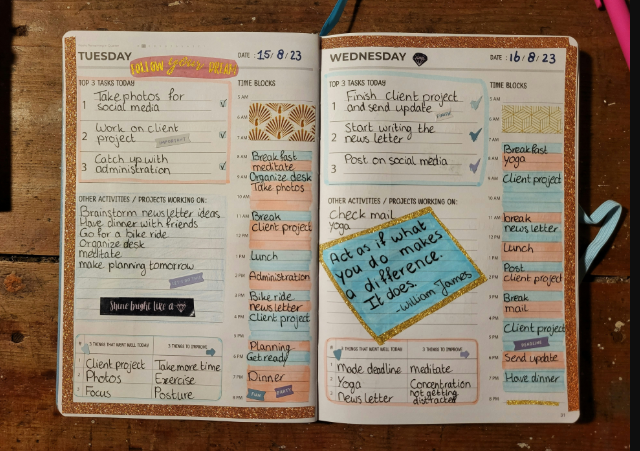
Understanding Time Blocking
Time blocking is a time management method that involves dividing the day into distinct blocks dedicated to specific tasks or activities. This technique originated with productivity experts who recognized the potential for enhanced focus and efficiency when tasks are allocated a set period. Unlike traditional scheduling, which often leaves time slots flexible for various activities, time blocking mandates a more structured approach. Each block is reserved for a particular task, minimizing distractions and fostering a deep concentration on the assigned work.
The fundamental principle of time blocking is to assign dedicated time intervals for tasks, rather than working haphazardly throughout the day. This approach encourages individuals to prioritize their responsibilities, set realistic goals, and allocate sufficient time for completion. By visually organizing the day, students can balance academic demands with personal commitments, thereby promoting a more harmonious routine.
Unlike the conventional to-do list, which can sometimes become overwhelming and disjointed, time blocking creates a clear map for the day. This method helps in mitigating procrastination by establishing a concrete timeframe for each task, thereby compelling individuals to stay on track. Moreover, by committing to specific blocks, students can better manage their energy levels, as they can identify when they are most productive and schedule more challenging subjects or projects during those peak times.
In academic settings, where deadlines and responsibilities abound, time blocking proves especially beneficial. By focusing on structured intervals, students can ensure that they allocate time for studying, completing assignments, and reviewing materials without the anxiety typically associated with looming deadlines. Over time, those who adopt time blocking often report a greater sense of accomplishment and a more organized academic experience.
Benefits of Time Blocking for Academic Success
Time blocking is a highly effective technique that has gained prominence among students striving for academic success. One of the primary benefits of this method is its ability to enhance focus. By allocating specific time slots for individual tasks, students can immerse themselves completely in their studies without the distractions often associated with multitasking. This heightened level of concentration fosters deeper learning, allowing students to engage with the material more profoundly.
Another significant advantage is the reduction of procrastination. When students observe a structured timeline that delineates when tasks need to be completed, they are less likely to delay their efforts. The visible commitment to the allotted time can encourage immediate action, minimizing the onset of procrastination that often plagues academic endeavors. Notably, time blocking promotes a sense of accountability; students are more likely to stay committed to their schedules.
In addition, implementing time blocking improves time awareness. Students often struggle with estimating how long tasks will take, leading to poor planning and unrealistic expectations. By utilizing time blocking, learners can better understand their workflows and develop a more accurate sense of time management. This greater awareness can significantly enhance their productivity, as they learn to prioritize and allocate their efforts more effectively.
Moreover, time blocking facilitates a better work-life balance, which is crucial for overall well-being. With dedicated periods for academic tasks, students can ensure they also carve out time for leisure and personal commitments. Establishing boundaries between study and personal life prevents burnout, enhancing both academic performance and mental health. As students adopt time blocking, they typically experience improved efficiency and satisfaction across multiple areas of their lives.
How to Get Started with Time Blocking
Implementing time blocking in academic schedules begins with a thorough assessment of current time management habits. To effectively manage academic tasks, it is essential to identify how time is currently allocated throughout the day. This can be done by tracking time spent on courses, studying, attending extracurricular activities, and personal routines. A week-long diary can serve as a valuable tool to visualize how time is divided and highlight potential areas where adjustments may be beneficial.
Once your current habits are documented, the next step is to set realistic academic goals. Goals should be specific, measurable, achievable, relevant, and time-bound (SMART). For instance, instead of setting a vague goal such as “study more,” a more actionable goal might be “dedicate two hours every Tuesday and Thursday for math revision.” By establishing such concrete objectives, you will have a clear direction for your time blocking plan.
Designing a time-blocking layout involves creating a structured schedule that accommodates both academic deadlines and personal responsibilities. Begin by segmenting your day into blocks ranging from 30 minutes to two hours, ensuring you include periods for classes, study sessions, and breaks. Consider using digital calendars or time-blocking applications which can help in visualizing these blocks effectively. Color-coding different academic tasks can also enhance clarity and maintain focus. Remember to allocate buffer time between blocks to account for unexpected tasks or overruns, which often occur in academic environments.
As you establish your time-blocking system, it is crucial to revisit and adjust the layout regularly. Continuous improvement in how you manage time will ultimately lead to enhanced academic performance. Adaptation and flexibility are vital elements for optimizing your time blocking approach and ensuring it remains effective over time.
Tools and Techniques for Effective Time Blocking
Time blocking is a popular method for managing academic tasks effectively. To implement this technique, individuals can utilize a variety of tools and methods to enhance their productivity. The selection between digital and analog tools often depends on personal preference and specific needs.
Digital tools are increasingly favored for their convenience and accessibility. Applications such as Google Calendar, Notion, and Trello provide excellent platforms for creating time blocks. These tools allow users to visualize their schedule, set reminders, and easily adjust their plans as necessary. For instance, Google Calendar includes features that enable color-coding of different subjects or tasks, making it easy to differentiate between academic areas at a glance. Additionally, many of these apps offer collaborative features, perfect for group projects.
On the other hand, some individuals prefer the tactile experience of analog methods. Traditional planners and wall calendars can serve as effective tools for outlining time blocks. Writing tasks down on paper often helps with retention and can provide a satisfying sense of accomplishment when tasks are checked off. Analog tools can also limit distractions associated with digital devices, allowing for a more focused approach to time management.
To maximize the effectiveness of time blocking, it is essential to choose a combination of tools that aligns with personal habits and specific academic requirements. For example, a student might use a digital calendar for scheduling classes and deadlines but rely on a physical planner for daily task lists. This hybrid approach combines the strengths of both mediums, catering to different aspects of task management.
Ultimately, the effectiveness of time blocking relies heavily on consistent usage of the chosen tools and techniques. Regular reviews of one’s system can lead to ongoing improvements, ensuring that academic goals are met efficiently.
Customizing Your Time Blocking Approach
Time blocking is a powerful technique for academic task management, yet its effectiveness can vary based on individual learning styles and preferences. To create a personalized time-blocking approach, one must consider various factors including study habits, coursework types, and personal productivity rhythms.
Firstly, understanding your unique study habits is crucial. Are you a visual learner who thrives on diagrams and charts, or do you prefer auditory methods such as listening to lectures? Tailoring your time blocks to accommodate these preferences can significantly enhance your retention and comprehension of the material. For example, a visual learner may allocate time for creating infographics or colorful mind maps, while an auditory learner could set aside blocks for listening to recorded lectures or participating in study groups where discussion is key.
Next, consider the type of coursework you are engaged in. Different subjects may require different approaches. For instance, a mathematics course that needs rigorous practice calls for longer, uninterrupted time blocks focused solely on problem-solving. Conversely, a literature class might benefit from shorter, varied blocks that include reading, note-taking, and analysis. By aligning your time blocks with the demands of each subject, you can optimize your study sessions for each specific course.
Additionally, it is important to recognize your personal productivity rhythms. Some students are more productive during the day, while others come alive at night. Identifying your peak times of focus and energy allows you to allocate the most challenging tasks during these periods. For instance, if you find that you concentrate better in the early morning, organizing heavier tasks within that timeframe can maximize your efficiency. By customizing your time blocking approach in these ways, you ultimately create a more sustainable and productive study routine.
Common Challenges in Time Blocking
While time blocking can significantly enhance academic productivity, students often encounter several challenges when trying to implement this method effectively. One of the primary issues is rigidity. Time blocking is founded on the principle of dedicating specific blocks of time for particular tasks, which can lead to a rigid schedule that may not accommodate the dynamic nature of student life. Consequently, when unexpected opportunities or demands arise, students may find it difficult to adapt their plans without feeling unproductive or deviating from their original schedule.
Another frequent challenge is facing unexpected interruptions. Life as a student is rife with distractions, from social engagements to urgent requests from peers or family. These interruptions can disrupt time blocks, making it challenging for students to maintain focus on their tasks. It is crucial to prepare for these interruptions by establishing a buffer system within the time blocks, allowing for some flexibility without derailing overall productivity.
Furthermore, estimating task durations accurately can pose a significant hurdle. Many students struggle with predicting how long they will need to complete specific academic assignments or study sessions. This often results in either over-scheduling or underestimating the time required, leading to frustration and a sense of failure when tasks exceed or fall short of the planned blocks. To counter this, students should adopt a trial-and-error approach in their initial time blocking efforts, refining their estimates as they gain experience in assessing their workload effectively.
In essence, addressing these common challenges requires a combination of adaptability, preparation, and reflective practice. By acknowledging and strategizing against these obstacles, students can harness the full potential of time blocking as a crucial tool for improved academic task management.
Case Studies: Successful Time Blocking in Academia
Time blocking has gained popularity among students and academic professionals seeking to enhance their productivity and manage their academic tasks effectively. Various case studies illustrate the successful implementation of this technique in diverse academic settings.
One notable example is a graduate student pursuing a Master’s degree in Environmental Science. Faced with multiple research projects, assignments, and teaching responsibilities, she turned to time blocking as a solution. By scheduling dedicated blocks of time for reading, writing, and research, she experienced a significant increase in her productivity. This structured approach allowed her to maintain focus during her studies and reduced the overwhelm often associated with balancing multiple coursework demands.
Another compelling case study involves an undergraduate student majoring in Computer Science. Struggling with a heavy course load, he adopted a time-blocking strategy to manage his study sessions. By allocating specific periods for programming assignments, exam preparation, and group work, he was able to enhance his retention of information and streamline his workflow. His academic performance improved, leading to higher grades and a greater sense of control over his academic life.
In a professional context, a university professor implemented time blocking to manage lecture preparation, student meetings, and research activities. By allocating distinct blocks to these tasks, he noted not only improved organization in his professional responsibilities but also increased time for post-lecture interactions with students. This approach enhanced both his teaching effectiveness and his availability for student support.
Across these diverse cases, the impact of time blocking techniques is clear. Students and academics who applied these principles observed improvements in their task management, resulting in enhanced academic performance and overall satisfaction. The structured nature of time blocking enables individuals to work more efficiently and purposefully, ultimately contributing to a more balanced academic experience.
Reviewing and Adjusting Your Time Blocking Plan
Effective time blocking requires more than just the initial setup; it necessitates ongoing evaluation and adjustment to ensure productivity remains high. Regular reviews of your time blocking plan allow you to identify patterns, assess the efficacy of your allocated time slots, and make necessary alterations in response to shifting demands. This iterative approach ensures that your plan evolves alongside your academic responsibilities, leading to improved outcomes.
A critical aspect of this process is conducting periodic evaluations of how your time blocks are working for you. Setting aside time each week or month to reflect on your schedule can reveal whether particular tasks require more or less time than initially anticipated. Keeping a record of your progress not only highlights successes but also pinpoints areas for improvement. This insight enables you to make informed decisions about how to restructure your time allocation, ensuring that your plan remains aligned with your academic goals.
As academic priorities shift—whether due to course requirements, upcoming exams, or personal commitments—your time blocking plan should also be adaptable. An inflexible system can lead to increased stress and diminished productivity. By reassessing your workload regularly, you can adjust your blocks accordingly, redistributing time to accommodate urgent projects or important deadlines. Adopting a flexible mindset encourages sustainability in your routine, reducing the likelihood of burnout while maintaining steady progress toward your objectives.
In conclusion, regular review and adjustment of your time blocking strategy are paramount for optimal academic task management. Periodic evaluations of your time allocations, coupled with a willingness to adapt, will empower you to effectively tackle your workload and enhance your academic performance.
Future Trends in Task Management for Students
As we look to the future, the landscape of academic task management is poised for significant transformation, primarily driven by advancements in technology. In particular, the growing adoption of time management tools is reshaping how students approach their academic responsibilities. The integration of artificial intelligence (AI) and automation into time management applications is becoming increasingly prevalent. This could fundamentally alter how students utilize time blocking techniques for their studies.
One of the emerging trends is the personalization of task management through AI algorithms. These systems are capable of analyzing individual study habits, preferences, and peak productivity times to create tailored time blocking schedules. By leveraging data insights, students can optimize their learning processes, ensuring that they allocate their time most effectively. This personalization allows for a more streamlined approach to academic task management, potentially increasing students’ efficiency and effectiveness.
Moreover, automation has the potential to play a vital role in minimizing the cognitive load associated with planning and organization. With automated reminders and task prioritization, students may find it easier to adhere to their time-blocked schedules without the additional mental strain of manual tracking. Such tools could also incorporate real-time adjustments, enabling students to shift their commitments based on evolving priorities and deadlines seamlessly.
A further trend includes collaborative platforms that integrate time blocking features, facilitating group studies or projects. Students could synchronize their schedules in real time, promoting accountability and ensuring that collaborative tasks are effectively managed. This collective approach to task management could ultimately enhance student engagement and foster better academic outcomes.
In conclusion, the future of academic task management looks promising as technology continues to advance. The integration of AI and automation into time management practices, particularly relating to time blocking techniques, holds the potential to revolutionize how students manage their academic workloads, making it more efficient and aligned with their individual learning needs.