


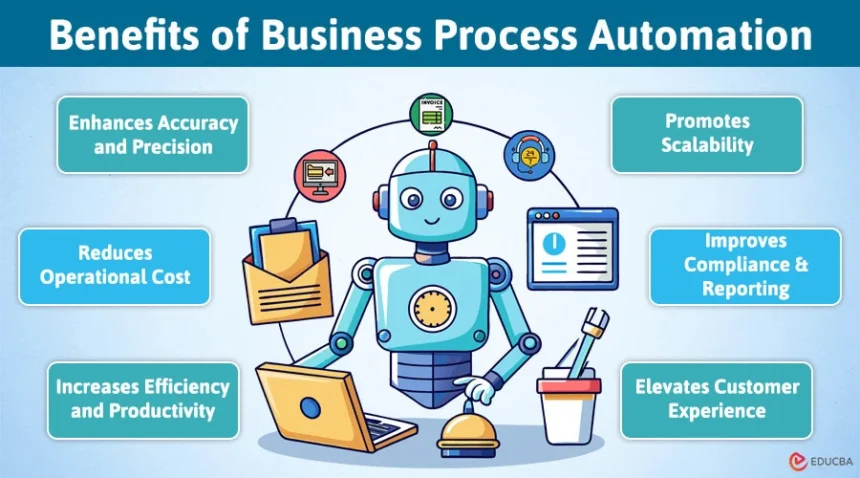
Introduction to Business Process Automation
Business process automation (BPA) refers to the use of technology to execute recurring tasks that are part of a business process. As organizations strive to enhance their operational efficiency and remain competitive in today’s fast-paced business landscape, the relevance of BPA becomes increasingly evident. It is essential for businesses to adopt automation strategies to streamline their processes and reduce manual effort.
The necessity for automation in various business functions has grown, particularly in the areas of customer service, human resources, finance, and supply chain management. With the increasing volume of data and the demand for quicker decision-making, manual processes are often not sufficient to meet the expectations of customers and stakeholders. Consequently, BPA provides solutions to these challenges by enabling organizations to automate repetitive tasks, thereby allowing employees to focus on higher-value activities.
Moreover, BPA not only reduces the time taken to complete tasks but also minimizes the risk of human error, thus improving overall accuracy and reliability. This transformation is pivotal in achieving operational excellence by optimizing workflow, reducing costs, and enhancing productivity. By adopting business process automation, organizations can establish clear accountability, improve compliance, and maintain quality across various operations.
In essence, business process automation represents a strategic approach to improving organizational effectiveness. As businesses continue to evolve, leveraging innovative technologies for automation has the potential to reshape operations fundamentally, paving the way for enhanced growth and sustainability.
Cost Reduction Through Automation
Automating business processes is a strategic move that can yield substantial financial benefits for organizations of all sizes. One of the primary advantages of implementing automation is the significant reduction in labor costs. By utilizing software and systems to handle repetitive tasks, companies can minimize the dependency on a large workforce for operations. This transition not only lowers salaries and associated employee expenses but also allows businesses to reallocate human resources towards higher-value tasks, ultimately enhancing productivity.
Moreover, automation contributes to minimized human error. In manual processes, errors can lead to costly mistakes that necessitate time-consuming corrections. Automation mitigates this risk by standardizing processes and improving accuracy, which is particularly vital in areas like data entry, invoicing, and inventory management. With fewer errors, businesses can realize substantial savings linked to correcting mistakes, managing returns, and maintaining customer satisfaction.
In addition to labor and error costs, automation significantly lowers operational expenditures. By streamlining processes, businesses cut down on the time required to complete tasks, thus enhancing efficiency. For instance, automated inventory management can lead to more accurate stock levels, reducing instances of overstocking or stockouts—which can be financially detrimental.
A notable case study highlighting these benefits is the experience of Company X, which adopted automation in its billing process. This company reported a 30% reduction in billing errors and saved approximately 25% in labor costs within the first year of implementation. Overall, the introduction of automation into business processes impacts the bottom line positively, supporting an organization’s efforts to achieve long-term sustainability and profitability.
Increased Efficiency and Productivity
Automation of business processes has become an essential strategy for organizations striving to enhance efficiency and productivity. By automating repetitive and time-consuming tasks, companies can significantly streamline their operations, minimizing delays and reducing human error. Tasks such as data entry, report generation, and inventory management can be handled by automation software, freeing up valuable time for employees to engage in more strategic initiatives.
For instance, consider the automation of invoice processing. Traditionally, this task involves manual data entry, cross-checking, and approvals, which can consume a considerable amount of employee hours. With automation tools, businesses can swiftly process invoices, automatically extract pertinent information, and even manage approvals electronically. This not only expedites the payment cycle but also allows employees to redirect their efforts toward activities that foster innovation and growth.
Furthermore, customer relationship management (CRM) systems can benefit immensely from automation. Through the use of automated reminders for follow-ups and scheduled communications, sales teams can maintain consistent contact with leads without the risk of overlooking important engagements. This systematic approach ensures a higher conversion rate, ultimately contributing to increased revenue and improved customer satisfaction.
Moreover, automating data analysis can provide valuable insights without the manual burden. Businesses can generate reports on sales trends, customer behaviors, and operational efficiencies at a much faster pace. This swift access to information enables decision-makers to respond promptly to market changes, thereby gaining a competitive edge.
In essence, the implementation of automation in business processes significantly enhances operational efficiency and productivity. By alleviating employees from mundane tasks, companies empower their workforce to concentrate on strategic objectives, ultimately leading to a more dynamic and productive work environment.
Improved Accuracy and Quality Control
In today’s fast-paced business environment, maintaining accuracy and quality control is essential for success. One of the most significant advantages of automating business processes is the substantial reduction in human error. Human beings are prone to mistakes, especially when handling repetitive tasks that may lead to fatigue or distraction. By implementing automated systems, organizations can significantly diminish the likelihood of errors, ensuring that tasks are completed with a higher degree of precision.
Automation not only alleviates human errors but also promotes consistent output quality. Automated processes operate based on predefined rules and parameters, which helps ensure uniformity across tasks and activities. For example, in manufacturing, automated machinery can execute the same operation day in and day out without variation, resulting in products that meet stringent quality standards. This consistency is invaluable, as it fosters trust and reliability among customers and contributes to a positive brand reputation.
Furthermore, automation enhances the reliability of data management. Manual data entry can introduce inaccuracies due to typos or miscommunication. However, automated systems can seamlessly collect, analyze, and store data, delivering information that is both accurate and readily available for decision-making. With a centralized database, companies can trust that the data they are using to shape business strategies is up to date and reliable.
In conclusion, automating business processes not only minimizes the chances of human error but also leads to consistent quality in outputs. As organizations increasingly adopt automation, they can enjoy improved accuracy, resulting in enhanced overall performance and customer satisfaction.
Enhanced Customer Experience
In today’s fast-paced business environment, enhancing customer experience is paramount. Automation plays a pivotal role in this endeavor by streamlining processes and ensuring that customer interactions are both efficient and satisfactory. One of the primary benefits of implementing automation in customer service is the reduction in response times. Automation tools such as chatbots enable businesses to interact with customers instantly, addressing inquiries and resolving issues without the delays typically associated with human intervention.
Moreover, automation facilitates personalized experiences by leveraging customer data. For instance, systems can analyze past interactions to tailor responses based on individual preferences and behaviors. This level of customization not only improves satisfaction but also fosters a sense of loyalty among customers, as they feel understood and valued. Tools like Customer Relationship Management (CRM) systems utilize automation to manage customer information effectively, allowing for targeted communication and offerings.
Availability is another area significantly enhanced by automation. With 24/7 bots and online support systems, customers can find assistance at any time, regardless of traditional business hours. This constant accessibility ensures that customer needs are met promptly, leading to higher satisfaction rates. Furthermore, platforms such as automated email responders and self-service portals empower customers to find solutions independently, contributing to a seamless experience.
In summary, the integration of automation in business processes is a strategic approach to improving customer service. By providing faster response times, personalized interactions, and round-the-clock availability, businesses can enhance their customer experience significantly. Automation tools not only simplify operations but also play a crucial role in building lasting customer relationships, ultimately leading to business growth and success.
Scalability and Flexibility
The automation of business processes offers significant advantages, particularly in terms of scalability and flexibility. As organizations grow, they often encounter fluctuating demands that necessitate a quick and efficient response. Automated systems empower businesses to adjust their operations seamlessly, allowing for a rapid realignment of resources and processes without the need for extensive manual intervention.
Scalability becomes a decisive factor when considering expansions into new markets or adjusting to changing consumer preferences. Automated processes facilitate this scalability by providing a framework that can support increased output and efficiency as the organization grows. For example, an automated inventory management system can accommodate a larger product line or an increase in transaction volume, thereby minimizing the risk of overstock or stockouts.
Moreover, the flexibility of automated systems is crucial for accommodating various business sizes and structures. Whether a start-up or an established enterprise, businesses can implement automation tailored to their specific needs. Small enterprises can leverage relatively simple automation tools for handling essential functions, while larger corporations may invest in comprehensive enterprise resource planning (ERP) systems that synchronize operations across multiple departments.
This adaptability ensures that organizations are not only equipped to handle present demands but are also prepared for future growth. Automated systems can often be scaled incrementally, allowing businesses to expand their automation efforts in phases—ultimately leading to a strategic deployment that aligns with their growth trajectory.
Data-Driven Decision Making
The advent of automation within business processes has ushered in a new era of efficiency, particularly in the realm of data collection and analysis. Automated systems enable organizations to gather vast amounts of data across various operational facets, transforming traditional data management practices. With these systems, businesses can benefit from real-time insights, which play a pivotal role in making data-driven decisions.
Real-time data analytics facilitates swift responses to changing market conditions and consumer preferences. For instance, through automation, a marketing team can monitor campaign performance instantaneously, adjusting strategies based on the latest metrics rather than relying on outdated reports. This agility enhances an organization’s competitive edge in a rapidly changing business environment, where timely decision-making is critical.
Moreover, automation tools can synthesize data from multiple sources, providing a comprehensive overview of business performance. This holistic perspective empowers leaders to identify trends and patterns that may otherwise go unnoticed. For example, an automated sales reporting system can not only track sales figures but can also analyze customer behavior, helping to identify potential upsell opportunities and refine the sales strategy.
Additionally, leveraging automated data analysis promotes consistency and accuracy. Manual processing of data is prone to human error, which can lead to misguided strategies and poor decision-making. In contrast, automated systems are designed to minimize errors and ensure that decision-makers have access to the most accurate information available. By reducing the risk of inaccuracies, organizations can make informed decisions that are backed by reliable data.
In summary, the integration of automation in business processes not only streamlines data collection but also enhances decision-making through real-time analytics and insights. This capacity for data-driven decision-making enables businesses to plan strategically and respond effectively to market dynamics, positioning them for sustainable growth and success.
Security and Compliance Benefits
In the modern business landscape, ensuring security and compliance is paramount. Automating business processes offers a myriad of advantages in these areas, contributing to the overall integrity and reliability of operations. One of the essential features of automated systems is the implementation of robust access controls. These controls safeguard sensitive data by restricting access to authorized personnel only, which helps mitigate risks associated with data breaches or unauthorized usage.
Moreover, automated processes facilitate the creation of comprehensive audit trails. Audit trails serve as a detailed record of actions taken within a system, allowing organizations to monitor who accessed what data and when. This level of transparency is crucial for compliance with industry regulations, as it enhances accountability and supports investigation of any discrepancies or anomalies in data handling. By maintaining these records, businesses can not only comply with legal requirements but also refine their processes based on insights gathered through these audits.
Regulatory compliance is another area where automation proves beneficial. Automated systems can be programmed to adhere to specific regulations and standards, ensuring that all processes are aligned with legal requirements. This alignment reduces the risk of non-compliance, which can result in hefty fines and reputational damage. Furthermore, updates to regulations can be integrated seamlessly into business processes, allowing organizations to stay up-to-date and compliant with minimal manual intervention.
Ultimately, by enhancing security through access controls, maintaining detailed audit trails, and ensuring adherence to regulatory requirements, automation not only fortifies a business’s operational framework but also instills greater confidence among stakeholders. It is evident that automating business processes not only streamlines efficiency but also enhances security and compliance significantly.
Conclusion: The Future of Work with Automation
As organizations increasingly embrace the digital age, automating business processes is becoming a crucial element for enhancing efficiency, productivity, and competitiveness. The benefits of automation, as discussed throughout this article, highlight its capacity to reduce operational costs, minimize human error, and free up valuable resources. By reallocating personnel from repetitive tasks to more strategic roles, businesses can foster innovation and improve overall employee satisfaction.
The growing trend of automation signifies a notable shift in the workplace landscape. Companies seeking to maintain their competitive edge must adapt to these changes by investing in technologies that streamline processes. With advancements in artificial intelligence and machine learning, the potential for further automation is substantial. As tasks continue to evolve, businesses must consider how these technologies can be integrated into their existing workflows, enhancing not just productivity but also the quality of services offered to clients.
Importantly, the transition to automated processes also calls for a cultural shift within organizations. Training and upskilling employees will ensure they are equipped to work alongside automated systems effectively. Moreover, businesses should emphasize the benefits of automation on job satisfaction and career growth, as it can lead to more meaningful and engaging work for their staff.
In conclusion, the future of work increasingly hinges on the capability of businesses to leverage automation to their advantage. By recognizing the key benefits outlined and committing to thoughtful implementation, organizations can navigate the evolving landscape and thrive in the age of automation. The question for many businesses is no longer “if” they should automate, but rather “how” they can do so effectively for long-term success.