


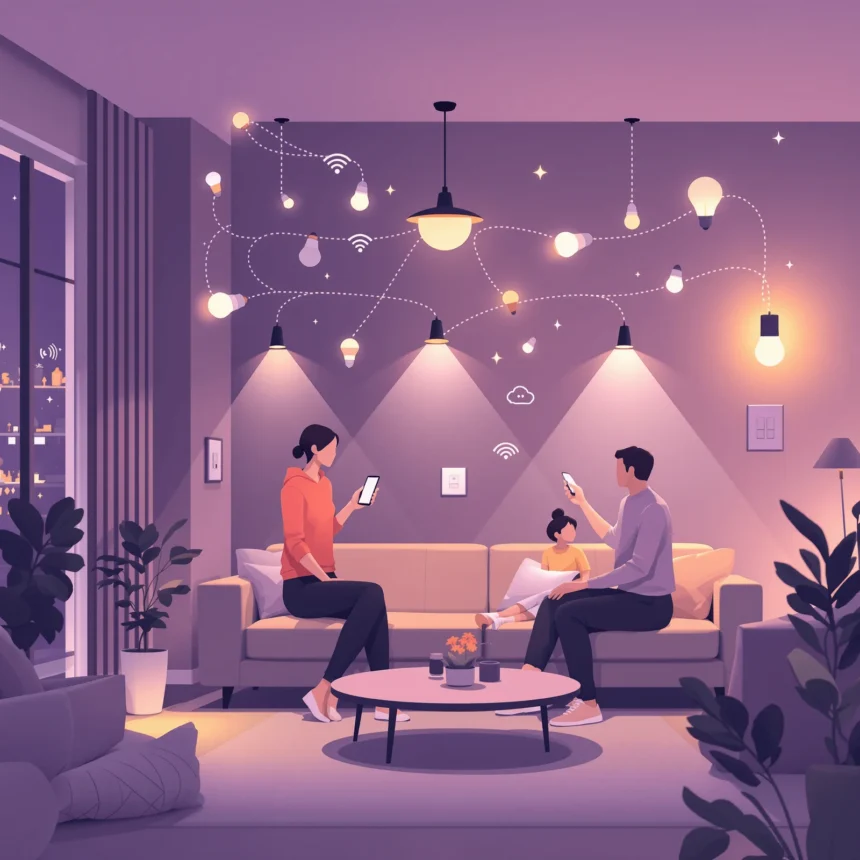
Introduction to Smart Lighting
Smart lighting represents a significant advancement in lighting technology, distinguished from traditional lighting by its ability to integrate with various digital technologies. At its core, smart lighting encompasses lighting systems that can be controlled remotely through smartphones, tablets, or other devices, allowing users to adjust brightness, color, and power status without being physically present. This capability introduces a new level of convenience, enhancing energy efficiency and personalization.
The evolution of lighting technology has paved the way for smart lighting systems. Initially, lighting was limited to simple on/off functionality, but the advent of incandescent bulbs, fluorescent lights, and ultimately LED technologies expanded options for illumination. As energy efficiency became a key concern, the transition towards connected devices led to the emergence of smart lighting solutions. This connection often utilizes wireless communication protocols such as Wi-Fi, Bluetooth, or Zigbee, ensuring that lights can seamlessly interact with other smart home devices to create a cohesive and automated living environment.
Automation further enhances the value proposition of smart lighting, enabling users to program schedules or activate settings based on certain conditions, such as time of day or occupancy. For instance, smart lights can be programmed to dim automatically at night, or to turn on when someone enters a room. Advanced systems even allow for integration with sensors that can detect movement, leading to lights being operational only when necessary, thus conserving energy.
Remote control capabilities further emphasize the appeal of smart lighting. By using a dedicated application, homeowners can not only control their lights from anywhere but also customize scenes to suit specific moods or activities. This enhances the comfort and functionality of any living space, allowing for a tailored ambiance for anything from a cozy movie night to an energetic workout session.
Benefits of Smart Lighting
Smart lighting technology provides a range of advantages for homeowners, significantly enhancing the convenience and efficiency of everyday living. One of the most prominent benefits is energy efficiency. Traditional lighting solutions consume substantial amounts of energy, leading to higher electricity bills. Conversely, smart lighting systems, which often utilize LED bulbs, use significantly less energy. According to the U.S. Department of Energy, LED lighting can save up to 75% more energy than traditional incandescent bulbs, contributing to reduced consumption and lower costs over time.
Cost savings are another key advantage. While the initial investment in smart lighting might be higher, the long-term savings are undeniable. Smart lighting allows for advanced scheduling and automation, enabling lights to turn off when not needed, such as during daylight hours or while no one is home. This level of control is not only beneficial for your wallet but also has a positive impact on your home’s carbon footprint.
Enhanced security is another significant benefit. Smart lighting systems can be programmed to mimic your presence at home even when you are away, deterring potential burglars. In fact, statistics show that homes with well-lit exteriors are less likely to be targeted for break-ins. This added layer of security can provide peace of mind, especially for those living in neighborhoods where crime rates are more concerning.
Moreover, the convenience of smart lighting contributes to an improved lifestyle. Homeowners can control their lighting through smartphones or smart home assistants, making it easy to create the desired ambiance with just a voice command or flick of a button. This flexibility allows for customizable experiences whether hosting gatherings or enjoying quiet evenings at home.
Finally, the overall improvement in lifestyle and ambiance that smart lighting can provide is substantial. By adjusting the brightness and color temperature of lights, homeowners can enhance their living spaces, promoting relaxation or productivity as needed. Whether it is soft, warm lighting for movie nights or bright, cool lighting for work, smart lighting solutions cater to the needs of every occasion.
Types of Smart Lighting Solutions
Smart lighting solutions have revolutionized the way we illuminate our homes, offering an array of products that enhance energy efficiency and user convenience. The two most popular options include smart bulbs and smart light strips, each designed to meet different lighting needs across various environments.
Smart bulbs are available in various shapes and sizes, capable of being retrofitted into existing light fixtures. These versatile bulbs offer features such as adjustable brightness, color temperature, and remote control through mobile applications. Leading manufacturers in this domain include Philips Hue, LIFX, and Wyze, each providing distinct capabilities, like integration with other smart home devices.
On the other hand, smart light strips are flexible and customizable, making them ideal for both ambient and accent lighting. These strips can be easily installed under cabinets, along walls, or around furniture, offering a unique way to create mood lighting or highlight architectural features. Brands such as Govee and Nanoleaf have gained popularity for their innovative light strips that come with vibrant color options and sync features for music and entertainment.
Additionally, smart lighting fixtures encompass a wide range of designs, including ceiling lights and sconces, which come equipped with built-in smart technology. These fixtures often support voice commands and are compatible with various home automation systems like Google Assistant and Amazon Alexa. Notable manufacturers such as Casper and Ring offer smart lighting fixtures that focus not only on aesthetics but also on efficiency and functionality.
Lastly, lighting controls, such as smart switches and dimmers, provide another layer of sophistication, allowing users to manage their lighting systems seamlessly. Products from companies like Lutron and Leviton enable effortless control over multiple fixtures, promoting a customizable lighting experience throughout the home.
Choosing the Right Smart Lighting for Your Home
Selecting the appropriate smart lighting solutions for your home can greatly enhance both functionality and ambiance. The first consideration in your decision-making process should be the size of the space where the smart lights will be installed. For larger areas, such as living rooms or open-concept kitchens, opt for bright and powerful lighting options that offer ample illumination. If the area is smaller, more subtle smart bulbs may suffice, providing enough light without overwhelming the space.
Another critical factor to evaluate is the features you desire in your smart lighting system. Popular features include color-changing options to match your mood or decor, as well as dimmable settings that allow you to adjust brightness according to the time of day or specific activities, such as reading or entertaining. These features cater to your personal preferences and can significantly impact your overall lighting experience.
Compatibility with existing systems cannot be overlooked. Before making a purchase, ensure that the smart lighting products you select are compatible with your current home automation systems or platforms, such as Google Home, Amazon Alexa, or Apple HomeKit. This compatibility is essential for seamless integration and controlling your lights via voice command or mobile apps.
Lastly, budget plays a crucial role in determining what smart lighting options are available to you. Prices can vary widely based on brand, features, and performance capabilities. By establishing a budget beforehand, you can evaluate several products without overspending. In this way, you can find smart lighting solutions that meet all your criteria while still being cost-effective. Careful consideration of these factors will aid you in choosing the right smart lighting that enhances both your home environment and lifestyle.
Installation and Setup of Smart Lighting Systems
Smart lighting systems have become increasingly popular among homeowners seeking to enhance their living spaces with modern technology. The installation of these systems can be approached in two primary ways: do-it-yourself (DIY) or hiring a professional. Each method has its benefits and may cater to different user preferences and technical skills.
For those opting for a DIY installation, the process generally begins with selecting the appropriate smart lighting products that meet individual needs. This can include smart bulbs, smart switches, or integrated fixtures. Once the products are acquired, it is crucial to follow the manufacturer’s instructions for installation carefully. Typically, this involves swapping out traditional light bulbs for smart ones, or, in some cases, replacing standard wall switches with smart switches. It is advisable to ensure that the electrical circuit is powered off during installation for safety purposes.
After physical installation, the next step is to configure the smart lighting system. This typically requires downloading the respective mobile application associated with the smart lighting devices. These applications often support various platforms such as Android and iOS, making them widely accessible. Users should create an account and follow the onboarding instructions provided within the app.
Connecting the devices usually involves using Bluetooth or Wi-Fi, depending on the system. Once connected, users can customize their settings, such as scheduling, automation, and controlling brightness levels. For those who may find the DIY route daunting, hiring a professional installer is an efficient alternative. This ensures the system is set up correctly and functions as intended, sometimes accompanied by a warranty or support service.
Integration with Smart Home Systems
Smart lighting technology has evolved significantly in recent years, offering homeowners the ability to integrate their lighting solutions seamlessly with various smart home systems. This integration not only enhances their functionality but also simplifies the user experience through automation and voice control. One of the compelling aspects of smart lighting systems is their compatibility with popular voice assistants such as Amazon Alexa, Google Assistant, and Apple HomeKit.
By connecting smart lighting to these platforms, users can control their lights effortlessly through simple voice commands. For instance, with a command like “Alexa, turn on the living room lights,” the lights respond instantly, streamlining daily routines and adding convenience to the home environment. This kind of integration can significantly enhance the user experience, offering not just ease of use but also a hands-free operation that can be particularly beneficial when multitasking.
The interoperability of smart lighting with other smart home devices is another key advantage. This means that users can create personalized lighting scenes and automate lighting schedules based on their activities. For example, smart lights can be programmed to dim automatically when a home theater system is activated, or to brighten in the morning as part of a wake-up routine. Furthermore, many smart lighting systems allow for remote operation via smartphone apps, enabling users to manage their home lighting from anywhere.
As technology advances, compatibility among devices will only continue to improve, which means that integrating smart lighting solutions with other smart home systems will become more intuitive. This interconnectedness lays the groundwork for greater energy savings and enhanced security, as users can create schedules or set their lights to mimic occupancy when away from home.
Creative Ways to Use Smart Lighting
Smart lighting technology is revolutionizing how we illuminate our homes, offering endless possibilities for creativity and personalization. One intriguing application is using smart lighting to create mood lighting for entertainment. With the ability to change colors and brightness through a mobile app or smart home device, users can set the perfect ambiance for movie nights, romantic dinners, or social gatherings. For instance, dimming the lights and adding a warm hue can transform a room into a cozy cinema experience, while vibrant colors can invigorate a party atmosphere.
Another essential function of smart lighting is enhancing home security. Automated lighting systems can simulate occupancy by turning lights on and off at scheduled intervals or in response to motion. This feature not only deters potential intruders but also provides convenience, particularly for individuals who travel frequently. Moreover, integrating outdoor smart lighting with security cameras increases visibility around the home, contributing to increased safety and peace of mind.
Furthermore, smart lighting can be employed for special events, such as holidays or celebrations. Unique effects can be created by synchronizing the lights with music or setting up dynamic patterns in line with themes. For example, during winter holidays, one might opt for soft whites and warm colors to evoke a festive spirit, while summer parties might benefit from colorful light displays that dance along with upbeat tunes.
Encouraging personal expression, smart lighting gives homeowners the freedom to experiment and customize their environments. Whether utilizing pre-set scenes or engaging in creative DIY projects, the versatility of smart lighting opens up a world of possibilities for enhancing home aesthetics and functionality. Innovations in this field continue to expand, allowing individuals to truly make their spaces their own through thoughtful and imaginative lighting solutions.
Potential Challenges and Considerations
While smart lighting offers numerous advantages, potential challenges and considerations must be acknowledged to ensure a smooth transition and experience for users. One of the primary concerns regarding smart lighting systems relates to connectivity issues. Many smart lighting products rely on Wi-Fi or Bluetooth to function. Consequently, if there are disruptions in internet connection or a weak signal in certain areas of the home, this could hinder the operation of the lights, leading to frustration. To mitigate these connectivity concerns, it may be beneficial to invest in a robust home network infrastructure or to explore smart lighting systems that operate independently of the internet.
Another aspect to consider is security. As smart lighting devices connect to home networks and may even store personal data, they can become targets for cyberattacks. Ensuring that devices are secured with strong passwords and updated regularly can help safeguard against potential security vulnerabilities. Additionally, utilizing reputable brands that prioritize privacy and regularly issue security patches is crucial for protecting your smart home ecosystem.
Furthermore, the learning curve associated with adopting new smart technologies can pose a challenge for some users. Users accustomed to traditional lighting may find it daunting to navigate the various features and settings of smart lighting systems. To ease this transition, comprehensive user manuals, online tutorials, and customer support can be invaluable resources. It is also advisable to begin with simple systems and gradually expand as comfort grows with the technology.
By addressing these potential challenges—connectivity issues, security concerns, and the learning curve associated with new technologies—homeowners can optimize their smart lighting experience, ultimately transforming their spaces effectively and securely.
Conclusion: The Future of Smart Lighting
Smart lighting is poised to become an integral part of modern home automation, redefining how we interact with our living spaces. The transformative impact of these advanced lighting solutions is evident in their ability to enhance convenience, efficiency, and ambiance within the home. By integrating smart lighting systems, homeowners can control their lighting remotely, customize settings based on their daily routines, and even adjust the mood through varying color temperatures and brightness levels.
The growing trend toward smart home technology emphasizes the importance of energy efficiency and enhanced user experience. As smart lighting continues to evolve, we anticipate advancements such as improved connectivity, innovative sensor applications, and greater compatibility with other smart devices. These improvements will enable users to create even more personalized environments, thereby maximizing both comfort and functionality.
Furthermore, with the integration of artificial intelligence and machine learning, future smart lighting systems will likely offer predictive features, automatically adapting to individual preferences and schedules without requiring manual input. This level of automation not only enhances the quality of life for users but also promotes energy conservation by optimizing lighting use when and where needed.
As we look to the future, transitioning to smart lighting technology represents a pivotal step towards a more efficient and interconnected home. We encourage readers to consider adopting these innovative solutions as they provide both aesthetic and practical benefits. By making the switch to smart lighting, homeowners can enjoy a more streamlined, enjoyable living environment while also contributing to sustainable practices in energy consumption.