


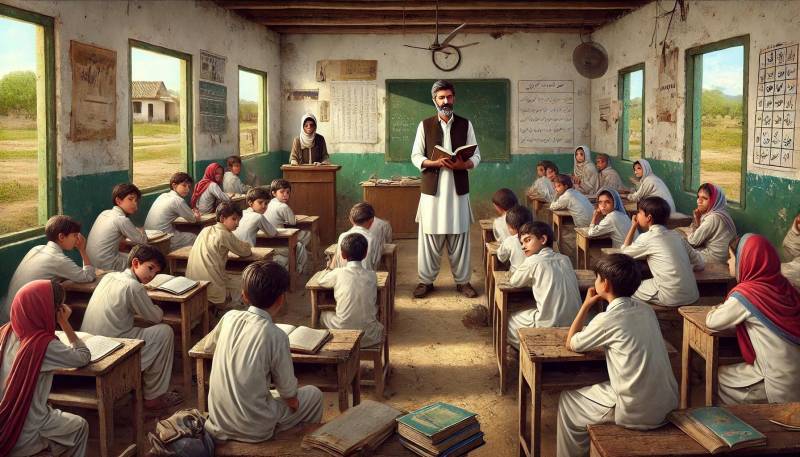
Introduction to Education in Pakistan
Education in Pakistan has been a pillar for societal development and national identity since the country’s inception in 1947. As a foundational element, it bears the potential to drive economic and social progress. However, the current state of education signifies a complex challenge; the literacy rate remains below satisfactory levels, particularly among women and rural populations. This disparity not only hinders individual potential but also adversely impacts national progress and unity.
The historical significance of education in Pakistan cannot be overstated. As a region that has produced scholars and intellectuals through centuries, the emphasis on education has shifted over time. In the early years post-independence, the government recognized the importance of developing an educational framework that could foster enlightened citizenship. Despite various reforms and initiatives, numerous issues persist today, such as inadequate funding, outdated curriculum, and insufficient infrastructure. Such challenges impede the overall quality and accessibility of education.
Moreover, education serves as a means for addressing critical issues such as poverty, unemployment, and extremism. By equipping the youth with skills and knowledge, education can empower the next generation to contribute positively to society. Access to quality education creates opportunities not only for personal advancement but also for community upliftment. In light of these challenges, the Pakistani government and various non-governmental organizations are increasingly advocating for educational reforms and awareness, promoting the need for a skilled workforce to meet the demands of a rapidly changing global landscape.
Therefore, the importance of education in Pakistan is multi-faceted, encompassing individual growth, national security, and economic prosperity. Ensuring that every citizen has access to quality education is crucial for the country’s future trajectory and is fundamentally linked to overall development, growth, and progress.
The Role of Education in Economic Development
Education serves as a fundamental pillar for economic development, particularly in developing countries like Pakistan. Numerous studies indicate a positive correlation between educational attainment and economic growth. A more educated workforce is often associated with higher labor productivity, greater innovation, and improved job creation. In Pakistan, where the unemployment rate remains a pressing issue, enhancing the educational framework could yield significant economic benefits.
The rise in educational levels leads to an increase in human capital, which is essential for driving economic performance. For instance, according to the Pakistan Bureau of Statistics, each additional year of schooling has the potential to increase a person’s lifetime earnings by approximately 10%. This figure illustrates not just the financial benefits for individuals but also points to a more skilled and competent workforce that can enhance productivity across various sectors.
Moreover, investment in education has been shown to bolster innovation. Higher educational attainment encourages critical thinking and creativity, which are crucial components in developing new technologies and processes that can improve efficiency and competitiveness in the marketplace. For Pakistan, leveraging educational advancements to foster homegrown innovations could significantly advance its economic standing globally.
Additionally, improving access to quality education directly contributes to job creation. By equipping the populace with relevant skills and knowledge, educational institutions can prepare individuals for the demands of an evolving labor market. This, in turn, addresses the skill gap that often hampers employment opportunities, thereby facilitating both social and economic stability.
In light of these factors, it becomes evident that enhancing the educational landscape in Pakistan is not merely a matter of policy; it is a strategic necessity for sustainable economic development. As education directly influences national productivity, innovation, and the creation of job opportunities, investing in this sector holds the key to unlocking Pakistan’s economic potential.
Social Benefits of Education
Education in Pakistan plays a pivotal role in fostering social equality, reducing poverty, and enhancing civic engagement. Access to quality education can serve as a powerful equalizer, allowing individuals from diverse socio-economic backgrounds to improve their circumstances. In particular, it empowers marginalized groups, including women and minorities, offering them equal opportunities to succeed.
Numerous communities across Pakistan have experienced transformation through educational initiatives. For example, the establishment of schools in remote areas has provided children who previously had limited access to education with the opportunity to learn and thrive. Programs aimed at increasing female literacy rates have shown significant social impact by equipping women with the skills necessary to contribute economically and socially, thereby altering traditional gender roles.
Furthermore, education promotes civic engagement by cultivating a sense of responsibility among individuals. Educated citizens are likely to participate in community services, be informed about their rights, and take active roles in democratic processes. With improved education, young people often become advocates for change in their communities, addressing issues such as health, sanitation, and local governance.
Consider the example of a village that established a community school, leading to a rise in both educational retention and community involvement. Parents previously indifferent to the educational process began recognizing its benefits, resulting in higher enrollment rates and subsequent support for local infrastructure development. As education levels rise, they contribute to lowering the poverty rate within the community, creating a positive feedback loop that enhances overall well-being.
In essence, the social implications of education in Pakistan extend beyond individual benefits; they contribute to the collective progression of society. Providing equitable access to education can transform social landscapes, reduce inequalities, and foster a more engaged and informed citizenry, ultimately leading to a more prosperous nation.
Education and Gender Equality
In Pakistan, education plays a pivotal role in bridging the gender gap that persists across various sectors. The barriers to education for women are manifold, including cultural norms, socioeconomic factors, and inadequate infrastructure. Many families prioritize the education of male children over their female counterparts, resulting in a significant disparity in enrollment rates. This trend not only limits opportunities for women but also inhibits national progress by failing to harness the potential of half the population.
Enhancing access to education for girls is essential for empowering women, which, in turn, leads to broader social benefits. Educated women are more likely to participate in the workforce, contribute to economic development, and make informed decisions that affect their families and communities. Studies have shown that when women receive an education, they tend to invest more in their children’s education, thus creating a positive generational cycle. This cycle highlights how education fosters not just individual empowerment, but collective societal advancement.
Moreover, the government of Pakistan and various NGOs have initiated programs aimed at addressing the barriers that restrict women’s access to education. These efforts include providing financial assistance, improving school infrastructure, and promoting community awareness about the importance of educating girls. By dismantling these barriers, Pakistan can ensure that women receive a quality education akin to that of their male peers.
Furthermore, education contributes to changing societal attitudes regarding gender roles. As more women become educated, traditional perceptions begin to evolve, resulting in greater acceptance of women’s rights and equality. A society that values education for all its members—regardless of gender—stands to benefit significantly through enhanced social cohesion, improved health outcomes, and increased economic productivity.
Challenges Facing the Education Sector in Pakistan
The education sector in Pakistan faces a myriad of challenges that hinder its effectiveness and accessibility. One of the most pressing issues is the lack of adequate funding. Government allocations for education are often insufficient to meet the growing needs of the population. Insufficient resources lead to a lack of materials, trained teachers, and basic facilities necessary for a conducive learning environment. Many public schools operate in dire conditions, lacking essential infrastructure such as clean water, electricity, and even appropriate classroom spaces.
Infrastructure issues further exacerbate the difficulties encountered within the educational framework. In remote and rural areas, educational institutions are sparse, often requiring children to travel long distances, which is not always feasible. Furthermore, where facilities do exist, they may be poorly constructed and maintained, detracting from the overall quality of education. The climate of uncertainty in some regions due to political instability adds another layer of complexity, as schools can sometimes be targets in times of unrest, making both students and teachers feel threatened.
Cultural barriers also significantly affect educational access in Pakistan. In various communities, traditional gender roles restrict girls’ access to education, resulting in lower female enrollment rates. Socioeconomic factors play a pivotal role, as families with limited financial resources may prioritize work over education for their children. This is particularly acute in rural areas where families rely on their children’s labor for financial support, thereby depriving them of the opportunity to pursue formal education. Overall, addressing these challenges necessitates a comprehensive approach that encompasses increased funding, infrastructural improvements, and societal reforms to promote the value of education across all demographics in Pakistan.
The Role of Technology in Education
Technology plays a pivotal role in advancing education in Pakistan. The integration of digital tools and resources can significantly enhance learning experiences, providing students with access to a wealth of information and innovative teaching methods that can address the challenges faced by the educational sector.
One of the most notable advancements in recent years has been the rise of e-learning platforms. These online education systems offer flexible learning opportunities that cater to various educational needs, allowing students from different backgrounds to access quality education regardless of their geographical location. For instance, platforms like Coursera, EdX, and local initiatives have begun offering courses in multiple subjects, which can effectively bridge the knowledge gap in subjects that are otherwise under-delivered in traditional classrooms.
Moreover, the availability of digital resources has transformed the way students learn. E-books, educational videos, and interactive applications enhance engagement and facilitate a deeper understanding of complex concepts. By utilizing multimedia tools, educators can create a more dynamic and interactive classroom environment that appeals to the diverse learning styles of students.
Innovative teaching methods bolstered by technology are also gaining traction in Pakistan. For example, the flipped classroom model encourages students to learn theoretical content online at their own pace, allowing for more interactive discussions and practical applications during classroom time. Such models promote critical thinking and problem-solving skills, essential for success in the 21st century.
In conclusion, the role of technology in education is increasingly important in Pakistan. The potential to enhance learning through e-learning platforms, digital resources, and creative teaching methods is crucial for addressing current educational challenges and promoting national progress.
Success Stories: Educational Initiatives Making a Difference
In recent years, several educational initiatives in Pakistan have emerged, showcasing remarkable success stories that have significantly impacted the country’s educational landscape. These programs are not merely academic ventures; they embody the hope and aspirations of communities striving for better futures through education.
One noteworthy initiative is the Teach for Pakistan program, inspired by the global Teach for All network. This program recruits young graduates who commit to teaching in underprivileged schools for a minimum of two years. The goal is to bridge the educational divide by providing quality instruction and mentorship to students who otherwise have limited access to quality education. Through their innovative teaching methods and community engagement efforts, the participants of Teach for Pakistan are helping to inspire a new generation of learners, fostering both academic growth and critical thinking skills.
Another successful example is the Saylani Welfare International Trust, which operates various educational institutions across the country, particularly in urban areas such as Karachi. The Trust offers vocational training, technical education, and scholarship programs aimed at marginalized youth. By equipping students with practical skills, Saylani has empowered countless individuals to secure stable employment, thus contributing to economic growth and community development.
Furthermore, the Karachi Literacy Project has made strides in combating illiteracy in urban slums by establishing informal learning centers that provide basic education to children aged 5 to 14. Engaging parents and community members, the initiative fosters a supportive learning environment and emphasizes the value of education within these vulnerable populations.
These initiatives, among many others, illustrate the significant impact that focused educational programs can have on the individual and community level. They not only provide immediate educational benefits but also contribute to long-term national progress by promoting social equity and economic opportunity for all citizens of Pakistan.
The Collective Responsibility: What Can Be Done
In Pakistan, the improvement of education is a task that requires the concerted efforts of multiple stakeholders, including the government, non-governmental organizations (NGOs), and the general public. Each of these entities has a unique role to play in addressing the multifaceted challenges faced by the education sector.
The government holds the primary responsibility for establishing and maintaining an effective educational framework. This includes formulating policies that enhance access to quality education, allocating sufficient funding, and ensuring that schools are adequately equipped and staffed. By prioritizing education in national budgets and developing targeted programs to improve teacher training and infrastructure, the government can create a conducive environment for learning. Moreover, the government should actively promote awareness campaigns to highlight the importance of education, particularly in rural and underserved areas.
Non-governmental organizations also play a critical role in advancing educational initiatives. NGOs often operate in regions where government resources are limited, providing support through various programs such as teacher training, community mobilization, and scholarship opportunities for underprivileged students. Their ability to garner local support and engage community members can greatly amplify educational efforts. Furthermore, NGOs can serve as catalysts for change, advocating for policy reforms and bringing attention to pressing educational issues that require immediate action.
Finally, the general public has a significant part to play in improving education in Pakistan. Parents, community leaders, and local activists can promote the value of education within their communities, encouraging enrollment and retention, particularly for girls. Grassroots efforts, such as volunteer tutoring and community-based educational programs, can also enhance learning outcomes. Ultimately, it is through collective responsibility that a robust education system will emerge, leading to national progress.
Conclusion: The Future of Education in Pakistan
In evaluating the critical role of education in Pakistan, it becomes evident that establishing a robust education system is not merely a necessity but an imperative to facilitate national progress. Education serves as the foundation for social equity, economic opportunity, and civic engagement, profoundly impacting every facet of society. The challenges faced—ranging from inadequate infrastructure and lack of trained educators to socio-economic barriers—underscore the urgent need for reform. However, with concerted efforts from various stakeholders, there exists a viable path forward.
The implications for the future of education in Pakistan are profound. As the landscape of global education evolves, Pakistan must adapt its curriculum and pedagogical approaches to encompass contemporary skills and knowledge. This adaptation must prioritize inclusivity to ensure that all demographics, especially marginalized communities, have access to quality education. Furthermore, as technology becomes increasingly integrated into various sectors, it is crucial for educational institutions to embrace technological advancements to enhance learning experiences and prepare students for an increasingly digital world.
It is vital for policymakers, educators, and communities to recognize education not just as a governmental responsibility but as a shared societal goal. Innovations in teaching methods, increased funding, and public-private partnerships may offer pathways to unlock the infrastructure and resources otherwise lacking in educational environments. Moreover, addressing gender disparities within the education sector is essential; empowering women through education is a powerful step toward national empowerment.
In summary, prioritizing education in Pakistan is the bedrock of national development and progress. By fostering a cohesive strategy that engages all sectors of society, Pakistan can ensure a brighter future for its citizens. There is no time to waste; immediate and sustained action is required to actualize the potential of education as a transformative force in the nation.