


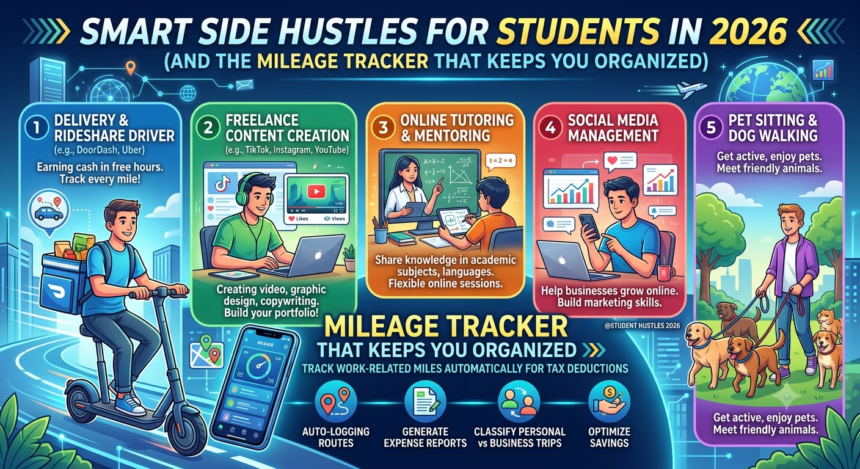
College life in 2026 looks very different from a decade ago, and one of the biggest shifts is how many students now juggle part time gigs alongside their coursework. Whether it is tutoring, delivering food, or driving for a rideshare platform between classes, students are discovering that flexible income opportunities can help cover tuition, rent, and everyday expenses. If any of that side income involves driving, downloading a reliable mileage tracker early on can save a surprising amount of money once tax season arrives. This guide walks through the most practical side hustles for students right now, and explains why tracking your driving properly is one of the smartest habits you can build alongside them.
Why Side Hustles Make Sense for Students
Balancing a full course load with a job has always been common, but the nature of student work has changed. Traditional part time jobs with fixed shifts are being replaced by flexible gig work that fits around lecture schedules, exam periods, and study sessions. This flexibility is exactly why so many students are drawn to driving based gigs, freelance work, and app based delivery jobs.
The appeal is straightforward. Students can work fifteen hours one week and forty the next, depending on how demanding their semester is. This kind of adaptability is difficult to find in traditional retail or hospitality roles, which is part of why gig platforms have become so popular on campuses.
The Trade Off Nobody Talks About
What many students do not realize until it is too late is that flexible income often comes with more complicated tax obligations. Unlike a traditional part time job where taxes are withheld automatically, gig income and freelance work usually require the student to track their own expenses and report earnings independently. This is where good habits early on make a real difference.
Popular Side Hustles Among Students Today
There are several categories of work that consistently attract students, each with different time commitments and income potential.
- Food and grocery delivery through app based platforms
- Rideshare driving during evenings and weekends
- Freelance tutoring, either in person or through online platforms
- Pet sitting and dog walking through community apps
- Selling handmade goods or reselling items online
Comparing Popular Options
The table below compares a few common student side hustles based on flexibility, income potential, and whether driving is typically involved.
| Side Hustle | Flexibility | Income Potential | Involves Driving |
|---|---|---|---|
| Food delivery | Very high | Medium | Yes |
| Rideshare driving | High | Medium to high | Yes |
| Online tutoring | Medium | Medium | No |
| Reselling items | High | Low to medium | Occasionally |
| Pet sitting | Medium | Low | Occasionally |
As shown above, a large portion of common student side hustles involve some amount of driving, which means tracking mileage becomes directly relevant to a significant share of students earning extra income.
Why Mileage Tracking Matters for Student Drivers
If a student is driving for delivery apps or rideshare platforms, every mile driven for that work can potentially reduce their taxable income. Many students overlook this simply because they are unfamiliar with how self employment deductions work, or because keeping a manual log feels like an unnecessary hassle on top of an already busy schedule.
The good news is that automatic tracking apps remove almost all of the manual effort involved. Once installed, they can detect trips in the background and generate organized reports without requiring the student to remember to start or stop anything manually.
Building the Habit Early
Establishing a tracking habit in the first semester of gig work, rather than waiting until tax season creates panic, pays off significantly. A few simple steps help:
- Install a tracking app as soon as you start any driving based gig
- Check weekly that trips are being categorized correctly
- Separate personal errands from work related trips consistently
- Keep a monthly summary so tax season involves no surprises
Balancing Academics and Gig Work
Time management becomes the central challenge once a student takes on regular gig work. Classes, assignments, and exams do not pause because a shift is scheduled, so students need systems that reduce administrative burden wherever possible. Automating financial tracking, including mileage, is one of the easiest ways to reclaim time that would otherwise go toward manual recordkeeping.
Students who treat their side hustle like a small business, even a very part time one, tend to have a much smoother experience when it comes time to file taxes. This mindset shift, treating gig income as something to actively manage rather than something to figure out later, is often what separates students who keep more of their earnings from those who unknowingly leave money behind.
Final Thoughts
Side hustles offer real financial flexibility for students navigating the rising costs of education, and for many, driving based gig work is the most accessible option available. The key to making that income work harder is pairing it with smart habits from day one, particularly around tracking mileage accurately. A small amount of setup effort at the start of a semester can translate into meaningful savings later, letting students focus more energy on their studies and less on financial cleanup at tax time.
For anyone balancing a demanding course load with part time driving work, building this single habit early is one of the most practical financial decisions a student can make.
Long Term Financial Habits That Start in College
The habits students build around gig income during their college years often carry forward long after graduation. Someone who learns early to track expenses, separate business driving from personal errands, and plan for tax obligations enters the professional world with a genuine advantage over peers who never had to think about these things until much later in life.
This is particularly true for students who continue freelancing or gig work after graduation, whether as a full career path or a supplemental income source alongside traditional employment. The discipline formed during college, treating even small amounts of gig income seriously enough to track properly, tends to translate directly into stronger financial management skills throughout adulthood. Employers and clients alike tend to notice this kind of organized, responsible approach, even in contexts unrelated to taxes.