


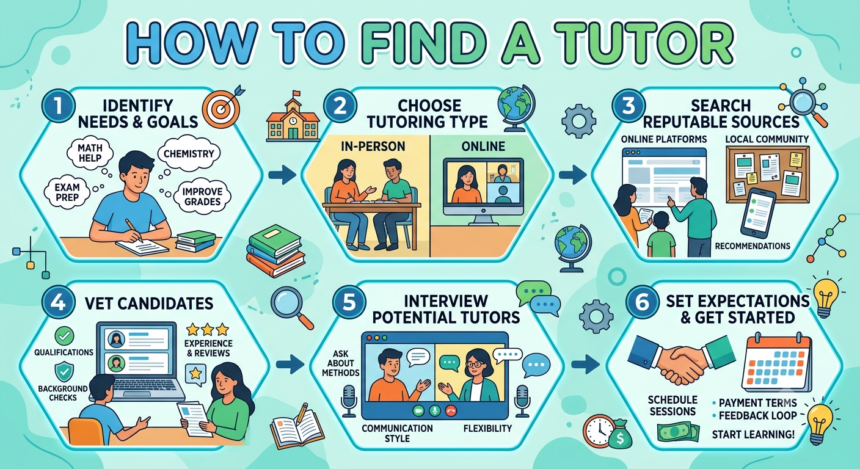
There are many ways to go about finding a tutor for your child. The wrong choice can cost you time, money and – worse – your child’s confidence. Fortunately, a little groundwork goes a long way. In this article, we set out the routes most families take when searching for a tutor and weigh their respective merits.
Before You Start: Ask Yourself the Right Questions
It is tempting to leap straight into the research, but a moment’s reflection before you start can pay dividends.
1. What do you need the tutor for, specifically?
It might be short-term revision before an exam, targeted help with a particular part of the syllabus, mentoring for motivation and study technique, or broader, ongoing support across the curriculum. All these are quite different briefs, and they call for quite different tutors.
2. What kind of tutor is likely to work well with your child?
Think about the teachers at school who consistently get the best out of them. Is it the brisk, no-nonsense sort, or the warm and patient sort? This can help guide you to the tutor who is likely to be the best fit.
3. What does your child think?
Explain that you’re thinking of finding them a tutor and why this is a good idea. Ask what kind of tutor they think they would respond to. Not only will this help narrow your search, it will also encourage your child to engage properly with their tuition.
Different Ways to Find a Tutor
Word-of-Mouth Recommendations
The recommendation of a trusted friend remains one of the best ways to find a tutor. The culture around tutoring has shifted considerably in the last twenty years or so; where it was once a rather hushed-up affair, something families were faintly embarrassed to admit to, it is now discussed far more openly among parents. A genuinely excellent local recommendation can be gold dust.
There are, however, two caveats worth bearing in mind. First, the best tutors tend to have waiting lists, precisely because they come so well recommended. Second, some parents are understandably reluctant to share the name of a tutor they regard as a hidden advantage for their own child.
Online Platforms
Online tutoring directories list many thousands of tutors, and allow you to search by subject and level in a matter of moments. They are cheap, convenient, and give the impression of considerable choice.
The trade-off is that the amount of vetting the tutors have undergone is very variable, and will usually be nothing to match the standards of a good agency. Often you won’t know much about a tutor’s qualifications, their track record of results, or whether proper safeguarding checks (a DBS, for instance) have been carried out. The responsibility for judging their ability and suitability falls entirely on you.
A couple of other drawbacks to keep in mind: many tutors listed will be current university students with limited experience, and the tuition is generally only available online.
Through a Tutoring Agency
A reputable tutoring agency does the heavy lifting on your behalf. Tutors will have been properly vetted and interviewed, references and qualifications checked, and an enhanced DBS certificate obtained.
A good agency gathers feedback from parents continuously, meaning it builds a genuine, evolving picture of each tutor’s strengths. You should have the chance to discuss your child with a member of staff before they recommend any tutors, so the fit is considerably more likely to be right from the outset. You should expect regular lesson reports, proper check-ins, and ongoing monitoring of progress.
If, despite all this, the fit is not quite right, a good agency will simply replace the tutor. Reputation is everything to an agency of this kind, and it is built on good word of mouth. Most can arrange either in-person tuition, within a given area, or online lessons.
The obvious trade-off is cost: an agency charges a fee for this level of service, on top of the tutor’s own rate. For many families, however, the peace of mind, the quality control, and the time saved make this the preferable route – particularly for anything beyond a few short-term lessons.
Dukes Plus is one such agency. Founded by teachers more than fifteen years ago, we have since delivered over 200,000 hours of tuition to thousands of families, and our results speak for themselves:
- 98% of our 11 Plus students secure a place at one of their target schools
- 96% of our GCSE and A Level students meet or exceed their predicted grades
From a free initial consultation through to careful tutor matching and ongoing oversight from a dedicated Head of Tuition, ours is a fully managed service from start to finish.
How to Know You Have Found the Right Tutor
Hiring a tutor is the beginning of the process, not the end. Whether they were the right choice tends to reveal itself over the following weeks.
Monitor the fit
If the tutor offers a trial lesson, then take it up. If not, make sure you’re not committed for the long term before you begin. You want to have the flexiblity to make a final decision once you’ve reviewed the first lesson(s).
Does your child look forward to the sessions, or dread them? Ask for the tutor’s and your child’s opinion on the rapport they have built up – or failed to. In our experience, this is often the decisive factor in the success of the tuition. Does the tutor understand how your child thinks and what they find difficult, do they know how to explain things in a way that will click for your child, and can they make the lessons enjoyable?
Keep track of progress
Ask for lesson reports: they should show what was covered, how your child responded, and where the gaps remain. It’s useful to ask the tutor after a lesson or two how much progress they expect to make with your child and within what timeframe. You can make a judgement on how well the lessons are going after this has elapsed.
Know when to make a change
Even a well-chosen tutor isn’t always a lasting fit. Sometimes, through no fault of the tutor’s, after a year of improvement, results will stagnate or your child will gradually disengage. Worse, but by no means unheard of, is for the tutor’s standards to slip: you might notice that they cancel or arrive unprepared, or that their reports have grown vague and repetitive.
Through an agency, resolving a problem is simple: raise it, and they will replace the tutor without fuss. Working independently, the conversation takes more tact. But have it anyway – don’t persist out of politeness.
Know when to end tutoring
Once the purpose of the tuition is fulfilled (the exam passed, the school offer secured, the confidence restored) it is sensible to stop and allow your child to stand on their own two feet. A good tutor will say so honestly, rather than prolonging things. Tutoring can always resume later, for a new syllabus or a new challenge.
Questions to Ask Before Hiring a Tutor
However you decide to find a tutor, you should speak to them or their agency before you commit. At a minimum, you should ask:
- Do they hold a recent, enhanced DBS check?
- What are their qualifications – a relevant degree, and any formal teaching qualifications?
- Can they provide good references?
- Have they successfully tutored other pupils in the same subject and exam?
- How will they assess your child’s needs and ability, and how will they adapt their approach accordingly?
- What is their availability, and can they teach in person as well as online?
- What is their hourly rate, and are there any additional fees?
- Will they provide lesson reports or other regular updates on progress?
- What results do they expect to achieve, and within what timeframe?
A tutor who answers these questions readily and satisfactorily is generally one worth trusting. The right match, properly made, can make an extraordinary difference – not only to a child’s school or exam performance, but to their confidence and their enjoyment of learning. It is worth taking the time to get it right.
Explore Dukes Plus’s tutoring services, arrange a free initial consultation, and find the best-fit tutor for your child.