
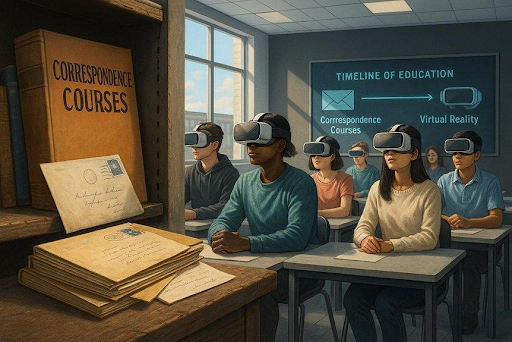
The UK Open University evolved dramatically from its early correspondence courses to today’s immersive virtual reality experiences. This change reflects advancements in educational technology and a commitment to accessibility. You’ll notice milestones like the introduction of radio and the internet reshaping how education is delivered. As you explore further, consider how these innovations not only engage students but also adapt to their diverse needs for learning and career readiness. There’s much more to uncover about this fascinating journey.
The Birth of the UK Open University: Early Correspondence Courses
As the demand for higher education grew in the 1960s, the UK’s need for a more accessible learning model became increasingly apparent.
You might wonder how correspondence methods emerged as a solution. Initially, these methods faced early challenges, including limited resources and skepticism about their effectiveness. Many questioned whether students could truly grasp complex subjects without face-to-face interaction.
Yet, pioneers in education believed in the potential of written materials and postal communication to bridge gaps. They tailored courses that catered to diverse learners, emphasizing flexibility and self-paced study.
This innovative approach laid the groundwork for future advancements in distance learning. By embracing these challenges, the UK began to redefine educational access, creating a pathway for those seeking freedom through knowledge.
Key Milestones in Distance Learning
While the early days of distance learning laid the foundation, several key milestones have greatly shaped its evolution in the UK. The introduction of the Open University in 1969 marked a transformative shift, making higher education accessible to a broader audience.
In the 1980s, the advent of television and radio broadcasting further expanded learning opportunities, allowing students to engage with materials in innovative ways.
The rise of the internet in the 1990s revolutionized distance learning, enabling real-time communication and access to vast resources. Each of these milestones reflects an ongoing educational evolution, challenging traditional methods and embracing flexibility.
As you explore these developments, consider how they’ve empowered you to pursue knowledge on your own terms, fostering a true sense of freedom in learning.
How Open University Embraces Technology
As you explore the Open University’s approach to technology, you’ll notice its commitment to creating dynamic Virtual Learning Environments.
How do these platforms enhance your learning experience through interactive tools?
Understanding this integration could reveal the broader impact of technology on education in the modern era.
Virtual Learning Environments
In recent years, the Open University has transformed the educational landscape by integrating sophisticated Virtual Learning Environments (VLEs) into its curriculum.
These VLEs create virtual classrooms where you can engage with course materials and fellow learners from anywhere.
But how do these environments enhance your learning experience? By offering immersive experiences, they allow you to explore deeper into subjects, fostering a sense of community despite physical distances.
You can participate in discussions, access resources, and even collaborate on projects in real time.
This shift not only empowers you as a student but also challenges traditional educational boundaries.
Are you ready to embrace the freedom and flexibility these VLEs provide, revolutionizing your approach to learning?
Interactive Learning Tools
Open University leverages technology to create interactive learning tools that actively engage you in the educational process. By incorporating innovative features, the institution fosters a dynamic learning environment.
Here are some key aspects:
- Gamified learning enhances motivation through game-like elements.
- Collaborative tools promote teamwork and shared learning experiences.
- Personalized feedback tailors assessments to your individual progress.
- Adaptive assessments adjust to your skill level, ensuring you’re challenged appropriately.
- Interactive simulations provide real-world experiences in a virtual setting.
As you navigate these tools, consider how they empower your learning journey.
With mobile learning options, access to these resources becomes even more flexible, supporting your desire for autonomy in education.
How do you envision using these tools to enhance your experience?
The Shift to Online Learning: How It Evolved Into Virtual Reality Education
While traditional education once relied heavily on face-to-face interactions, the rapid advancement of technology has transformed how learning occurs, ushering in an era of online education.
You’ve likely noticed how online platforms now offer immersive experiences that enhance learner engagement through digital resources and interactive simulations, much like the flexible learning environments found in middle school online programs. These technological advancements have created virtual classrooms that transcend geographical boundaries, making educational accessibility a reality for many.
But how do these innovations shape your learning experience? As you navigate this landscape, consider how each tool not only serves to inform but also to inspire.
The evolution from basic online courses to integrated VR education raises intriguing questions about the future of learning. How will you embrace these changes to maximize your educational journey?
Accessibility and Inclusivity: Open University’s Commitment to All Learners
As the landscape of education evolves, the Open University stands out for its unwavering commitment to accessibility and inclusivity for all learners.
This dedication guarantees that everyone, regardless of their background, can pursue their educational aspirations. You might wonder how they achieve this mission. Here’s a glimpse:
- Equitable access to resources for all students
- Flexible learning schedules catering to diverse needs
- Support services designed for those with disabilities
- Diverse representation in course materials and faculty
- Community engagement initiatives promoting inclusivity
What Are the Upcoming Trends in Open University Education?
As you explore the future of open university education, you’ll notice a significant shift towards the increased use of AI, which promises to personalize learning experiences.
Hybrid learning models are also emerging, blending online and in-person instruction to enhance accessibility.
In addition, the formation of global learning communities is reshaping how you connect and collaborate with peers worldwide, prompting questions about the impact on educational outcomes.
Increased Use Of AI
The rising integration of artificial intelligence in open university education is reshaping the landscape of learning and teaching. As you explore this evolution, consider how AI is enhancing your educational experience:
- AI personalization tailors learning paths to your unique strengths and weaknesses.
- Automated tutoring offers instant feedback, making support accessible around the clock.
- Predictive analytics helps identify students at risk of falling behind, allowing for timely interventions.
- AI-driven assessments streamline grading, freeing up instructors to focus on meaningful interactions.
- Chatbots provide 24/7 assistance, answering your questions in real-time.
This shift towards AI not only democratizes education but also empowers you to take charge of your learning journey.
How will you embrace these technologies to enhance your educational experience?
Hybrid Learning Models
Artificial intelligence is paving the way for innovative approaches in open university education, leading to the rise of hybrid learning models.
You might wonder how these models blend traditional classroom experiences with online learning. Blended learning combines the best of both worlds, allowing you to access educational technology that enhances your learning journey.
Imagine attending lectures in-person while simultaneously engaging with interactive online resources, catering to your unique needs and preferences. This flexible approach not only fosters self-directed learning but also keeps you connected to a broader educational community.
As you explore these trends, consider how hybrid learning can empower you, offering the freedom to shape your educational path while leveraging advanced tools for success.
Are you ready to embrace this evolution?
Global Learning Communities
While you navigate the evolving landscape of open university education, global learning communities are emerging as an essential trend reshaping how you connect and collaborate with peers worldwide.
These communities foster learning through shared experiences and diverse perspectives, enhancing your educational journey.
As you explore this vibrant ecosystem, consider the following:
- Collaborative platforms that facilitate real-time interaction and project work.
- Opportunities for cross cultural exchange that enrich your understanding of global issues.
- Flexible online courses that cater to diverse learning styles.
- Networking possibilities that can lead to collaborations beyond borders.
- Access to a wealth of resources from various institutions, broadening your horizons.
In this dynamic environment, your learning experience can become a truly global adventure.
How Open University Graduates Contribute to the Workforce
Open University graduates play a pivotal role in shaping the modern workforce. With their focus on skill acquisition and lifelong learning, you’ll find they’re often job market ready, equipped to navigate the complexities of today’s economy.
Their diverse backgrounds enhance workforce diversity, fostering creativity and innovation. Many graduates engage in flexible employment, allowing them to adapt to various industry needs.
Through professional networking, they cultivate connections that enhance industry relevance and open doors for career advancement. Moreover, experiential learning empowers them to tackle real-world challenges, driving economic impact.
As you explore the contributions of these graduates, consider how their unique perspectives enrich not just their careers but the entire labor landscape. Their influence is profound, shaping a dynamic and inclusive workforce.
The Role of Innovation in Shaping Future Learning Experiences
Innovation is rapidly transforming how we experience learning, leading to more personalized and effective educational pathways. As you explore the impact of innovative pedagogy and future technologies, consider how these advancements can reshape your learning journey:
- Adaptive learning platforms tailor content to your needs.
- Virtual and augmented reality enhance immersive experiences.
- Collaborative online environments foster global connections.
- Artificial intelligence personalizes feedback and assessment.
- Gamification increases engagement and motivation.
These innovations don’t just make education more accessible; they empower you to take control of your learning.
As you embrace these changes, think critically about how they can help you achieve your goals. How will these evolving tools and methodologies support your quest for knowledge and freedom in your educational pursuits?
Conclusion
As you reflect on the evolution of the UK Open University, consider how its roots in correspondence courses starkly contrast with today’s immersive virtual reality experiences. This journey highlights not only technological advancements but also a steadfast commitment to accessibility and inclusivity. While the landscape of education continues to shift, the Open University remains a beacon of innovation, inviting you to explore how these changes will further shape the workforce of tomorrow. What might the future hold for your learning journey?