


Lie Detector Tests: How Polygraph Examinations Work and When They Are Used
Understanding the Lie Detector Test
When people need to establish whether important information is truthful, a lie detector examination can provide an additional source of objective information. Polygraph testing is used in a variety of situations, including private disputes, relationship concerns, employment-related investigations, criminal investigations, and other circumstances where determining the consistency of a person’s answers is important.
A polygraph does not simply operate as a machine that identifies a lie. Instead, a trained examiner asks carefully prepared questions while monitoring physiological responses. The results are then evaluated together with the questions, the examination procedure, and other relevant information.
Understanding how the process works can help people approach a polygraph examination with realistic expectations and make informed decisions about whether testing is appropriate for their circumstances.
What Is a Lie Detector?
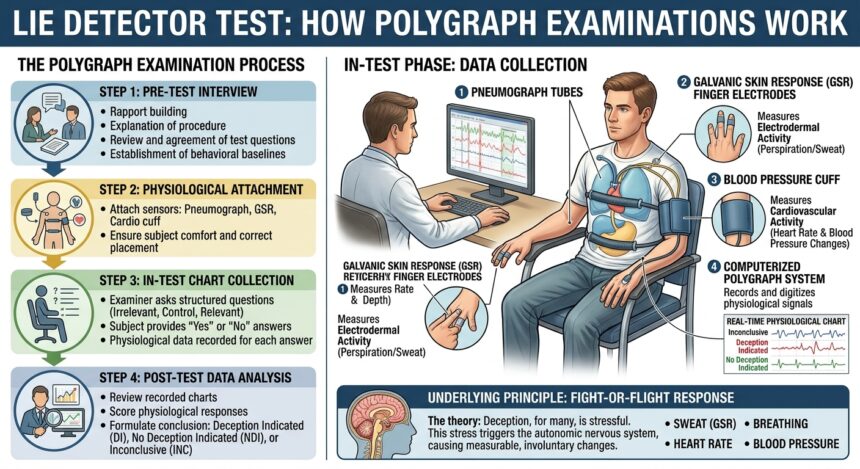
A lie detector, commonly known as a polygraph, is an instrument designed to record several physiological changes while a person answers questions. These changes may include variations in breathing, cardiovascular activity, and skin conductivity.
The underlying principle is that answering certain questions may produce measurable physiological reactions. During a professional examination, these responses are recorded and assessed by the examiner.
A polygraph therefore does not literally “read” someone’s thoughts. It records physiological activity associated with responses to carefully structured questions.
What Does a Polygraph Measure?
A modern polygraph examination may monitor several physiological channels, including:
- Respiratory activity
- Heart rate and cardiovascular changes
- Skin conductivity
- Movement or other relevant physical activity
The examiner considers these recordings in relation to the questions that were asked. Proper question formulation is particularly important because unclear, confusing, or overly complicated questions can make an examination less useful.
How Does a Polygraph Examination Work?
A professional examination generally consists of several stages. The exact procedure can vary depending on the purpose of the test and the examiner’s methodology.
1. Pre-Test Interview
The examination normally begins with a detailed discussion between the examiner and the person being tested. The examiner explains the procedure and discusses the issues that need to be addressed.
The relevant questions are reviewed so that the person understands what will be asked. This stage can also help identify ambiguous wording or information that needs clarification.
2. Attachment of the Sensors
The examiner places the necessary sensors on the person being tested. These instruments record physiological changes during the examination.
The sensors themselves do not determine whether an answer is true or false. Their purpose is to provide physiological data for later analysis.
3. Question Phase
The examiner asks a predetermined series of questions. The person normally answers verbally, often with simple responses such as “yes” or “no.”
The questions are designed around the specific issue being investigated. Keeping the examination focused is important because unrelated subjects can introduce unnecessary variables.
4. Analysis of the Results
After the questions have been presented, the examiner analyzes the recorded physiological responses. The results are considered in the context of the examination rather than being interpreted from a single reaction.
This is one reason professional training and standardized procedures are important when conducting a polygraph examination.
When Are Lie Detector Tests Used?
A polygraph can be considered in many situations where people need additional information about disputed events or statements.
Common examples include:
| Situation | Potential Purpose |
|---|---|
| Relationship disputes | Address specific questions involving suspected dishonesty |
| Personal investigations | Clarify disputed statements or events |
| Workplace matters | Investigate particular allegations where appropriate |
| Legal investigations | Provide information that may assist an investigation |
| Theft or misconduct concerns | Examine a person’s responses to relevant questions |
| Missing information | Address specific factual disputes |
A polygraph should generally be viewed as one part of an investigation rather than as a substitute for documentary evidence, witness testimony, digital records, or professional legal advice.
Why Question Formulation Matters
One of the most important parts of polygraph testing is the wording of the questions. A useful examination needs questions that are clear, specific, and relevant to the issue being investigated.
For example, a broad question such as “Have you ever lied to me?” could cover countless situations and therefore may not provide a useful basis for a focused examination.
A more specific question concerning a defined event or fact can be considerably easier to understand and evaluate.
Professional preparation can therefore make a significant difference to the quality of the examination.
How Should Someone Prepare for a Polygraph?
People often become nervous before a polygraph examination. Feeling some degree of anxiety is not unusual, which is why the examiner normally explains the procedure beforehand.
Practical preparation can include:
- Understand the purpose of the examination.
- Review the relevant facts beforehand.
- Ask the examiner about anything you do not understand.
- Listen carefully to each question.
- Answer the questions truthfully and directly.
- Avoid trying to manipulate or interfere with the examination.
- Inform the examiner about factors that could affect the procedure.
The objective is not to “beat” the machine. A person should instead concentrate on understanding the questions and providing accurate answers.
What Can Affect a Polygraph Examination?
Physiological responses can be influenced by many factors. Stress, physical discomfort, fatigue, medication, medical circumstances, and other conditions may potentially affect the recorded data.
This is another reason why a polygraph should be administered by a qualified and experienced examiner who can consider the circumstances surrounding the test.
The examination environment also matters. Clear instructions, appropriate question preparation, and consistent procedures can help reduce unnecessary sources of confusion.
Choosing a Professional Polygraph Service
Anyone considering a lie detector examination should pay attention to the examiner’s experience, professionalism, confidentiality practices, and approach to question preparation.
Before arranging an examination, it can be useful to ask:
- What type of examinations are offered?
- How is the examination conducted?
- How are questions prepared?
- How long does the appointment normally take?
- What information should be provided beforehand?
- How are examination results communicated?
- What confidentiality measures are in place?
Getting clear answers before the appointment can make the process more straightforward and help ensure that expectations are realistic.
Making an Informed Decision
A polygraph examination can be useful when a specific question needs to be addressed and the people involved want an additional professional assessment of the available information. However, it is important to understand what the examination can and cannot establish.
The most valuable approach is to combine polygraph results with the surrounding facts and evidence. A test should not automatically be treated as an absolute substitute for a complete investigation.
If you are dealing with a specific dispute and want to understand whether a professional examination could help, learn more about the available lie detector services and contact the testing team for guidance before arranging an appointment. Visit Lie Detector Services to review the available services, benefits, contact information, and current details.
Ready to clarify an important question? Explore the professional testing options available through the website and get in touch to discuss your situation before booking a polygraph examination.