


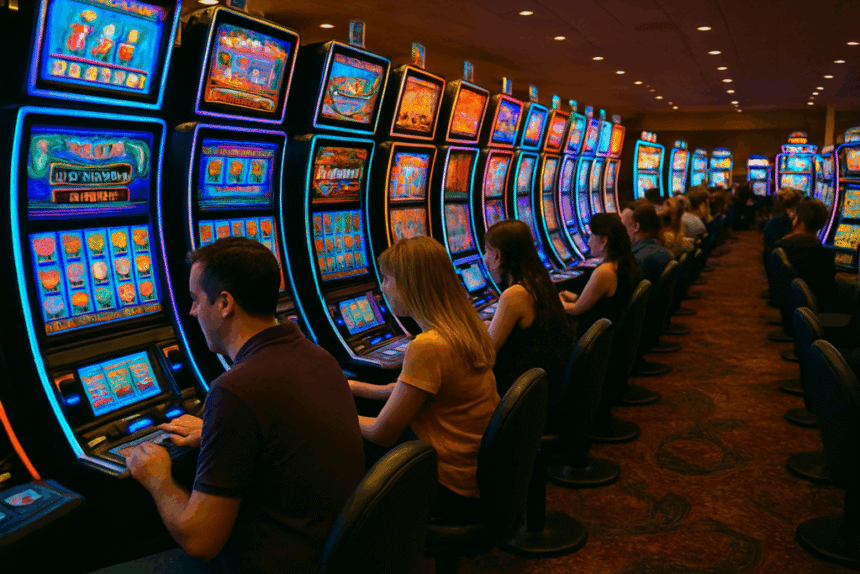
Walk onto a casino floor and the environment there starts working on you immediately. You never see any clocks there and no windows either. Lights pulse a touch faster than a resting heart rate. The interesting part is that none of that happens by accident. It’s nothing new because casinos have run live behavioral experiments for decades. A lot of what they learned has landed straight into marketing plans.
The same old tricks
Move the floor online, and the tricks barely change shape. US online casinos work on the same reward loop a physical slot machine built its whole business on. This includes near-misses, bonus rounds that arrive without warning, a jackpot number climb where everyone can watch it grow and more. Gambling moved screens. But the psychology stayed put.
Reward without a guarantee
A slot machine never pays on schedule. That’s the whole trick. Surprise beats expectation every time — a discount nobody saw coming hits harder than one advertised a week in advance. Loyalty programs figured this out too. A flat points system gets ignored. Random perks get checked daily.
A room built to erase time
Strip away clocks and windows, and three hours starts feeling like forty minutes. Nobody notices the slippage happening. Brands want that same fog — an app built to hold attention past the point someone meant to put the phone down, a pop-up event designed to feel like its own small world with no exit visible.
Letting players feel in control
The odds never move. They just can’t, because the math related to house edge always remains the same. The way a casino floor is designed, you tend to forget that math part. It consistently hands out small decisions — pick a seat, pick a number, hit or stand, and many other similar things.
All of these combined make you feel as if you are the one who controls things. But in reality, it’s the design, where you are not changing anything underneath. Subscription tiers do the same thing. So does every ‘build your own’ feature a brand has ever offered. The choice will always feel real to you, but the math doesn’t care either way.
The small details nobody notices
A chip hits a table and makes a specific sound. That’s not any random sound because it has been engineered that way on purpose. Carpet patterns pull eyes toward certain tables without you realizing the deliberate attempt to steer. Ambient noise sits at a precise volume — lively, not chaotic. Even that’s tested to land exactly there.
Nothing from this design side registers alone. Together it builds trust fast, the same quiet way a clean website or a well-timed email builds trust for a brand that’s never touched a card table.
What keeps people at the table
Casinos don’t guess at what players want. Excitement, status, a sense of escape, control — they read that mix constantly and build the floor around it. Marketing works the same way when it works at all. Understand customer needs first, or the tactic lands flat. A scarcity trick means nothing if it’s not solving for something someone already wanted solved.
Urgency that pulls people back
VIP rooms stay closed to most people walking by. High-stakes tables aren’t for everyone either. A countdown ticks visibly on a promotion, impossible to ignore once it’s running. Missing out costs something, even on things nobody actually needed before the clock started. Flash sales run on the exact same wiring. So does “only three left” on a product page that’s never seen on a casino floor.
Where AI fits into all of this now
Casinos have started layering newer tools over these old tricks. The focus is on reading individual play patterns instead of broad averages to time an offer precisely right. AI in online marketing is walking the identical path outside gambling now. It uses behavioral data to decide which reward hits which person at which exact moment. It doesn’t push across one random campaign and then let the marketers hope that some magic will happen, as was the case in traditional marketing.
What this actually teaches brands
It’s really not about gambling. It’s about attention and what keeps someone in the room past where logic alone would have pulled them out. Casinos figured this out long before most marketing teams caught up. Every brand running a loyalty program, a flash sale, or a well-built app is borrowing from that same floor plan, whether anyone on the team ever stops to notice it.
