


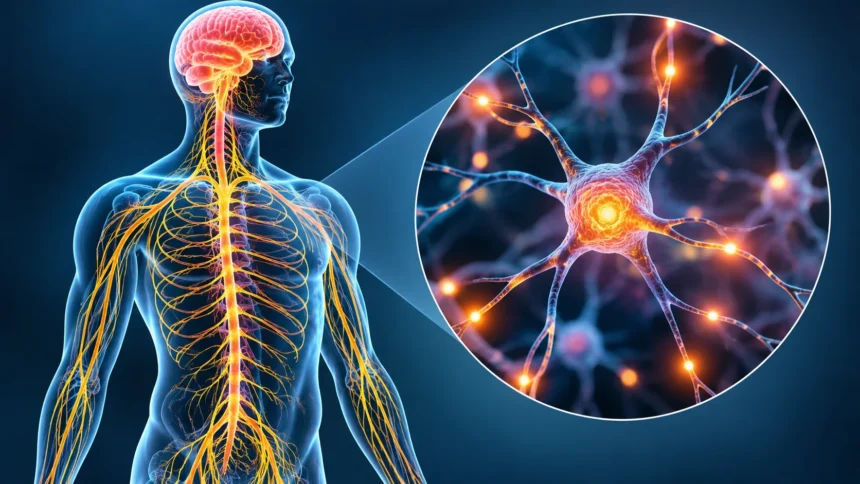
The nervous system is one of the most important and complex systems in the human body. It controls how we think, move, feel, and respond to the world around us. From breathing and walking to remembering information, almost every daily activity depends on signals traveling through this remarkable communication network.
Understanding the nervous system helps explain how different body parts work together. It includes the brain, spinal cord, and nerves that connect different areas of the body. These structures constantly exchange information to support movement, sensation, internal organ functions, and overall health.
What Is the Nervous System?
The nervous system is a complex network of specialized cells and structures that controls communication throughout the body. It receives information from the environment, processes signals, and coordinates appropriate responses. This system plays an essential role in movement, sensation, thinking, and maintaining internal balance. Without it, the body’s organs could not coordinate their activities effectively.
The human nervous system includes the brain, spinal cord, and peripheral nerves. These components work together to transmit information through electrical signals and chemical messengers. For example, touching a hot surface activates sensory receptors that communicate with the spinal cord and brain. This allows the body to respond quickly to potential danger.
The nervous system also regulates many automatic functions that happen without conscious effort. These include breathing patterns, heart rate, digestion, and certain reflexes. At the same time, it supports learning, memory, emotions, and decision-making. Its ability to manage both voluntary and involuntary activities makes it essential for everyday life.
What Are the Main Parts of the Nervous System?
The nervous system has two major divisions called the central nervous system and peripheral nervous system. Each division performs different tasks while remaining closely connected to the other. The central nervous system processes information and coordinates many responses. The peripheral nervous system carries messages between central structures and the rest of the body.
The central nervous system consists of the brain and spinal cord. The brain interprets sensory information, supports thinking, and helps control movement. The spinal cord carries signals between the brain and different body regions. It also participates in reflex actions that require rapid responses to certain stimuli.
The peripheral nervous system includes nerves and nerve structures located outside the brain and spinal cord. These nerves connect the central nervous system with muscles, skin, organs, and sensory receptors. They carry information in both directions to support coordinated body functions. Together, these two divisions create an extensive communication network throughout the body.
How Does the Nervous System Work?
The nervous system works by sending and receiving information through specialized cells called neurons. These cells communicate using electrical impulses and chemical signals. Sensory receptors detect changes inside or outside the body and transmit information toward the central nervous system. The brain or spinal cord then processes those signals and coordinates a response.
For example, when you accidentally touch something sharp, sensory neurons carry information toward the spinal cord. Neural circuits may trigger a reflex that quickly moves your hand away. Information also reaches the brain, allowing you to become aware of the sensation. This process shows how the nervous system combines immediate protection with conscious awareness.
Communication between neurons usually occurs at specialized connections called synapses. When an electrical impulse reaches a nerve ending, it can trigger the release of chemical messengers called neurotransmitters. These substances influence the activity of nearby cells and help signals move through neural networks. This coordinated signaling supports movement, memory, emotion, and countless other functions.
What Is the Central Nervous System?
The central nervous system, often abbreviated as CNS, includes the brain and spinal cord. It serves as the primary processing and coordination center of the body’s nervous system. Information from sensory organs travels toward these structures for interpretation. The central nervous system then helps organize responses based on the body’s needs.
The brain contains interconnected regions responsible for different functions, including perception, movement, memory, and language. The spinal cord connects the brain with many peripheral nerves and supports important reflex pathways. Together, these structures coordinate complex activities across the body. Their continuous communication allows people to respond to changing environments.
The central nervous system receives protection from bones, membranes, and cerebrospinal fluid. The skull surrounds the brain, while the vertebral column protects the spinal cord. Special protective membranes called meninges cover these structures. Cerebrospinal fluid provides cushioning and helps maintain a suitable environment for nervous tissue.
What Is the Peripheral Nervous System?
The peripheral nervous system, or PNS, includes nerves and related structures outside the brain and spinal cord. Its main purpose is to connect the central nervous system with the rest of the body. Peripheral nerves carry sensory information toward central structures and motor commands outward. This communication supports movement, sensation, and internal organ regulation.
The peripheral nervous system contains cranial nerves and spinal nerves. Cranial nerves connect with the brain and brainstem, while spinal nerves connect with the spinal cord. These nerves serve different areas of the head, trunk, arms, and legs. They help transmit information needed for coordinated physical activity.
Damage to peripheral nerves can interfere with normal communication between the body and central nervous system. Depending on the affected nerves, symptoms may include weakness, numbness, tingling, or changes in sensation. Some conditions also affect automatic body functions. Understanding peripheral nerve health is important for recognizing problems that may require medical attention.
What Are Neurons and Why Are They Important?
Neurons are specialized nerve cells responsible for transmitting information throughout the nervous system. They form complex networks that support communication between the brain, spinal cord, muscles, and organs. A typical neuron contains a cell body, dendrites, and an axon. Each structure contributes to receiving, processing, or sending signals.
Dendrites receive information from other cells, while the cell body supports essential cellular functions. The axon carries electrical impulses toward other neurons, muscles, or glands. Many axons have a protective insulating layer called myelin. This layer helps electrical signals travel efficiently along nerve fibers.
Neurons work alongside supporting cells known as glial cells. Glial cells help nourish, protect, and maintain a healthy environment for nervous tissue. Some produce myelin, while others contribute to immune defense and chemical balance. The cooperation between neurons and glial cells supports efficient nervous system function.
What Are the Main Functions of the Nervous System?
The nervous system performs three closely connected functions: sensory input, information processing, and motor output. Sensory receptors detect changes in the body’s internal and external environments. The central nervous system evaluates incoming information and helps determine suitable responses. Motor pathways then communicate with muscles or glands to produce actions.
Another important function involves controlling voluntary movements such as walking, writing, and lifting objects. The brain plans and coordinates many of these actions using information from muscles, joints, and sensory organs. The nervous system continuously adjusts movement to maintain balance and accuracy. This coordination makes everyday physical activities possible.
The nervous system also supports mental processes and automatic body regulation. It contributes to learning, attention, memory, emotions, and decision-making. At the same time, specialized neural circuits help control heart rate, digestion, temperature regulation, and breathing. These functions demonstrate how the nervous system influences nearly every aspect of human life.
What Is the Autonomic Nervous System?
The autonomic nervous system controls many body functions that occur without deliberate conscious effort. It helps regulate heart rate, digestion, blood pressure, sweating, and other internal processes. This system operates through networks connecting the brain, spinal cord, and internal organs. Its activity helps the body respond to changing physical conditions.
The autonomic nervous system includes sympathetic and parasympathetic divisions. The sympathetic division prepares the body for demanding situations by increasing alertness and supporting physical activity. The parasympathetic division generally supports digestion, recovery, and energy conservation. Both divisions continuously interact to regulate internal functions according to the body’s needs.
The enteric nervous system is another important network associated with autonomic regulation. It contains neurons within the digestive tract and helps coordinate gastrointestinal activity. Although it can perform certain functions independently, it also communicates with the brain and other autonomic pathways. This relationship demonstrates the close connection between nervous system activity and digestive health.
What Is the Difference Between the Sympathetic and Parasympathetic Nervous Systems?
The sympathetic nervous system becomes particularly active when the body faces physical demands or stressful situations. It can increase heart rate, influence breathing, and redirect blood flow toward active muscles. These changes help prepare the body for immediate action. This response is commonly associated with the fight-or-flight reaction.
The parasympathetic nervous system generally supports activities associated with rest, digestion, and recovery. It can slow heart rate and promote gastrointestinal activity under suitable conditions. Its functions help the body conserve resources and maintain normal internal processes. This division is often described as supporting the rest-and-digest response.
Although these divisions are frequently presented as opposites, their relationship is more complex. Both systems remain active at different levels and coordinate various body functions. Their effects depend on the organ involved and the body’s current requirements. Balanced autonomic regulation helps maintain stable internal conditions as daily demands change.
How Does the Brain Control the Nervous System?
The brain acts as a major control and processing center for the nervous system. It receives information from sensory pathways and communicates with other neural structures. Different brain regions contribute to movement, perception, language, memory, and emotional processing. Their coordinated activity supports both conscious behavior and automatic regulation.
The cerebrum is the largest part of the brain and supports many higher mental functions. Its outer layer, called the cerebral cortex, contributes to thinking, sensory perception, and voluntary movement. Other structures, including the cerebellum, help coordinate movement and balance. These regions communicate through extensive networks of nerve connections.
The brainstem connects major brain structures with the spinal cord and helps regulate essential functions. It contains neural circuits involved in breathing, alertness, and cardiovascular control. Many cranial nerve pathways also pass through or originate within this region. Together, the brain’s interconnected structures support the continuous operation of the human nervous system.
What Role Does the Spinal Cord Play?
The spinal cord is a long structure of nervous tissue extending from the brainstem through the spinal canal. It acts as an important communication pathway between the brain and peripheral nerves. Sensory signals travel toward the brain through spinal pathways. Motor commands travel through other pathways to influence muscles and body functions.
The spinal cord also coordinates certain reflex actions without requiring an initial conscious decision. For example, a sudden painful stimulus can activate a withdrawal reflex through local neural circuits. The brain receives information about the event, but the immediate response may begin earlier. This organization helps protect the body from potentially harmful situations.
Spinal cord health is essential for movement, sensation, and several automatic functions. Injuries or diseases affecting this structure may disrupt communication between the brain and different body regions. The resulting difficulties depend on the location and severity of the damage. Prompt medical evaluation is important whenever serious spinal cord injury is suspected.
How Does the Nervous System Control Movement and Reflexes?
Voluntary movement begins through coordinated activity involving several brain regions. Motor areas send commands through neural pathways toward the spinal cord and peripheral nerves. Motor neurons then activate skeletal muscles, allowing the body to perform planned actions. Sensory feedback helps adjust movement while an activity is taking place.
The cerebellum and basal ganglia contribute to smooth, accurate, and controlled movement. These structures work with other brain regions to regulate timing, coordination, and movement patterns. Sensory information from muscles and joints helps the brain monitor body position. This process allows people to perform tasks requiring balance and precision.
Reflexes are rapid, automatic responses to particular stimuli. They often involve neural circuits within the spinal cord or brainstem rather than a fully conscious decision. A familiar example is the knee-jerk reflex tested during some medical examinations. Reflex testing can provide useful information about the functioning of specific nerve pathways.
How Does the Nervous System Support Memory and Learning?
Learning involves changes in how networks of neurons communicate and process information. When people practice a skill or encounter new information, neural connections can change in strength and organization. This ability is part of a broader process called neuroplasticity. It allows the nervous system to adapt through experience and repeated activity.
Different brain regions contribute to different forms of learning and memory. The hippocampus plays an important role in forming many new memories, while other structures support learned skills and habits. Attention, sleep, and emotional significance can influence how information is stored. Memory therefore depends on coordinated activity across several neural systems.
Neuroplasticity continues throughout life, although its characteristics change with age and experience. Practicing useful skills, learning new information, and maintaining healthy routines can support cognitive functioning. Recovery after certain neurological injuries may also involve changes in neural pathways. However, the extent of recovery varies according to individual circumstances.
What Are Common Nervous System Disorders?
Nervous system disorders include conditions affecting the brain, spinal cord, or peripheral nerves. Examples include epilepsy, multiple sclerosis, peripheral neuropathy, and Parkinson’s disease. These conditions have different causes, symptoms, and treatment approaches. Some primarily affect movement, while others influence sensation, cognition, or communication.
A stroke occurs when blood flow to part of the brain is blocked or when bleeding occurs within the brain. It can cause sudden weakness, facial drooping, speech difficulties, or other neurological symptoms. Stroke is a medical emergency requiring immediate professional care. Early treatment can significantly influence outcomes and reduce the risk of complications.
Neurological conditions may develop because of genetic factors, infections, autoimmune activity, injuries, or other medical problems. Their symptoms can include headaches, altered sensation, weakness, seizures, or changes in coordination. Not every symptom indicates a serious neurological disorder. However, persistent, unexplained, or suddenly developing symptoms deserve appropriate medical evaluation.
What Are the Signs of an Unhealthy Nervous System?
Problems involving the nervous system can produce a wide range of physical and cognitive symptoms. Common examples include unusual numbness, tingling, muscle weakness, coordination difficulties, and changes in sensation. Some people experience memory problems, dizziness, or recurring headaches. The significance of these symptoms depends on their severity, duration, and associated medical conditions.
Certain warning signs require emergency attention because they may indicate a serious neurological problem. Sudden facial drooping, one-sided weakness, speech difficulty, or unexpected vision loss can occur during a stroke. A sudden severe headache or new seizure may also require urgent assessment. Immediate medical care is important when these symptoms develop.
Other symptoms may appear gradually and require a routine medical assessment rather than emergency treatment. Examples include ongoing tingling, unexplained changes in balance, or progressive muscle weakness. A healthcare professional can review medical history, perform a neurological examination, and recommend suitable investigations. Early evaluation helps identify causes and guide appropriate management.
How Can You Keep Your Nervous System Healthy?
Maintaining nervous system health involves supporting the body’s overall physical and mental well-being. Regular physical activity, balanced nutrition, and sufficient sleep contribute to healthy brain and nerve functioning. Everyday movement also supports circulation and coordination. Choosing sustainable habits is generally more beneficial than relying on temporary health trends.
A varied diet supplies nutrients needed for normal nerve function, including certain B vitamins and essential minerals. Nutritional deficiencies, particularly vitamin B12 deficiency, can contribute to neurological problems in some people. Drinking enough water and managing existing medical conditions are also important. Individual dietary needs may differ depending on health status and medical advice.
Protecting the nervous system also means reducing preventable risks. Wearing appropriate protective equipment during sports, practicing road safety, and avoiding harmful substances can help prevent injuries. Managing long-term conditions such as diabetes and high blood pressure supports neurological health. Medical guidance remains important for anyone experiencing persistent symptoms or living with an existing neurological condition.
What Are Some Interesting Facts About the Nervous System?
The human brain contains approximately 86 billion neurons, along with numerous supporting cells. These neurons communicate through complex networks involving an enormous number of connections. Information moves across these networks using electrical and chemical signaling. Their coordinated activity supports perception, movement, memory, and other essential functions.
Not every nerve signal travels at the same speed. Signal transmission varies according to factors such as nerve fiber diameter and the presence of myelin. Some nerve impulses travel very rapidly, while others move considerably more slowly. These differences help explain why various sensory and motor responses occur at different rates.
Another remarkable feature of the nervous system is its capacity to change with experience. Neural connections can strengthen, weaken, or reorganize as people learn and adapt. The digestive tract also contains an extensive network of neurons involved in controlling gut activity. These characteristics reveal how specialized and interconnected the body’s communication systems are.
Conclusion
The nervous system is a vital communication network responsible for coordinating activities throughout the human body. It includes the brain, spinal cord, and peripheral nerves that work together to process information. From simple reflexes to complex thinking, its functions influence nearly every aspect of everyday life.
Understanding nervous system anatomy and functions makes it easier to appreciate the relationship between the brain, nerves, and internal organs. Neurons transmit signals, while specialized neural pathways support movement, sensation, memory, and automatic body processes. Each component contributes to maintaining coordinated and effective communication across the body.
Taking care of nervous system health requires consistent attention to physical activity, nutrition, sleep, and injury prevention. Recognizing unusual neurological symptoms and seeking appropriate medical advice can also support better outcomes. Learning how this complex system works provides a useful foundation for understanding human health and behavior.
Frequently Asked Questions
What is the nervous system in simple words?
The nervous system is the body’s communication and control network. It includes the brain, spinal cord, and nerves that send messages throughout the body to support movement, sensation, thinking, and automatic functions.
What are the three main functions of the nervous system?
The three main functions are sensory input, information processing, and motor output. Together, they allow the body to detect changes, interpret information, and produce appropriate responses through muscles or glands.
What are the two main parts of the nervous system?
The two main divisions are the central nervous system and peripheral nervous system. The central division includes the brain and spinal cord, while peripheral nerves connect these structures with the rest of the body.
What is the difference between a neuron and a nerve?
A neuron is an individual specialized cell that transmits information. A nerve is a bundle of nerve fibers, mostly axons, surrounded by supporting tissues and found in the peripheral nervous system.
How can I improve my nervous system health naturally?
Regular movement, balanced nutrition, sufficient sleep, and managing medical conditions can support nervous system health. Protecting yourself from injuries and seeking medical care for unusual neurological symptoms are also important.