

Learning is a journey, and like any adventure, it’s best when we make it our own. Imagine absorbing knowledge not just through textbooks but by transforming that information into something uniquely yours—using your words and images to create a deeper understanding. This approach doesn’t just enhance what you learn; it makes the process enjoyable and personal.
By engaging with material on such an intimate level, you’re not merely memorizing facts; you’re crafting connections that stick with you long after exams are over. Ready to unlock the secrets of effective learning? Let’s explore how using your own words and pictures can elevate your educational experience!
Importance of Using Your Own Words and Pictures in Learning
Using your own words in learning transforms passive absorption into active engagement. When you rephrase concepts, you force yourself to process and understand the material deeply. This practice nurtures critical thinking skills, enabling you to ask questions and explore ideas more thoroughly.
Incorporating pictures adds another layer of comprehension. Visuals can simplify complex topics and highlight relationships between ideas that text alone may not convey. Our brains often retain images better than words, making visuals a powerful tool for memory retention.
Creating personal interpretations through writing or drawing fosters ownership of knowledge. It allows you to connect new information with your experiences and interests, which makes learning feel less like a chore and more like an exciting endeavor. By marrying words with visuals, you’re crafting a unique narrative that resonates on multiple levels—cognitive, emotional, and creative.
How It Benefits Your Memory and Understanding
When you express concepts in your own words, the brain engages more deeply with the material. This active process solidifies understanding and improves retention.
Personalizing information helps create mental connections. You relate new knowledge to what you already know, making it easier to recall later. It’s like building a web of ideas that strengthens as you add more.
Using your voice encourages critical thinking. Instead of passively absorbing facts, you’re analyzing and synthesizing them into something meaningful for yourself. This can lead to richer insights.
Moreover, when combined with visuals—whether sketches or photographs—your grasp on the subject deepens further. Images paired with text stimulate different parts of the brain, enhancing both memory and comprehension simultaneously.
This approach transforms learning from a chore into an engaging experience that resonates personally and intellectually.
Incorporating Visual Aids in Studying
Visual aids can transform your study routine. They make complex information clearer and more engaging. Whether it’s charts, graphs, or images, visuals capture attention and enhance comprehension.
Using infographics helps distill vast amounts of data into digestible chunks. You can highlight key points effortlessly. Diagrams illustrate processes that text alone may fail to convey effectively.
Flashcards are another great tool. Designing them with your own images reinforces memory retention while making studying interactive.
Creating visual summaries allows you to synthesize content creatively. Color-coding notes or using mind maps adds an artistic flair to learning that is both effective and enjoyable.
Incorporating videos into your study sessions provides dynamic explanations of concepts too challenging for textbooks alone. This multisensory approach caters to different learning styles, making the process inclusive and diverse in its methods.
Tips for Summarizing Information in Your Own Words
Summarizing information in your own words is a valuable skill. It helps deepen understanding and enhances retention. Start by reading or listening attentively to the content. Take notes on key points that stand out.
Afterward, close your eyes and try to recall what you’ve learned without looking at your notes. This mental exercise forces you to engage with the material actively.
When writing your summary, use simple language. Avoid jargon unless necessary. Aim for clarity over complexity.
Break down complex ideas into bite-sized pieces. Use bullet points if it helps organize thoughts more clearly.
Consider teaching someone else what you’ve just learned; this reinforces knowledge further while exposing any gaps in understanding.
Don’t hesitate to revisit original sources if needed, but always strive to express concepts uniquely from your perspective.
The Power of Mind Mapping
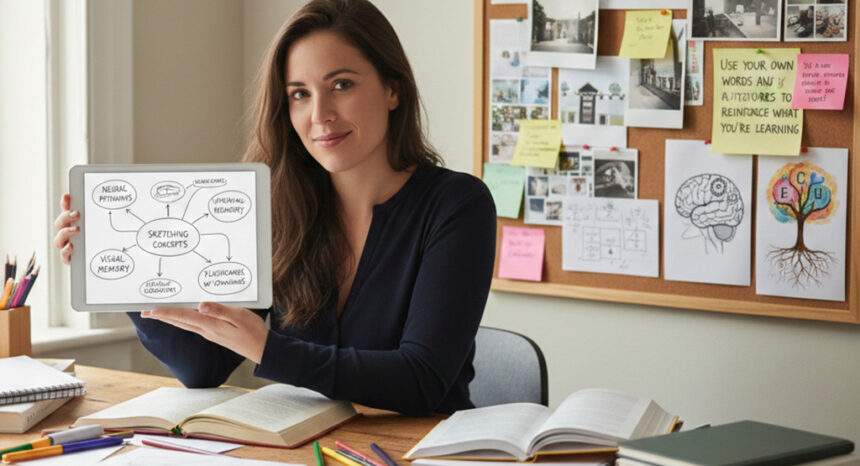
Mind mapping is a dynamic technique that transforms your thoughts into visual diagrams. It allows you to organize information in a way that reflects how your brain naturally works.
When creating a mind map, start with the main idea at the center and branch out with related concepts. This creates clear connections between topics and helps illustrate relationships. The colorful visuals make learning engaging and memorable.
Using images, keywords, and short phrases can enhance retention. Your brain tends to remember visuals better than text alone. Plus, it encourages creativity as you explore various angles of a subject.
You can use digital tools or go old school with paper and colored pens. Both methods are effective for different learners. Mind mapping not only aids understanding but also makes studying an enjoyable experience.
Utilizing Interactive Tools and Platforms
Interactive tools and platforms can transform the way you learn. They offer dynamic ways to engage with content that traditional methods simply can’t match.
Think about using apps that allow for real-time quizzes or flashcards. These tools create a fun learning environment while reinforcing your knowledge.
Online forums and study groups also provide opportunities for discussion. Engaging with peers helps clarify concepts, as teaching others is one of the best ways to solidify your understanding.
Platforms like interactive simulations or educational games make complex subjects easier to grasp. Visualization through these mediums brings abstract ideas to life.
Don’t forget about digital mind-mapping tools! They help in organizing thoughts visually, making connections clearer than ever before.
Embrace technology as a companion on your learning journey; it makes studying an adventure rather than a chore.
Conclusion
Using your own words and pictures can transform the way you learn. By expressing concepts in a personal manner, you not only engage more deeply with the material but also enhance your retention of information. When you create visual aids or illustrations, you’re tapping into another layer of understanding that complements text-based learning.
Incorporating these techniques makes studying an active process rather than a passive one. You begin to see connections between ideas through mind mapping and interactive tools, which fosters creativity and critical thinking. Summarizing information in your own voice helps clarify thoughts and reinforces knowledge long after you’ve moved on from the initial study session.
Embracing this personalized approach to learning can lead to greater comprehension and recall. Whether you’re a student or simply someone eager to expand their horizons, making use of your unique perspective will serve as both an effective strategy for mastering new content and keeping motivation high along the journey of discovery.