


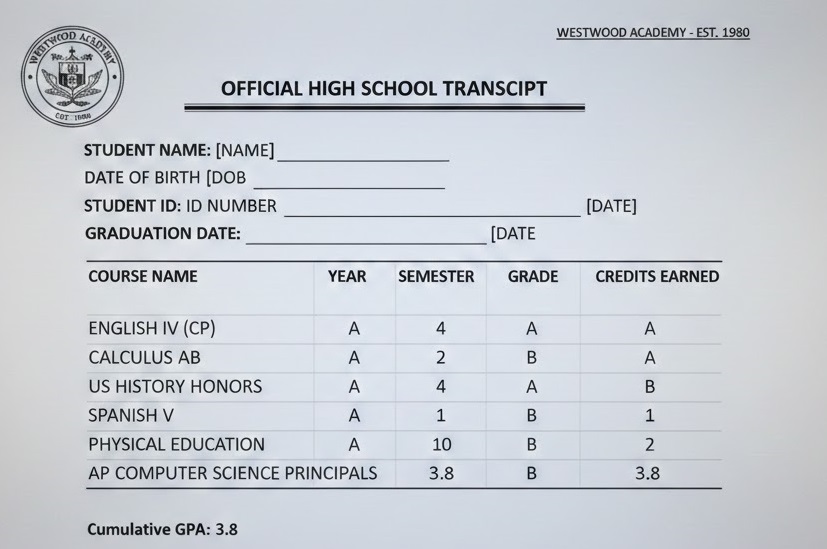
High school is a whirlwind of experiences, friendships, and academic pursuits. Amidst the hustle and bustle, one vital document emerges as a cornerstone for your future: the official high school transcript. This seemingly simple piece of paper holds immense power; it encapsulates your academic journey and can shape opportunities in higher education and beyond. Whether you’re aiming for college or entering the workforce, understanding what an official high school transcript entails is essential to navigating these next steps with confidence. Let’s dive into what makes this document so important and how it plays a pivotal role in your educational career!
Why are high school transcripts important?
High school transcripts serve as a crucial snapshot of a student’s academic journey. They reflect not just grades, but also commitment and effort over four important years.
Colleges often rely heavily on these documents during the admissions process. A well-maintained transcript can distinguish an applicant in a competitive field.
Employers also consider high school transcripts when evaluating potential hires. They provide insight into work ethic and areas of study that may align with job responsibilities.
Moreover, transcripts can reveal trends in performance, such as improvement or consistency in particular subjects. This information helps educators understand where to focus their support for students moving forward.
In essence, high school transcripts are more than just records; they represent opportunities for higher education and career advancement.
What information is included on a high school transcript?
A high school transcript is a comprehensive record of a student’s academic journey. It typically includes the student’s full name, date of birth, and graduation year. These personal details help identify the student accurately.
Courses taken throughout high school are listed in detail. This section shows the subjects studied each year, such as math, science, language arts, and electives.
Grades for each course are recorded too. This reflects performance over time and provides insight into areas of strength or improvement.
Credits earned toward graduation requirements are also included. This indicates progress toward completing high school.
Additionally, many transcripts feature Grade Point Average (GPA), summarizing overall academic performance on a standardized scale.
Some schools may include attendance records or standardized test scores like SAT or ACT to provide further context about a student’s achievements.
How to obtain an official high school transcript
Obtaining an official high school transcript is a straightforward process. First, identify your high school’s administrative office or guidance counselor. Most schools have specific procedures for requesting transcripts.
Next, you may need to fill out a request form. This can often be done online through the school’s website or by visiting in person. Be prepared to provide personal information like your full name, date of birth, and graduation year.
Many schools charge a small fee for the service. Payment methods will vary; check if they accept credit cards or require checks.
Once submitted, allow some time for processing. The length of wait can differ based on the school’s workload and policies.
If you’re no longer at the school district, contact their central office for instructions on how to retrieve your records effectively.
Understanding grades, credits, and GPA on a transcript
Understanding grades, credits, and GPA on a transcript is essential for students. Each grade reflects your performance in a course. A high grade indicates mastery of the material, while lower grades may signal areas needing improvement.
Credits represent the weight of each class. Typically, a semester-long course earns one credit. Accumulating enough credits is crucial for graduation.
GPA stands for Grade Point Average and serves as a summary of academic performance. It’s calculated by assigning numerical values to letter grades and averaging them across all courses taken. This number often plays a pivotal role in college admissions.
Each school may have its own grading scale or weighting system which can affect how GPAs are calculated. Understanding these nuances can help you strategize your coursework effectively throughout high school.
How colleges and employers use high school transcripts
Colleges and employers view high school transcripts as essential tools for assessing applicants. For colleges, these documents provide a snapshot of academic performance over four years. Admissions teams look at grades, course rigor, and trends in achievement to gauge student potential.
Transcripts can also reveal involvement in advanced placement or honors classes. This information helps colleges understand a student’s readiness for the challenges of higher education.
Employers often require high school transcripts as part of their hiring process. They seek indicators of responsibility and commitment through an applicant’s academic record. Solid grades can reflect work ethic and skills that are valuable in the workplace.
Additionally, extracurricular activities listed on transcripts may hint at leadership abilities or teamwork experience—qualities that matter to both colleges and employers alike. Thus, high school transcripts serve multiple purposes across different sectors, playing a crucial role in future opportunities.
Tips for maintaining a strong transcript throughout high school
Start with a plan. Map out your courses each year, focusing on challenging subjects that align with your interests and career goals. This strategy will help you stay engaged and motivated.
Stay organized. Use a planner to track assignments, tests, and deadlines. This habit not only prevents last-minute cramming but also ensures consistent performance across all subjects.
Seek help when needed. Don’t hesitate to ask teachers for clarification or assistance if you’re struggling with material. They can provide valuable resources or even additional tutoring options.
Get involved in extracurricular activities. Participation in clubs, sports, or volunteer work can enhance your college applications while teaching time management skills essential for academic success.
Maintain a positive attitude toward learning. Cultivating curiosity about various subjects fosters resilience during tough times and reflects well on your transcript as you strive for excellence throughout high school.
Conclusion
High school transcripts serve as a crucial document in your academic journey. They are more than just a record of your grades; they encapsulate your educational achievements and potential. Understanding what an official high school transcript entails, its significance, and how to obtain it can pave the way for future opportunities.
Students need to recognize the weight their transcripts carry with colleges and employers alike. Each grade, credit earned, and GPA reflects not only hard work but also dedication to education. Taking proactive steps throughout high school can ensure that your transcript remains strong.
As you move forward in your educational pursuits or career path, keep these elements in mind. A well-maintained official high school transcript is an asset that opens doors for scholarships, college admissions, or job applications. Make every effort count during these formative years—your future self will thank you for it.