


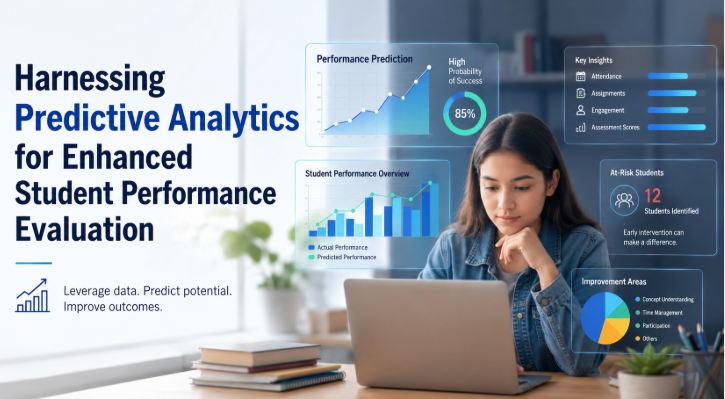
Introduction to Predictive Analytics in Education
Predictive analytics encompasses a variety of statistical techniques and methods that are used to analyze historical data and make forecasts about future outcomes. Within the realm of educational institutions, this approach has emerged as a powerful tool for evaluating student performance and improving educational outcomes. By leveraging data derived from various sources—such as assessments, attendance records, and even social factors—educators can gain invaluable insights into student behaviors and academic challenges.
In essence, predictive analytics translates complex data into actionable information. Educators and administrators can identify at-risk students early, allowing for timely interventions. This not only enhances student engagement but also facilitates tailored learning experiences to meet individual needs. The analytics can range from simple predictive models, using linear regressions, to more complex machine learning techniques that create deep insights into student trajectories.
Beyond educational evaluation, predictive analytics has applications in various fields, including healthcare, finance, and marketing, showcasing its versatility across different sectors. For example, in healthcare, predictive models are utilized to foresee patient outcomes based on historical medical data, while in marketing, consumer behaviors can be forecasted to optimize product offerings. Similar methodologies can be applied within education to anticipate trends in student performance, thereby supporting strategic decision-making.
As educational institutions increasingly embrace data-driven approaches, the integration of predictive analytics presents a transformative opportunity. By harnessing these methodologies, stakeholders can advance their understanding of the factors influencing student performance, ultimately leading to improved educational strategies and outcomes.
Understanding Student Performance Metrics
Evaluating student performance is a multifaceted process that relies on various metrics and indicators. These metrics not only serve as a means of assessing student capabilities but also play a pivotal role in informing educational strategies. Key performance indicators include grades, attendance, participation, and standardized test scores, each of which offers distinct insights into a student’s academic journey.
Grades are perhaps the most widely recognized metric, reflecting a student’s mastery of course material. They are often derived from assignments, quizzes, and exams, providing a cumulative view of performance over time. In contrast, attendance serves as an attendance metric that tracks a student’s engagement with their learning environment. Regular attendance is often correlated with higher academic performance, as it indicates a student’s commitment to their education.
Participation metrics capture a student’s involvement in classroom activities and discussions, indicating both engagement and understanding. Active participation enhances learning by allowing students to contribute to discussions and collaborate with peers, ultimately enriching the educational experience. Furthermore, standardized test scores offer a more uniform measure of student performance across different educational systems. These tests are designed to assess knowledge and skills in various subjects, providing essential data that can inform educational policy and curriculum development.
Traditionally, these performance metrics are collected through various means, such as grading systems, attendance records, and periodic assessments. However, as technology evolves, the methods of collecting and analyzing this data are becoming increasingly sophisticated. Schools now utilize software solutions that enable real-time tracking and analysis of student performance metrics. This advancement allows educators to identify trends and address issues promptly. By harnessing these metrics effectively, educators can strive to enhance the overall student experience and performance outcomes.
The Role of Data in Predictive Analytics
Data serves as the cornerstone of predictive analytics, especially within the context of student performance evaluation. The effectiveness of predictive models hinges on the availability of diverse and comprehensive datasets that encapsulate various aspects of student achievement and engagement. There are primarily two types of data that contribute to these evaluations: qualitative and quantitative data.
Quantitative data encompasses measurable variables, making it a critical component in predictive analytics. Common examples include standardized test scores, attendance records, and demographic statistics. Such data enable education professionals to identify patterns and trends that may correlate with student performance outcomes. For instance, frequent absences may indicate potential challenges faced by students, thus triggering the need for targeted interventions.
Conversely, qualitative data adds a nuanced layer to performance evaluations by capturing the subjective experiences of students. This type of data can be gathered through surveys, interviews, and observational methods. It highlights factors such as student motivation, engagement levels, and perceived barriers to learning. Incorporating qualitative insights allows for a more holistic understanding of student performance, beyond what quantitative data alone can reveal.
To ensure the effectiveness of predictive analytics, collecting accurate and relevant data is paramount. Educational institutions may employ various data collection methods. Surveys and questionnaires can facilitate the gathering of both qualitative and quantitative data, while learning management systems can provide rich datasets regarding students’ academic activities. Furthermore, institutional research may play a pivotal role in deriving necessary statistics and trends necessary for refined modeling.
In conclusion, the integration of both qualitative and quantitative data is essential in predictive analytics for evaluating student performance. By leveraging diverse data types and employing effective data collection methods, educational institutions can enhance their predictive models, leading to improved academic outcomes for students.
Frameworks and Models of Predictive Analytics
Predictive analytics, in the context of student performance evaluation, relies on a variety of frameworks and models that leverage data to anticipate educational outcomes. By utilizing machine learning algorithms, educators and institutions can gain insights that inform teaching methodologies and enhance learning experiences. One of the most foundational approaches within this realm is regression analysis. This statistical technique assesses the relationship between a dependent variable, such as student performance, and one or more independent variables, such as attendance or homework completion rates. Through regression analysis, institutions can identify significant predictors of outcomes and thus intervene strategically.
Another widely employed framework in predictive analytics is the decision tree algorithm. This model works by splitting a dataset into branches that represent different outcomes based on certain attributes. For example, a decision tree could illustrate how different combinations of student engagement levels and socioeconomic factors impact academic performance. The clarity provided by decision trees aids educators in understanding the conditions that lead to successful outcomes, facilitating targeted interventions.
Moreover, ensemble methods, which combine multiple predictive models to improve performance, are becoming increasingly prominent in educational analytics. Techniques such as random forests and gradient boosting excel in handling complex datasets often found in educational environments. These models enhance the predictive accuracy by aggregating the outputs of various algorithms, thus reducing the likelihood of overfitting and improving generalization to unseen data.
Other machine learning frameworks, such as neural networks and support vector machines, are also gaining traction in the academic sector. Although they require larger datasets and computational power, their ability to uncover intricate patterns in data can yield significant insights into student performance. Overall, the integration of these frameworks and models not only enhances the ability to evaluate student performance but also enables educators to tailor their instructional strategies effectively, ultimately fostering a more productive learning environment.
Case Studies of Predictive Analytics in Action
Predictive analytics has become a transformative tool in educational institutions, allowing for informed decision-making that enhances student performance. One notable example is the Georgia State University initiative, which implemented a predictive analytics system to identify students at risk of dropping out. By analyzing data such as student demographics, academic performance, and engagement levels, the university was able to intervene with personalized support strategies. This initiative resulted in a remarkable increase in student retention rates, with the university reporting a growth of approximately 23% over several years.
Another prominent case is the University of Arizona, which utilized predictive analytics to improve advising strategies and course selection. By leveraging data from past student performance, the university was able to forecast course demand and identify potential bottleneck classes. This foresight enabled the institution to offer additional sections of high-demand courses, consequently improving student satisfaction and overall academic outcomes. The results showed a significant increase in students achieving their desired learning outcomes, reinforcing the value of data-driven decision making.
In a different context, the Western Governors University (WGU) adopted predictive analytics to enhance its competency-based education model. By analyzing patterns in online student behavior, WGU could identify learners who might need additional resources or guidance. This tailored approach not only led to a more personalized educational experience but also resulted in higher completion rates compared to traditional university models. Analysis indicated a stark increase in the number of students completing their degrees, showcasing how predictive analytics can address diverse educational needs.
Challenges in Implementing Predictive Analytics
The integration of predictive analytics in evaluating student performance is laden with various challenges. One significant issue is data privacy, which has emerged as a major concern for educational institutions. As predictive analytics relies heavily on student data—ranging from academic records to behavioral metrics—maintaining confidentiality and compliance with regulations such as FERPA (Family Educational Rights and Privacy Act) becomes paramount. Institutions must ensure that adequate safeguards are in place to protect sensitive information while leveraging it for academic progress analysis.
Furthermore, the accuracy of predictive models poses another hurdle. Predictive analytics can provide insights into potential student performance; however, the quality of its predictions heavily depends on the data used. Incomplete, outdated, or biased data may lead to flawed assessments, potentially resulting in misinterpretations that can affect educational strategies adversely. Consequently, institutions must frequently evaluate not just their predictive models but also the integrity of their data sources to ensure reliability.
Moreover, successful implementation of predictive analytics requires a well-trained staff. Educators and administrative personnel may need extensive training to understand how to interpret analytical reports and integrate them into pedagogical practices effectively. This training process can be resource-intensive and may encounter resistance due to fears of technology or apprehension about the implications of data-driven decision-making. Thus, allocating time and resources for professional development in this arena is crucial for overcoming barriers to effective adoption.
In conclusion, for institutions wishing to enhance student performance evaluation through predictive analytics, addressing these challenges becomes critical. By focusing on data privacy, ensuring accuracy, and investing in staff training, they can successfully harness the power of predictive analytics to foster better educational outcomes.
Best Practices for Using Predictive Analytics
Implementing predictive analytics in educational settings requires careful consideration of several best practices. Firstly, effective data management is paramount. Schools and educational institutions should prioritize the accuracy, completeness, and timeliness of the data they collect. This includes regular audits of data sources and ensuring that the information is up-to-date and relevant. By maintaining high-quality data, educators can make informed decisions based on reliable analytics.
Collaboration across different departments is another crucial practice. It is vital for educators, administrators, and IT professionals to work together to ensure that the predictive analytics system is aligned with the institution’s goals. By fostering an environment of open communication and teamwork, stakeholders can share insights and feedback, facilitating a better understanding of student performance metrics and needs. Regular meetings can help in discussing findings, challenges, and improvements that need to be made in the predictive analytics strategy.
Additionally, continuous evaluation of the analytics system plays a significant role in its success. Educational institutions must not only implement predictive analytics but also monitor its effectiveness over time. This can be achieved through ongoing assessments, where the results of predictions are compared with actual student performance outcomes. Adjusting algorithms and methodologies based on these insights ensures that the predictive models remain accurate and relevant. By establishing a routine for evaluation and adjustment, organizations can continuously improve the impact of predictive analytics on student performance evaluation, ultimately enhancing educational outcomes.
Future Trends in Predictive Analytics in Education
The landscape of education is rapidly evolving, largely due to advancements in technology and analytical methods. One of the most significant future trends in predictive analytics lies in the integration of artificial intelligence (AI) and machine learning. These technologies are capable of analyzing vast amounts of data quickly and accurately, providing deeper insights into student performance and learning patterns. For example, AI algorithms can identify at-risk students by processing historical data, learning behaviors, and engagement levels, enabling educators to intervene proactively.
Moreover, the increasing role of big data in education cannot be overstated. Educators and institutions are now leveraging data analytics to inform instructional strategies and improve student outcomes. The harnessing of big data allows for a more personalized education experience, where tailored interventions can be developed to cater to individual student needs. As more educational institutions adopt this data-driven approach, predictive analytics will play a crucial role in fostering enhanced student performance.
Additionally, the trend of real-time analytics is becoming more prevalent. The ability to analyze data in real-time allows educators to monitor student performance instantly, allowing for quicker adaptations to teaching methods and course materials. This proactive approach can significantly improve student engagement and ultimately enhance their academic success. Moreover, through mobile applications and software platforms, students can receive immediate feedback on their performance, promoting self-reflection and continuous improvement.
Finally, the collaboration between educational institutions and technology companies is expected to spur innovative developments in predictive analytics tools. As partnerships grow, educational leaders will gain access to a wider array of technological solutions, enhancing the effectiveness of performance evaluation systems. In this context, the future of predictive analytics promises to offer robust frameworks for assessing student performance, leading to transformative educational practices.
Conclusion and Call to Action
In the context of educational advancement, the role of predictive analytics emerges as profoundly impactful in evaluating student performance. By leveraging data insights, educational institutions can identify trends and patterns that may indicate how students are likely to perform in both the short-term and long-term. This strategic application of technology allows for a more personalized approach to education, whereby interventions can be tailored to meet the unique needs of each student.
Moreover, predictive analytics empowers educators and administrators to make informed decisions that can lead to improved academic outcomes. When institutions adopt such data-driven methodologies, they can enhance their ability to allocate resources efficiently and implement targeted support programs that facilitate better learning experiences. Consequently, the integration of predictive analytics not only enhances evaluation processes but also fosters an environment where students can thrive academically.
It is imperative for educational stakeholders—such as policymakers, school leaders, and curriculum developers—to recognize the significance of these advanced analytics tools. By committing to the implementation of predictive models, schools can ensure they are at the forefront of educational innovation. Furthermore, collaboration across various educational sectors can lead to the sharing of insights and best practices, enhancing the overall effectiveness of performance evaluation.
Therefore, it is crucial for educational institutions to embrace predictive analytics as a fundamental component of their operational strategies. By doing so, they not only stand to improve academic performance evaluation but also prepare their students for success in an increasingly data-driven world. Stakeholders are encouraged to invest in training, technology, and collaborative initiatives that leverage predictive analytics, ultimately paving the way for improved educational outcomes for all students.