


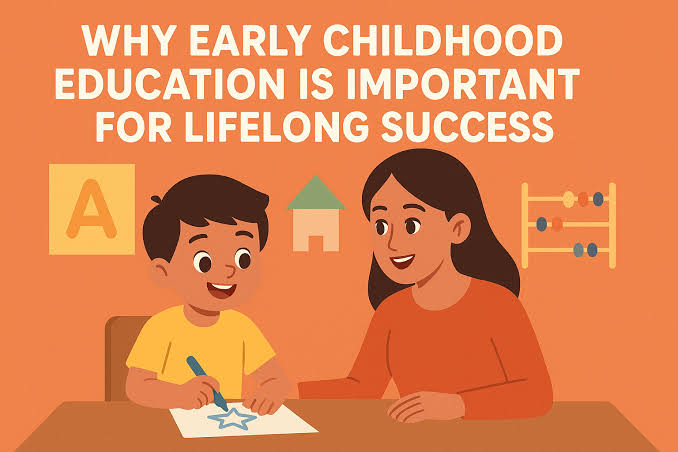
Understanding Early Childhood Education
Early childhood education (ECE) refers to the structured and intentional learning experiences for children from birth to eight years of age. This critical period is recognized for significant growth in cognitive, social, and emotional development, forming the foundation for lifelong learning and success. The objective of ECE is to create nurturing environments that promote holistic development through various educational practices.
The range of early childhood education encompasses several forms, including preschool, pre-kindergarten, and daycare programs. Each of these forms serves to enhance a child’s learning experience through age-appropriate curricula and activities. Preschools typically cater to children who are three to five years old and focus on developing essential skills such as language, literacy, and basic mathematics through interactive play and structured routines. Meanwhile, pre-kindergarten programs aim primarily at preparing children for the formal school system, by enhancing their readiness for Kindergarten.
Moreover, daycare centers also play an integral role in early childhood education. They not only provide supervision and care for working parents but often incorporate educational activities to aid a child’s development. These programs emphasize critical developmental milestones, such as fostering social interactions, problem-solving abilities, and emotional resilience, which are fundamental to a child’s future learning experiences.
As children engage in cognitive and social activities, they learn to navigate relationships with peers and caregivers. ECE focuses on creating environments that stimulate curiosity and creativity, allowing children to explore their surroundings and build confidence. By laying this educational foundation during the early years, early childhood education significantly influences future academic performance and personal growth, making it a cornerstone of successful lifelong learning.
The Foundation for Lifelong Learning
Early childhood education (ECE) plays a pivotal role in establishing the groundwork for a child’s future academic journey. Research indicates that experiences and skills acquired at a young age are strongly correlated with later educational achievements. High-quality early educational programs are instrumental in fostering critical foundational skills, including literacy and numeracy, which are essential for academic success.
Longitudinal studies have shown that children who participate in structured ECE programs display enhanced literacy skills, with a significant improvement in their vocabulary and phonemic awareness when compared to their peers who did not have the benefit of such early education. This strong foundation in language sets the stage for effective communication and comprehension abilities, which are vital throughout an individual’s academic life.
Furthermore, numeracy skills developed in early childhood are equally crucial. ECE programs often integrate playful learning experiences that nurture children’s ability to understand basic mathematical concepts through engaging activities. Such early exposure to numbers and relationships fosters a sense of confidence, enabling children to approach more complex mathematical concepts later in their education.
Critical thinking skills, which are paramount for problem-solving and reasoning, are also nurtured in high-quality early childhood settings. By providing children with opportunities to explore, question, and think creatively, ECE encourages them to develop their analytical skills. This early engagement not only prepares children for future academic challenges but also equips them with the competencies needed to navigate various life situations.
Overall, the correlation between early learning experiences and long-term academic success underscores the importance of investing in quality ECE. Such programs not only enhance literacy and numeracy but also lay the groundwork for critical thinking and problem-solving abilities that are essential for lifelong learning.
Social and Emotional Development
Early childhood education plays a pivotal role in the social and emotional development of children. Within a structured educational setting, children engage with peers and educators, fostering essential social skills such as sharing, cooperation, and communication. These interactions are crucial as they teach children how to effectively express themselves and understand the perspectives of others. The classroom environment provides a safe space for children to explore relationships, developing the ability to resolve conflicts and build friendships.
Moreover, early education encourages emotional regulation, a vital skill for lifelong success. Through guided activities, children learn to identify their feelings and manage their emotions in constructive ways. Educators facilitate discussions that help children articulate their experiences, promoting healthy emotional expression. As children encounter challenges such as taking turns or managing disappointments, they develop resilience—learning that setbacks are a natural part of life.
Another significant aspect of social-emotional development in early childhood education is the cultivation of empathy. By participating in group activities, children practice putting themselves in others’ shoes, fostering a sense of compassion. This ability to empathize is foundational for cooperative interactions throughout their lives, influencing their personal and academic relationships. Furthermore, early childhood education frameworks often include strategies to promote understanding and acceptance of diversity, which is essential in our increasingly interconnected world.
In summary, the integration of structured social experiences within early childhood education helps children develop critical social and emotional competencies. By nurturing skills such as empathy, resilience, and cooperation, early educational settings lay the groundwork for children to succeed in their future relationships and navigate the complexities of life effectively.
Cognitive Development and School Readiness
Early childhood education (ECE) plays a pivotal role in fostering cognitive development, which is crucial for school readiness. During the formative years, children experience rapid brain growth, and the experiences they encounter can profoundly influence their future learning capabilities. Engaging in structured ECE programs provides children with a rich environment that nurtures critical thinking, creativity, and problem-solving skills essential for academic success.
Activities incorporated into ECE curricula, such as interactive storytelling, hands-on science experiments, and open-ended art projects, stimulate children’s imaginations and enhance their cognitive abilities. These activities encourage children to ask questions, make predictions, and explore outcomes, thereby nurturing their natural curiosity about the world. By integrating play into learning, ECE gives children the tools they need to develop essential cognitive skills while making learning enjoyable.
Moreover, effective teaching strategies within early childhood education emphasize collaborative learning through group activities, which foster social and cognitive skills. Working as part of a team helps children learn to communicate their ideas, listen to others, and appreciate different perspectives. These interactions not only improve their problem-solving skills but also prepare them for the collaborative nature of modern classrooms.
Additionally, caregivers in ECE environments employ scaffolding techniques, whereby they provide support to children as they explore new concepts. This method allows children to gradually take on more complex tasks as their confidence and skills develop. Such an approach ensures that they build a solid foundation in foundational knowledge areas, preparing them for more advanced learning in school.
Economic Benefits of Early Childhood Education
The value of early childhood education (ECE) extends beyond the classroom, presenting significant economic advantages for both families and society. Investing in high-quality ECE programs yields a substantial return on investment (ROI), with research demonstrating that every dollar spent can generate a return of up to $7. Such figures reflect not only immediate educational benefits but also long-term economic gains through workforce development. A well-educated populace translates into increased productivity and enhanced economic output.
Moreover, ECE plays a crucial role in workforce readiness. Children who participate in quality early educational settings are more likely to succeed academically, leading to higher high school graduation rates and increased likelihood of pursuing higher education or skilled professions. This educational trajectory ultimately strengthens the economy by providing a skilled and capable workforce, thus lowering unemployment rates and driving innovation.
Beyond direct economic impacts, early childhood education also minimizes future social costs. Children who receive adequate early education are less likely to encounter issues such as academic failure or delinquency later in life. By addressing these challenges early, society can see a marked reduction in expenditures for social services, criminal justice, and healthcare. Consequently, the preventive nature of ECE reduces long-term pressure on public systems, translating into savings that can be redirected toward other critical areas.
In essence, investing in early childhood education proves to be a prudent economic strategy. By prioritizing ECE, families and society benefit from increased academic and professional achievements for children, as well as significant financial savings linked to a reduction in social costs and an overall enhancement in community well-being. Thus, the positive economic implications of ECE underscore its importance as a foundational investment in future generations.
The Role of Parents and Caregivers
Parents and caregivers have a crucial role in fostering early childhood education, which forms the foundation for lifelong success. Their involvement is vital in shaping children’s attitudes toward learning and in bridging the gap between home and educational systems. Encouraging curiosity and providing support at home can significantly enhance a child’s educational experience.
To effectively engage with early childhood education, families can begin by communicating with educators to understand curricula and learning objectives. Being informed about what their children are being taught in school enables parents to align their home activities with educational goals. This collaboration between parents and educators can lead to a more cohesive learning environment for children.
Supporting learning at home can also involve establishing a routine that includes educational play and reading together. Activities such as storytelling or discussing daily events can enhance language development and cognitive skills. Parents can highlight everyday learning opportunities by integrating educational games into playtime, thereby making learning a fun and enjoyable experience for their children.
Choosing the right educational environments is another essential aspect of parental involvement. When considering preschools or early learning centers, families should evaluate programs that emphasize social, emotional, and cognitive development. Watching for indicators such as teacher qualifications, curriculum structure, and interactive learning can help parents select an enriching setting that supports their child’s growth.
In effect, the collaboration between parents and caregivers and the educational system is pivotal for secure and enriching experiences in early childhood education. By actively participating in their children’s education, parents lay a strong foundation for their future academic and personal success. This involvement not only aids in the development of essential skills but also strengthens the parent-child bond, creating a nurturing and inspirational learning environment.
Challenges in Accessing Early Childhood Education
Accessing quality early childhood education (ECE) is a fundamental concern for many families, yet various barriers impede this essential process. Socioeconomic factors prominently influence a family’s ability to enroll their children in quality ECE programs. Families with lower income levels often struggle to afford tuition costs, especially when these programs are not subsidized or funded by public entities. This financial strain can lead to situations where parents must forego early education opportunities, placing their children at a disadvantage compared to peers from more affluent backgrounds.
Geographical disparities further complicate access to early childhood education. In many rural areas, there are significant shortages of ECE facilities. Families residing in these regions may have to travel long distances to access early learning programs or may find that local offerings do not meet quality standards. Conversely, urban areas may provide more options, but these can be oversubscribed, creating long waiting lists and further limiting access for low-income families. Such disparities contribute to a systematic inequity in educational opportunities available to children based on their geographic location.
Systemic issues, such as inadequate funding for early education initiatives and a lack of trained educators, also play a role in hindering access. Many providers may struggle to maintain affordable tuition rates while ensuring that the education quality meets required standards. To combat these challenges, community initiatives and policy reforms are essential. Advocacy for wider financial support, grants for low-income families, and legislative measures aimed at enhancing funding for ECE programs can significantly improve access. By fostering partnerships between local governments, nonprofits, and educational institutions, communities can create pathways to ensure all children have equitable access to quality early childhood education, enabling a strong foundation for future learning.
Policy Implications and Advocacy
The landscape of early childhood education (ECE) is significantly influenced by governmental and nonprofit organizations that advocate for policies and legislative initiatives aimed at enhancing accessibility and funding. These entities play a crucial role in shaping a framework that supports quality early learning experiences for children. The involvement of policymakers in ECE can be seen through various legislative efforts at both local and national levels, which often seek to increase funding allocations and improve program standards. A notable example is the implementation of initiatives that target underserved communities, ensuring that all children have equitable access to essential educational resources.
Advocacy efforts are pivotal in driving public awareness regarding the critical importance of early education. Nonprofit organizations, community leaders, and coalitions work tirelessly to promote the message that investing in ECE translates into long-term benefits, including higher rates of academic achievement, improved social skills, and reduced societal costs in areas such as healthcare and criminal justice. Collaborative advocacy campaigns can mobilize support from various stakeholders, urging lawmakers to prioritize funding for quality early childhood education programs. Moreover, these campaigns often involve grassroots movements that empower parents and community members to voice their needs, helping to foster a strong base of support for policy change.
Public awareness plays an equally vital role in the advocacy landscape. As awareness grows regarding the long-term benefits of ECE, it becomes increasingly important for the general populace to understand how these policy decisions ultimately impact children’s lives. By encouraging discussions around ECE, communities can create a demand for improved services and, in turn, prompt local and state governments to allocate necessary resources. Ultimately, the fusion of policy initiatives, advocacy efforts, and public awareness is essential to championing early childhood education, ensuring its critical role in fostering lifelong success for future generations.
Conclusion: Investing in Our Future
In reflecting upon the significance of early childhood education (ECE), it becomes evident that the foundation laid during these formative years is pivotal for long-term personal and societal success. The benefits of high-quality ECE programs extend far beyond individual learning, influencing a child’s approach to education, social relationships, and emotional development. It is crucial to recognize that investing in early childhood education represents not only a commitment to future generations but also an investment in the social and economic fabric of our communities.
Throughout this discussion, we have highlighted various aspects that illustrate the transformative impacts of ECE. These programs foster essential cognitive, emotional, and social skills, equipping children to navigate the complexities of later life. Studies indicate that children who experience robust early education are more likely to achieve academic success, develop healthier lifestyles, and engage in their communities, effectively breaking cycles of poverty and disadvantage.
Furthermore, prioritizing ECE is a collective responsibility. Policymakers, educators, parents, and community organizations must collaborate to advocate for access to high-quality early childhood education programs. By directing resources and attention towards ECE, we are not merely investing in individual children; we are cultivating a more educated workforce and stronger society overall. The returns on this investment manifest in reduced crime rates, higher earning potential, and increased civic participation, underscoring the profound, positive ripple effects of early education.
In conclusion, as we stand at the intersection of advocacy and action, it is imperative that we emphasize the importance of early childhood education in our dialogues. By fostering a shared understanding of its critical role, we can ensure that future generations are provided with the tools necessary for their lifelong success.