


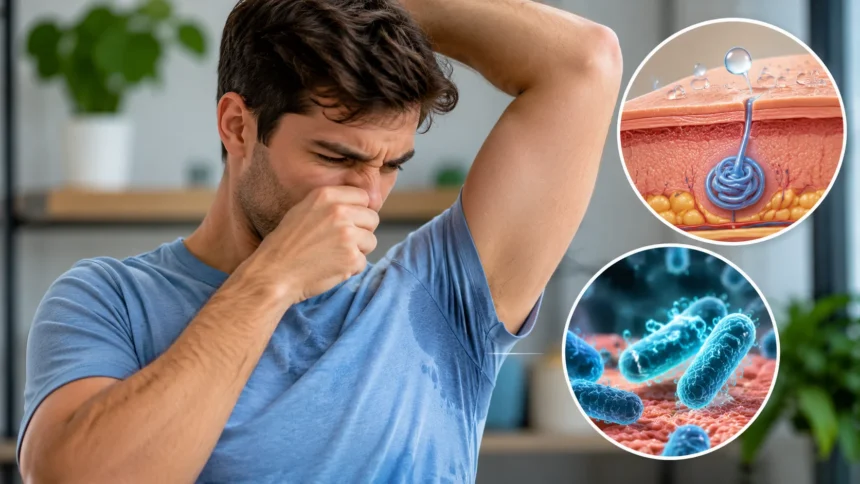
Body odor is a natural part of how the human body works, but it can sometimes become noticeable or uncomfortable. Everyone sweats, and everyone has bacteria living on their skin. However, sweat itself is usually not responsible for the smell. Body odor mainly develops when certain skin bacteria break down substances found in sweat and skin secretions.
Understanding what causes body odor and how sweat works can help you manage unwanted smells without worrying about normal bodily functions. Factors such as hormones, clothing, hygiene, diet, and health conditions can influence how your body smells. This guide explains the science behind sweating, common causes of body odor, and practical ways to stay comfortable and fresh.
What Is Body Odor?
Body odor is the smell that develops when substances on the skin interact with bacteria and other microorganisms. It is especially noticeable in areas such as the armpits, feet, and groin. These body parts often provide warm, moist environments where bacteria can grow and break down sweat-related compounds.
The medical term for noticeable or unpleasant body odor is bromhidrosis. However, having a natural body scent does not automatically mean someone has a medical problem. Body odor varies between individuals because of differences in skin bacteria, sweat composition, hormones, genetics, and everyday environmental conditions.
Some people notice stronger body odor during exercise, stressful situations, or hot weather. Others experience changes during puberty or when taking certain medications. Understanding these differences helps explain why the same hygiene routine may produce different results for different people and why body odor is not always related to cleanliness.
How Does Sweat Actually Work?
Sweating is one of the body’s natural cooling systems. When your internal temperature rises, your brain sends signals that activate sweat glands in your skin. These glands release moisture onto the skin’s surface, allowing heat to escape as the moisture evaporates into the surrounding air.
The hypothalamus, a small area of the brain, helps regulate body temperature. It responds to signals related to heat, physical activity, and other conditions affecting the body. When cooling is necessary, the nervous system activates sweat glands to help prevent excessive increases in internal body temperature.
Sweat production can increase during exercise, hot weather, and emotional stress. The amount varies depending on activity, environment, individual physiology, and other factors. Sweating is a normal and important process because it helps the body maintain a stable internal temperature while supporting safe physical activity.
Why Does the Human Body Sweat?
The primary purpose of sweating is temperature regulation. Physical activity produces heat, and the body needs an effective way to release that heat. As sweat evaporates from the skin, it removes thermal energy and helps prevent overheating during exercise, warm conditions, and other situations that raise body temperature.
Sweating also occurs in response to emotional experiences such as anxiety, fear, or excitement. This type of sweating often affects the palms, soles, forehead, and underarms. It happens because the nervous system responds to emotional signals, even when the surrounding temperature has not changed significantly.
Although sweat contains small amounts of salts and other substances, cooling remains its main function. The kidneys and liver handle most of the body’s waste processing and removal. Therefore, sweating should not be considered a major detoxification method, despite popular claims about sweating out harmful substances.
What Are the Different Types of Sweat Glands?
The human body contains different types of sweat glands that perform distinct functions. The two main types involved in everyday sweating are eccrine and apocrine glands. Their locations, secretions, and responses to bodily signals help explain why some areas produce more noticeable odors than others.
Eccrine sweat glands are distributed across much of the body, including the forehead, palms, and soles. They release mostly water and electrolytes directly onto the skin’s surface. This sweat helps regulate body temperature and is generally associated with little odor when it is first produced.
Apocrine sweat glands are concentrated in areas such as the armpits and groin. They release secretions containing substances that certain skin bacteria can break down into odor-producing compounds. These glands become more active around puberty and contribute to the characteristic body odor that many people notice during adolescence and adulthood.
What Causes Body Odor?
Body odor mainly develops when bacteria on the skin break down substances found in sweat and other skin secretions. This process produces chemical compounds that create recognizable smells. Areas with apocrine sweat glands are particularly associated with stronger odor because their secretions provide materials that bacteria can transform.
The amount of sweat someone produces does not always determine how strongly they smell. A person may sweat heavily but have relatively little odor, while another may notice a stronger smell with less moisture. Differences in skin bacteria, sweat composition, and personal biology can explain these variations.
Environmental factors also influence body odor. Tight clothing, damp fabrics, warm temperatures, and limited airflow can allow moisture and odor-producing compounds to remain close to the skin. Understanding these influences makes it easier to choose comfortable clothing and hygiene practices without assuming that every noticeable smell indicates poor cleanliness.
Why Does Sweat Smell Bad Sometimes?
Fresh eccrine sweat usually has very little noticeable smell because it consists mainly of water and dissolved substances. However, moisture can create conditions that allow bacteria to remain active on the skin. When bacteria process certain skin secretions, the resulting compounds can produce an odor that becomes stronger over time.
The armpits are especially prone to noticeable body odor because they contain apocrine glands and naturally occurring bacteria. Warmth, moisture, and limited airflow can contribute to the process. Clothing may also retain sweat-related compounds, allowing odors to persist even after the skin has dried.
Different bacteria produce different odor compounds, which helps explain why body odor does not smell identical for everyone. Some odors may be described as sour, onion-like, or musky. These descriptions reflect variations in chemical compounds rather than a reliable way to identify someone’s hygiene habits or medical condition.
How Does Puberty Affect Body Odor?
Puberty brings hormonal changes that influence several body functions, including the activity of apocrine sweat glands. These glands become more active as the body matures, which can make underarm odor more noticeable. This is a normal developmental change and does not mean that something is wrong.
During puberty, changes in skin oil production and the skin’s microbial environment can also influence body scent. Some teenagers notice that their usual hygiene habits no longer manage odor as effectively as before. Simple adjustments, such as regular washing and using deodorant when needed, may help.
The timing and intensity of these changes differ between individuals. Some people develop noticeable body odor earlier, while others experience relatively mild changes. Understanding that puberty-related sweating is normal can help young people approach personal hygiene with confidence rather than embarrassment or unnecessary concern.
Why Do Armpits Produce Stronger Body Odor?
Armpits contain a relatively high concentration of apocrine sweat glands, which contribute to characteristic underarm odor. Their secretions contain substances that certain bacteria can convert into noticeable-smelling compounds. This biological process explains why armpit odor can be stronger than the smell associated with sweating elsewhere on the body.
The underarm area also tends to remain warm and moist because the arms naturally rest close to the torso. Limited airflow may allow sweat and odor-related substances to accumulate. These conditions can contribute to persistent smells, particularly during physical activity, warm weather, or periods of emotional stress.
Regular washing can help remove accumulated sweat, skin debris, and odor-producing substances. Deodorants may reduce odor, while antiperspirants help limit the amount of sweat reaching the skin’s surface. Choosing comfortable, breathable clothing can also improve airflow and reduce the buildup of moisture throughout the day.
What Causes Foot Odor?
Foot odor develops when sweat, skin microorganisms, and footwear conditions interact. The feet contain numerous eccrine sweat glands, which can produce significant moisture during physical activity or warm weather. When socks and shoes trap that moisture, bacteria can break down substances on the skin and create noticeable odors.
Shoes that remain damp for long periods may contribute to unpleasant smells. Certain materials also hold moisture more readily than others, making ventilation important. Wearing clean socks, choosing suitable footwear, and allowing shoes to dry between uses can help manage the environment where odor develops.
Foot hygiene is another important consideration. Washing the feet and drying carefully between the toes can reduce accumulated moisture and skin debris. Persistent odor accompanied by itching, peeling, or irritation may indicate a skin condition, such as a fungal infection, that requires additional attention.
Can Diet Affect Body Odor?
Diet can influence body odor because some foods contain substances that are processed and released through different bodily pathways. Garlic, onions, and certain spices may temporarily change how a person’s breath or body smells. The effect varies depending on the food, amount consumed, and individual metabolism.
Certain dietary patterns may also influence body scent under specific circumstances. For example, prolonged fasting or very low carbohydrate intake can sometimes produce a fruity or acetone-like breath odor. However, ordinary variations in body odor are not reliable indicators of nutritional health or specific dietary problems.
Maintaining a varied, balanced diet supports overall well-being, but avoiding entire food groups is generally unnecessary for managing ordinary body odor. If a particular food consistently seems to affect your scent, observing that pattern may be useful. Persistent or unusual changes should not automatically be blamed on diet without considering other possible explanations.
Can Stress and Anxiety Cause Body Odor?
Stress can increase sweating because emotional signals activate parts of the nervous system. This response may occur during public speaking, examinations, difficult conversations, or unfamiliar situations. Stress-related sweating often affects the underarms, palms, and soles, even when the surrounding temperature is relatively comfortable.
Underarm sweating during emotional stress can involve glands and secretions associated with body odor. When bacteria break down odor-producing substances, noticeable smells may develop. This explains why some people experience stronger underarm odor during stressful moments compared with ordinary sweating caused mainly by heat.
Managing stress may help reduce some episodes of emotional sweating, although it will not eliminate normal sweat production. Comfortable clothing, appropriate hygiene products, and simple relaxation practices can provide practical support. Persistent excessive sweating that interferes with everyday activities may be worth discussing with a healthcare professional.
How Do Hormones Influence Body Odor?
Hormones affect sweat gland activity and other bodily processes that influence natural body scent. Puberty is one of the clearest examples because hormonal development changes apocrine gland activity. However, hormonal changes can also occur during menstruation, pregnancy, menopause, and other normal stages of life.
These changes may influence sweating patterns, skin conditions, or the way someone perceives body odor. The effects are not identical for everyone, and many hormonal shifts cause little noticeable difference. Factors such as temperature, stress, medication, and clothing can also influence odor at the same time.
A gradual change in body odor is not necessarily a sign of illness. However, sudden, unexplained, or persistent changes may deserve medical attention, especially when accompanied by other symptoms. A healthcare professional can consider relevant medical history, medications, and possible health conditions rather than relying on odor alone.
Does Poor Hygiene Always Cause Body Odor?
Poor hygiene can contribute to body odor when sweat-related substances and skin debris accumulate over time. Regular washing removes many materials that bacteria use to produce odor. However, body odor can still occur in people who maintain good hygiene because the underlying process is a normal part of human biology.
The amount of sweating and the composition of skin secretions vary naturally. Someone who sweats heavily during exercise or experiences hormonal changes may notice odor despite regular bathing. This does not automatically indicate that they are unclean or failing to care for themselves properly.
A practical hygiene routine should focus on comfort and skin health rather than eliminating every trace of natural body scent. Gentle washing, clean clothing, and suitable deodorant products are often sufficient. Excessive scrubbing or frequent use of harsh products can irritate the skin and may create additional discomfort.
What Is the Difference Between Deodorant and Antiperspirant?
Deodorant is designed primarily to reduce or mask body odor. Some formulas contain ingredients that limit odor-producing bacterial activity, while others use fragrance to make smells less noticeable. Deodorants generally do not significantly reduce the amount of sweat the body produces during normal activities.
Antiperspirants work differently because they contain ingredients that temporarily reduce sweating in the area where they are applied. Aluminum-based compounds form temporary barriers within sweat ducts, limiting the amount of moisture reaching the skin. Less moisture can also help reduce conditions that contribute to certain odor problems.
Some personal care products combine deodorant and antiperspirant functions. Choosing between them depends on whether odor, moisture, or both are the main concern. People with sensitive skin may prefer fragrance-free options and should stop using products that cause persistent irritation or discomfort.
How to Reduce Body Odor Naturally
Regular washing is one of the most practical ways to manage body odor. Using a gentle cleanser on areas such as the underarms and feet helps remove accumulated sweat and odor-related substances. Drying the skin afterward is also useful because excess moisture can contribute to uncomfortable conditions.
Clean, breathable clothing can make a noticeable difference throughout the day. Cotton and suitable moisture-wicking fabrics may improve comfort depending on the activity and environment. Changing damp clothes after exercise and washing garments according to their care instructions can help prevent lingering odors from building up in the fabric.
Staying appropriately hydrated supports normal body function, especially during warm weather or physical activity. However, drinking extra water is not a guaranteed treatment for body odor. Consistent hygiene, comfortable clothing, and suitable personal care products are generally more dependable approaches than unproven home remedies or restrictive dietary changes.
How to Manage Excessive Sweating
Excessive sweating is sometimes called hyperhidrosis when sweat production goes beyond what is needed for ordinary temperature regulation. It may affect the underarms, palms, feet, face, or other areas. Some people experience it without another medical condition, while others develop increased sweating because of medications or underlying health problems.
Practical management may include using an antiperspirant, wearing comfortable fabrics, and changing damp clothing when necessary. Keeping the surrounding environment cool can also improve comfort. However, these measures may not fully control excessive sweating, particularly when it occurs without heat, exercise, or emotional triggers.
Healthcare professionals can recommend additional treatments when sweating significantly affects daily activities. Options may include prescription antiperspirants and other treatments selected according to the affected area and individual circumstances. Seeking advice is reasonable when excessive sweating causes ongoing discomfort, skin irritation, or difficulty with normal routines.
When Can Body Odor Indicate a Health Problem?
Most body odor is harmless and reflects normal interactions between sweat, skin bacteria, and personal biology. However, a sudden or persistent change in body scent may occasionally be associated with a medical condition. Changes related to infections, medications, or metabolic processes can sometimes influence how the body smells.
Certain unusual odors may occur alongside health conditions, but smell alone cannot establish a diagnosis. For example, fruity-smelling breath combined with excessive thirst, vomiting, or unusual breathing may require urgent medical evaluation. Other symptoms, including fever, unexplained sweating, or persistent skin irritation, also deserve appropriate attention.
If body odor changes noticeably without an obvious explanation, a healthcare professional can help investigate possible causes. They may review symptoms, medications, hygiene products, and relevant medical history. Early evaluation can provide reassurance when the change is harmless or identify treatment options when an underlying condition needs attention.
Common Myths About Sweat and Body Odor
One common myth is that sweat itself is always responsible for unpleasant body odor. In reality, fresh eccrine sweat usually has little smell. Many noticeable odors develop when skin bacteria break down particular substances, especially those associated with apocrine gland secretions in areas such as the underarms.
Another misconception is that sweating removes large amounts of toxins from the body. Although sweat contains small quantities of certain substances, its main purpose is cooling. The liver and kidneys perform most waste-processing functions, so excessive sweating should not be treated as a necessary detoxification practice.
A third myth is that people with body odor must have poor hygiene. Natural differences in hormones, bacteria, genetics, and sweating patterns can affect body scent even with regular washing. Understanding these factors encourages a more accurate and respectful approach to a normal bodily function.
Conclusion
Body odor develops mainly through interactions between skin bacteria and substances found in sweat and skin secretions. Sweating itself is an essential biological process that helps regulate body temperature. Understanding the roles of sweat glands, bacteria, and hormones makes it easier to recognize why natural body scent varies between individuals.
Managing body odor usually involves straightforward habits such as gentle washing, wearing clean clothing, and choosing suitable deodorants or antiperspirants. Comfortable fabrics and proper footwear care may also help reduce moisture buildup. There is no need to eliminate all sweating because the body depends on this process to stay cool.
Most body odor is normal and does not indicate a serious health problem. However, sudden changes, excessive sweating, or unusual symptoms may require professional medical advice. By understanding how sweat works and following practical hygiene habits, you can manage unwanted odor while respecting your body’s natural functions.
Frequently Asked Questions (FAQs)
What Is the Main Cause of Body Odor?
Body odor mainly occurs when certain bacteria on the skin break down substances found in sweat and skin secretions. This process produces odor-related compounds, especially in areas such as the armpits and groin.
Does Sweat Itself Have a Smell?
Fresh eccrine sweat usually has very little smell because it consists mainly of water and electrolytes. Noticeable body odor commonly develops when bacteria interact with substances released by certain sweat glands.
Why Do My Armpits Smell Even After Showering?
Underarm odor can return after showering because normal skin bacteria and sweat gland secretions remain part of the body’s natural environment. Hormones, sweating patterns, clothing, and personal biology can influence how quickly odor develops.
Can Drinking More Water Reduce Body Odor?
Staying hydrated supports healthy body functions, particularly during sweating and physical activity. However, drinking additional water does not reliably eliminate body odor, which is mainly influenced by skin bacteria and odor-producing secretions.
When Should I See a Doctor About Body Odor?
Consider medical advice if body odor changes suddenly, becomes unusually persistent, or occurs alongside excessive sweating or other symptoms. A healthcare professional can assess possible causes and recommend suitable treatment when necessary.