


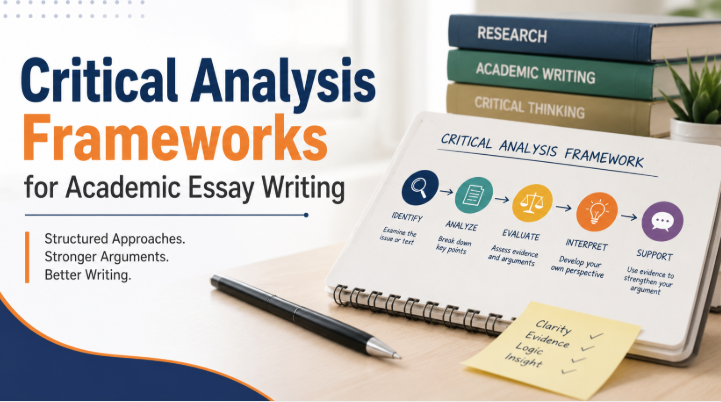
Introduction
Critical analysis is an essential aspect of academic writing that focuses on evaluating and interpreting various forms of information, such as texts, data, and arguments. It involves a meticulous examination of the material to identify underlying assumptions, biases, and implications. Critical analysis goes beyond merely summarizing or describing content; it requires the reader to engage thoughtfully with the material, assessing its strengths and weaknesses comprehensively.
This skill is particularly vital for students and writers, as it enables them to develop an informed viewpoint and present well-reasoned arguments in their essays. The capacity to critically analyze information allows writers to distinguish between mere opinions and substantiated claims, thus fostering a more profound understanding of the topic at hand.
It is crucial to differentiate critical thinking from other cognitive processes. While critical thinking entails evaluating and synthesizing information logically to arrive at a judgment, other forms of thinking, such as creative thinking or routine thinking, may not emphasize analysis or evaluation in the same way. For instance, creative thinking often focuses on generating new ideas, whereas routine thinking may involve habitually responding to situations without in-depth analysis.
In the context of academic writing, critical analysis is paramount. It infuses essays with depth and rigor, ensuring that arguments are not only well-articulated but also substantiated with evidence and analysis. By engaging in critical analysis, writers can enhance the quality of their essays, making them more persuasive and informative. This process also cultivates a mindset of inquiry, encouraging students to question sources and the validity of arguments, enriching their academic experience further.
The Importance of Critical Analysis Frameworks
Employing critical analysis frameworks in academic essay writing is essential for a systematic approach to evaluating texts, arguments, and evidence. These frameworks serve as guides that facilitate deeper understanding by breaking down complex information into manageable components. By utilizing structured methodologies, students and scholars can critically evaluate the effectiveness of the claims being made and the quality of the evidence that supports them.
One of the primary benefits of using critical analysis frameworks is the coherence they bring to academic essays. When writers adopt these frameworks, they create a clear and logical flow of ideas. This helps in organizing thoughts methodically, ensuring that each point made in the essay is well supported and contributes to the overarching argument. Furthermore, frameworks often delineate specific criteria for analysis, encouraging writers to think critically about their sources, the relevance of the arguments presented, and their implications.
Moreover, critical analysis frameworks enhance the depth of academic essays. By encouraging a multifaceted examination of the materials, writers can uncover underlying assumptions, biases, and implications that might not be immediately evident. This thorough investigation enriches the reader’s experience, fostering a comprehensive understanding of the subject matter. Consequently, academic essays that incorporate these analytical frameworks tend not only to be more persuasive but also more insightful, as they reflect a thoughtful engagement with the topic.
In conclusion, the integration of critical analysis frameworks into academic essay writing is vital for fostering coherence and depth. By structuring the analysis of texts and evidence effectively, these frameworks enhance the overall quality of scholarly work, equipping writers with the tools necessary for critical engagement in their respective disciplines.
Common Critical Analysis Frameworks
Critical analysis frameworks provide structured methodologies for evaluating information and arguments in academic writing. One of the most recognized frameworks is the SWOT analysis, which examines the Strengths, Weaknesses, Opportunities, and Threats related to a particular subject or issue. This tool is particularly effective for a strategic assessment of both internal and external factors influencing a scenario, allowing writers to deliver a balanced analysis.
Another important framework is the PEST analysis, which focuses on the Political, Economic, Social, and Technological factors affecting a subject. This methodology is instrumental in understanding external influences that may impact the area of study. By dissecting these components, writers can contextualize their arguments within broader socio-political and economic settings, making their essays more comprehensive.
The Toulmin model offers a distinct approach by breaking arguments down into essential components: Claim, Ground, Warrant, Backing, Rebuttal, and Qualifier. This model prompts writers to substantiate their claims effectively and anticipate counterarguments, thereby enhancing the credibility of their essays. It encourages logical structure and systematic reasoning, which are pivotal in academic writing.
Thematic analysis, on the other hand, is widely used in qualitative research. This framework involves identifying and analyzing themes within the data, enabling writers to present a nuanced understanding of the subject matter. By organizing ideas around core themes, this analysis aids in highlighting patterns and constructing compelling narratives.
In summary, these critical analysis frameworks—the SWOT analysis, PEST analysis, the Toulmin model, and thematic analysis—are fundamental in academic writing. They not only enhance the clarity of arguments but also enrich the overall quality of academic discourse.
Using the Toulmin Model for Argumentative Analysis
The Toulmin model, developed by philosopher Stephen Toulmin, offers a robust framework for dissecting and constructing arguments in academic writing. It consists of six key components: claim, grounds, warrant, backing, rebuttal, and qualifier. Understanding these elements is essential for students who aim to enhance their argumentative essay writing.
The claim is the primary assertion or argument that one seeks to prove. This serves as the focal point of the essay and requires clarity and conviction to effectively engage the audience. Following this is the grounds, which provide the evidence or reasons supporting the claim. This aspect of the Toulmin model necessitates thorough research and analysis to ensure that the arguments are well-founded.
The warrant connects the grounds to the claim, often requiring an explanation or justification as to why the evidence is relevant. This component is crucial, as it often addresses assumptions or expectations that the audience may have. Additionally, the backing offers further support for the warrant, reinforcing its validity with additional evidence or data.
Acknowledging counterarguments is vital in argumentative writing, which is where the rebuttal component comes into play. This element allows writers to anticipate and address potential opposing views, thereby strengthening their position. Lastly, the qualifier expresses the degree of certainty regarding the claim, using terms such as “usually,” “likely,” or “always.” This inclusion demonstrates a nuanced understanding of the topic and acknowledges the complexity of the argument.
Incorporating the Toulmin model into essay writing not only enhances an argument’s clarity but also promotes critical thinking. By systematically addressing each component, writers can construct well-rounded essays that effectively present and critique different viewpoints.
Applying SWOT Analysis in Critical Analysis
SWOT analysis, an acronym for Strengths, Weaknesses, Opportunities, and Threats, serves as a robust framework for conducting critical analysis in academic writing. This systematic approach enables writers to dissect and evaluate texts and arguments comprehensively. The implementation of this model can illuminate significant dimensions of the subject, promoting a structured analysis.
Initially, the “Strengths” component requires the identification of compelling aspects within the text or argument. This may include the credibility of sources, the clarity of the argument presented, or the relevance of the evidence used. By pinpointing strengths, writers can construct a foundation for their analysis, presenting a balanced view that appreciates the effective elements of the argument.
Conversely, examining the “Weaknesses” allows for an in-depth critique of the subject matter. This phase may reveal gaps in logic, biases in argumentation, or insufficient evidence supporting claims made. Highlighting weaknesses provides an opportunity to engage more critically with the material, fostering a nuanced understanding of the subject.
The “Opportunities” aspect promotes forward-thinking analysis, examining how the text can address current issues or leverage emerging trends. Analyzing opportunities encourages writers to reflect on how the arguments can be expanded or adapted to new contexts, thus adding relevance to their critiques.
Finally, the “Threats” component involves considering external challenges that might undermine the text or argument’s validity. This could involve competing perspectives, shifts in societal norms, or evolving academic discourse. By recognizing potential threats, writers can articulate the limitations and contextual factors that impact the argument’s longevity and influence.
Incorporating SWOT analysis into critical evaluation enriches academic essays, allowing writers to present a comprehensive analysis that appreciates the complexities of texts and arguments. This structured approach not only enhances the overall quality of critical writing but also equips writers with a thorough understanding of the subject at hand.
Integrating PEST Analysis into Academic Essays
PEST analysis, which stands for Political, Economic, Social, and Technological analysis, serves as a strategic framework that can enhance the depth and rigor of academic essays. By employing this analytical tool, writers can systematically evaluate the broader context surrounding their subject matter, thereby reinforcing their arguments with well-rounded insights. In an academic essay, a thorough PEST analysis aids in exploring how external factors shape the topic under discussion.
The political component of PEST analysis examines the influence of government policies, political stability, and regulatory frameworks on the topic of interest. Understanding the political backdrop can help articulate arguments that reflect how governmental actions or political movements affect the subject matter directly. For instance, when writing about environmental policies, integrating political analyses can highlight the impact of legislation on sustainability practices.
The economic aspect involves scrutiny of economic trends, market forces, and financial conditions that may impact the topic. This component is essential in academic writing as it elucidates the economic implications relevant to various issues like consumer behavior, market trends, or funding for academic research. Incorporating economic perspectives enhances an essay’s analytical quality, making it more persuasive and substantiated.
Social factors encompass cultural norms, demographics, and societal values, which are critical in understanding audience perceptions and behaviors. Including social analyses enables writers to position their arguments within the prevailing societal context, enhancing the essay’s relevancy. Finally, the technological component assesses the influence of technological advancements on the subject. In today’s rapidly evolving world, acknowledging technological trends can provide insights into new methodologies or perspectives pertinent to academic discussions.
Overall, integrating PEST analysis as a framework in academic essays fosters a comprehensive understanding of the complexities surrounding a particular topic. This method not only enriches the content but also strengthens the validity of the arguments presented, aiding the writer in delivering a more impactful essay.
Thematic Analysis as a Framework for Academic Writing
In the realm of academic essay writing, thematic analysis serves as a significant framework that aids in dissecting texts and deriving critical insights. This analytical approach focuses on identifying recurring themes within a given body of work, allowing writers to connect abstract ideas to concrete evidence. By systematically analyzing these themes, academics can enhance their critical arguments and develop a cohesive narrative that resonates with their intended audience.
The process of thematic analysis begins with familiarization with the text. This preliminary step involves extensive reading and note-taking, which helps to uncover potential themes. Following this, the researcher categorizes the data by highlighting pertinent segments of the text that illustrate emerging patterns. Such categorization not only facilitates organization but also cultivates a deeper understanding of the material. It becomes evident that this structured method is pivotal in ensuring that every significant aspect of the text is considered.
Next, the analysis shifts towards the interpretation stage, where identified themes are scrutinized in relation to the thesis of the academic essay. This interpretation involves assessing the implications of each theme and its contribution to the overall argument. By integrating themes into their writing, authors can present persuasive arguments that are backed by solid evidence, thereby enhancing their credibility. Furthermore, thematic analysis encourages the exploration of nuances within the text, providing a rich context for the argument being made.
Ultimately, employing thematic analysis in academic writing not only strengthens the essay’s foundation but also enriches the reading experience. A well-structured thematic analysis enables writers to present their insights with clarity and depth, which is essential for engaging scholarly discussions. This framework provides a roadmap for critical engagement, making it a valuable tool in the academic writing repertoire.
Best Practices for Implementing Critical Analysis Frameworks
To effectively implement critical analysis frameworks in academic essay writing, it is essential to follow several best practices that can enhance clarity, coherence, and depth of analysis. The first step is to choose an appropriate critical analysis framework that aligns with the subject matter and the objectives of the essay. Various frameworks exist, including thematic analysis, comparative analysis, and structuralism, among others. Select a framework that not only complements the content but also aids in developing a structured argument.
Once a framework is chosen, it is important to ensure clarity in your analysis. This can be achieved by breaking down complex arguments into more manageable components and directly linking each point to the chosen framework. Use clear headings to delineate different sections of your analysis, thereby guiding your readers through your arguments. Additionally, employing examples from relevant literature will help to illustrate your points and create a stronger connection between theory and practice.
Maintaining a critical perspective throughout the writing process is crucial. Writers should continuously question assumptions, biases, and interpretations while adhering to their chosen critical analysis framework. This practice involves examining not just the text or subject matter, but also your own positionality and how it influences your arguments. Engaging with counterarguments is also a significant aspect of critical analysis; by recognizing and addressing opposing views, you add depth and rigor to your essay.
Finally, revisiting your analysis during the revision stage ensures that your arguments remain aligned with the framework. Evaluate the effectiveness of your analysis in addressing the essay prompt, and make adjustments where necessary. Incorporating feedback from peers or instructors can also provide valuable insights, enhancing the overall quality of your critical analysis.
Conclusion and Future Directions in Critical Analysis
In summation, this article has explored essential frameworks that underpin critical analysis in academic essay writing. These frameworks serve as valuable tools that enable writers to dissect arguments, evaluate evidence, and articulate nuanced perspectives. By employing such critical analysis frameworks, writers can enhance their academic discourse and contribute substantially to their fields of study.
Looking forward, the importance of critical thinking skills cannot be overstated. As academic writing continues to evolve, so too must the approaches we take to analysis. The increasing complexity of information and the prevalence of digital content require that scholars remain adaptable. Future directions in critical analysis may involve integrating interdisciplinary perspectives, thereby enriching the analytical process and fostering innovative thought.
Moreover, developing a nuanced understanding of various critical theories will be fundamental for students and educators alike. By familiarizing themselves with diverse frameworks, writers can hone their skills in critical analysis, allowing for a more comprehensive and effective engagement with their subject matter. Academic institutions should encourage such exploration and provide resources that facilitate the growth of critical thinking across disciplines.
Ultimately, critical analysis is not merely an academic requirement; it is a skill that supports personal and professional development. As individuals refine their ability to think critically, they are better equipped to navigate the complexities of modern life. The ongoing pursuit of knowledge, coupled with the application of critical analysis frameworks, will undoubtedly empower writers to communicate their ideas with clarity and precision as they engage with the wider intellectual community.