


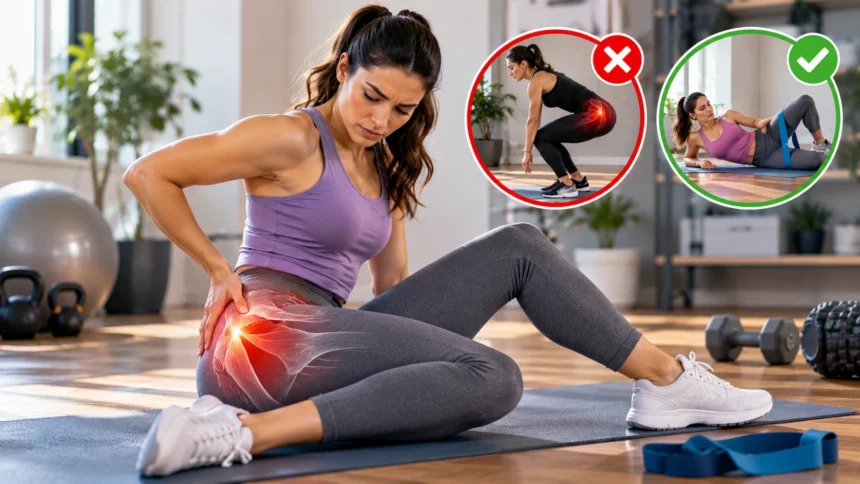
Gluteal tendinopathy can make everyday movements uncomfortable, especially walking, climbing stairs, sleeping on your side, or exercising. This condition affects the tendons around the outside of your hip and often causes pain during activities that place pressure on them. Understanding which gluteal tendinopathy exercises to avoid is an important step toward managing symptoms and supporting recovery.
Many people assume stretching or exercising harder will help relieve hip pain. However, certain movements can increase pressure on sensitive gluteal tendons and make symptoms worse. Deep stretches, repeated jumping, and demanding single-leg exercises may need temporary modification, depending on your symptoms and current strength.
The good news is that gluteal tendinopathy does not usually require avoiding physical activity completely. With appropriate exercise selection, gradual strengthening, and sensible activity changes, many people can improve their symptoms and return to normal routines. This guide explains which exercises may aggravate gluteal tendinopathy, safer alternatives, and practical ways to support your recovery.
What Is Gluteal Tendinopathy?
Gluteal tendinopathy is a condition affecting the tendons that connect the gluteus medius and gluteus minimus muscles to the greater trochanter, the bony area on the outside of the hip. These muscles help stabilize your pelvis when walking, standing, and climbing stairs. When the tendons become painful and sensitive to loading, everyday movements may become uncomfortable.
The condition is a common cause of greater trochanteric pain syndrome, often described as lateral hip pain. Symptoms typically include tenderness along the outside of the hip and discomfort when lying on the affected side. Some people also experience pain while walking uphill, climbing stairs, or standing on one leg for an extended period.
Gluteal tendinopathy can develop when the demands placed on the tendons exceed their current ability to tolerate activity. Sudden increases in exercise, repetitive loading, and sustained pressure against the outer hip may contribute to symptoms. Treatment generally focuses on reducing irritating positions while gradually improving the strength and capacity of the surrounding muscles.
Why Certain Exercises Make Gluteal Tendinopathy Worse
Not every hip exercise is suitable during a painful episode of gluteal tendinopathy. Some movements combine strong muscle loading with compression of the tendons against the outer hip bone. This combination can increase discomfort, particularly when the affected tendon is already sensitive or has recently been exposed to more activity than usual.
Hip adduction is one movement that deserves attention during recovery. It occurs when the thigh moves toward or across the body’s midline, such as during certain stretches or when crossing your legs. These positions may increase compression around the gluteal tendons, making them uncomfortable even when the movement appears gentle.
Exercise intensity and recovery time are also important factors. Repeatedly performing difficult exercises without adequate progression may cause symptoms to increase later that day or during the following night. The goal is not to eliminate every uncomfortable movement permanently, but to find an appropriate level of loading that supports rehabilitation without repeatedly aggravating symptoms.
Deep Glute and Piriformis Stretches to Avoid
Deep glute stretches are often recommended for general muscle tightness, but they may not be appropriate for someone experiencing gluteal tendinopathy. Certain movements pull the thigh across the body, increasing compression around the affected tendons. Popular figure-four and seated glute stretches may therefore aggravate lateral hip pain, depending on their position and intensity.
A strong stretching sensation does not necessarily mean the exercise is helping the tendon recover. If stretching produces discomfort along the outside of your hip, repeating it may increase irritation rather than provide relief. This is particularly important when symptoms are already noticeable during walking, sleeping, or ordinary movements around the house.
Instead of forcing deeper stretches, focus on comfortable movement that keeps the hip within a tolerable range. Gentle walking on level ground or controlled strengthening may be more useful when appropriate for your symptoms. A physiotherapist can help determine whether your discomfort comes from gluteal tendinopathy or another condition that requires different treatment.
Side-Lying Leg Raises and Clamshell Exercises
Side-lying leg raises and clamshell exercises are commonly used to strengthen the muscles around the hips. However, they can sometimes irritate gluteal tendinopathy, particularly when the painful hip is pressed against the floor. Certain positions also increase compression or create more resistance than the sensitive tendon can comfortably tolerate.
Clamshell exercises are not automatically harmful, and some people may use modified versions during rehabilitation. The difficulty depends on factors such as body position, resistance, exercise technique, and individual symptoms. If an exercise repeatedly produces outer hip pain or increases symptoms afterward, it may be unsuitable at that stage.
Standing hip strengthening or carefully selected static exercises may provide alternatives without requiring direct pressure on the affected side. These movements should begin at a manageable level and progress according to your response. Avoid assuming that every hip-strengthening exercise is beneficial simply because it targets the gluteal muscles.
High-Impact Running and Jumping Exercises
Running and jumping place repeated demands on the muscles and tendons responsible for controlling the hips and pelvis. For someone with sensitive gluteal tendons, a sudden increase in these activities may lead to increased discomfort. Hill sprints, repeated jumping drills, and high-intensity workouts can be especially challenging when symptoms are already present.
This does not mean everyone with gluteal tendinopathy must permanently stop running. Some people can continue with shorter, easier sessions or a reduced training schedule. Others may need a temporary break from higher-impact exercise while they develop greater strength and improve their tolerance for everyday activities.
Lower-impact alternatives may include comfortable walking on level ground, swimming, or carefully adjusted cycling, depending on what your hip tolerates. Begin with manageable activity levels and monitor your symptoms afterward. Return to running or jumping gradually when your strength, movement control, and response to exercise support that progression.
Deep Lunges and Single-Leg Squats
Deep lunges and single-leg squats require the hip muscles to stabilize the pelvis while supporting a substantial amount of body weight. These movements can become uncomfortable when the gluteal tendons are sensitive to loading. Poor movement control, excessive depth, or increasing resistance too quickly may place additional demands on the affected area.
Single-leg exercises are not necessarily exercises to avoid forever. They can become valuable parts of a progressive strengthening program once the tendon can tolerate them. During painful stages, however, performing deep or heavily loaded variations may be less appropriate than using simpler movements with better support and control.
A more manageable starting point may involve supported sit-to-stands or shallow double-leg squats, provided they do not worsen symptoms. These movements allow the workload to be shared between both legs. As your hip becomes more comfortable, a physiotherapist can guide progression toward step-ups, lunges, and more demanding single-leg activities.
IT Band Stretches and Aggressive Foam Rolling
The iliotibial band, often called the IT band, runs along the outside of the thigh and helps support movement around the hip and knee. Many people stretch this area when they experience lateral hip discomfort. However, some IT band stretches move the affected leg across the body and increase compression over the gluteal tendons.
Aggressive foam rolling directly over the painful outer hip may also aggravate symptoms. Although massage can feel helpful for certain muscular problems, pressing firmly against a sensitive tendon is not always beneficial. Repeatedly rolling over the greater trochanter may increase discomfort instead of addressing the underlying problem.
Avoid applying strong pressure directly to the tender area until your symptoms have been properly assessed. If other surrounding muscles feel tight, ask a physiotherapist which techniques may be appropriate. Improving hip strength and adjusting activities that increase tendon compression are generally more important than repeatedly stretching or rolling the painful region.
Safer Gluteal Tendinopathy Exercises to Consider
The best gluteal tendinopathy exercises usually focus on controlled muscle activation and gradual strengthening. Early rehabilitation may include isometric movements, where the muscles produce force without noticeable joint movement. These exercises can provide a manageable starting point for some people, although the amount of resistance should match their symptoms and physical abilities.
One commonly used option is a gentle standing hip abduction hold, performed with appropriate support and without leaning heavily onto one hip. Other rehabilitation programs may include modified bridges or controlled sit-to-stand exercises. These movements should be selected carefully because an exercise that feels comfortable for one person may aggravate another person’s symptoms.
A gradual strengthening program can eventually include resisted hip exercises, step-ups, and functional movements. Progression depends on comfort, strength, movement control, and how symptoms respond over time. Working with a qualified physiotherapist is particularly helpful when pain has persisted for several weeks or when ordinary activities have become difficult.
How to Exercise Without Making Hip Pain Worse
Managing exercise with gluteal tendinopathy involves finding a balance between movement and recovery. Complete rest for long periods can reduce muscle capacity, while repeatedly pushing through significant pain may aggravate symptoms. A sensible approach involves selecting manageable activities and increasing their difficulty gradually as the hip becomes more comfortable.
Pay attention to how your hip feels during exercise, later that evening, and the following morning. Mild discomfort may be acceptable in an individualized rehabilitation plan if it settles quickly and does not worsen your usual symptoms. However, increasing night pain, persistent soreness, or difficulty walking afterward suggests that the activity may have been too demanding.
Avoid making several major exercise changes simultaneously because this makes it harder to identify what causes irritation. Adjust resistance, duration, or frequency gradually, and allow recovery between demanding sessions. If symptoms keep increasing despite modifications, seek professional guidance rather than continuing to exercise through worsening discomfort.
Daily Habits That Can Aggravate Gluteal Tendinopathy
Exercise is not the only activity that places pressure on gluteal tendons. Everyday habits such as sitting with crossed legs, standing with one hip pushed outward, or resting in low chairs can also increase discomfort. These positions may create sustained compression around the outer hip, particularly when maintained for extended periods.
Sleeping positions can also influence symptoms, especially when lying directly on the painful side. If you prefer side sleeping, try lying on the more comfortable side with a pillow between your knees to support your upper leg. When both hips are uncomfortable, lying on your back with suitable pillow support may provide relief.
Walking uphill, climbing many stairs, and standing on one leg repeatedly can also aggravate some cases. Temporary adjustments, such as using stair railings or choosing flatter walking routes, may help reduce irritation. These changes are intended to support recovery while you gradually rebuild strength, not to permanently restrict normal daily movement.
How Long Does Gluteal Tendinopathy Take to Heal?
Recovery from gluteal tendinopathy is usually gradual rather than immediate. Some people notice improvements within several weeks of adjusting painful activities and beginning suitable rehabilitation. Others require several months of progressive strengthening, particularly when symptoms have been present for a long time or everyday movements remain difficult.
The recovery process depends on several factors, including the duration of symptoms, the tendon’s current tolerance for activity, and the consistency of rehabilitation. Improving too quickly and returning immediately to demanding workouts may trigger setbacks. A gradual program allows the hip muscles and tendons to develop greater capacity while reducing repeated episodes of irritation.
Progress should be measured through meaningful improvements in daily function rather than expecting every sensation to disappear immediately. Walking comfortably, sleeping more easily, and managing stairs with less pain are useful signs of improvement. If symptoms remain unchanged or become worse, a healthcare professional can reassess the diagnosis and adjust your treatment plan.
When to See a Doctor or Physiotherapist
Persistent pain around the outside of the hip deserves proper assessment because several conditions can produce similar symptoms. Gluteal tendinopathy may overlap with other causes of lateral hip pain, while problems involving the lower back or hip joint can sometimes feel similar. A qualified professional can help identify the likely cause.
Consider arranging an appointment if hip pain continues for several weeks, regularly interrupts sleep, or prevents normal activities. A physiotherapist can evaluate muscle strength, movement patterns, and activities that aggravate symptoms. They can also recommend a personalized exercise program that gradually improves your ability to tolerate everyday movements and physical activity.
Seek urgent medical care if hip pain follows a significant injury and you cannot bear weight, or if you develop severe pain with fever or a hot, swollen joint. New weakness, numbness, or rapidly worsening symptoms also warrant medical assessment. Early evaluation can help identify problems that should not be treated with exercises alone.
Conclusion
Understanding which gluteal tendinopathy exercises to avoid can help you manage lateral hip pain more effectively. Deep glute stretches, aggressive IT band stretching, high-impact exercise, and demanding single-leg movements may aggravate sensitive tendons. However, whether an exercise is appropriate depends on your symptoms, technique, and current capacity for physical activity.
Recovery usually involves reducing excessive tendon compression while gradually improving strength and movement control. Carefully selected exercises, comfortable daily positions, and sensible activity adjustments can support this process. The goal is to maintain appropriate movement rather than avoiding all activities that involve the hip.
If your symptoms persist, worsen, or interfere with everyday life, consider working with a healthcare professional. An individualized rehabilitation plan can help you choose appropriate exercises and progress safely. With patience, consistent strengthening, and gradual increases in activity, many people can improve comfort and return to the activities they enjoy.
Frequently Asked Questions
What exercises should I avoid with gluteal tendinopathy?
Deep glute stretches, aggressive IT band stretches, high-impact jumping, and painful single-leg exercises may need modification. Avoid movements that repeatedly aggravate outer hip pain, and seek personalized guidance for safe strengthening.
Is walking good for gluteal tendinopathy?
Walking can be beneficial when performed at a comfortable intensity and distance. Start with manageable walks on level ground, monitor your symptoms, and temporarily reduce hills or longer distances if they increase discomfort.
Are squats bad for gluteal tendinopathy?
Squats are not automatically harmful. Shallow, controlled double-leg squats may be suitable for some people, while deep or heavily loaded variations may aggravate symptoms and require modification during recovery.
Should you stretch your glutes with gluteal tendinopathy?
Strong glute stretches that bring the thigh across the body can increase tendon compression and worsen lateral hip pain. Controlled strengthening and appropriate activity modifications are generally preferred during rehabilitation.
Can gluteal tendinopathy heal without surgery?
Many people improve without surgery through physiotherapy, gradual strengthening, and adjustments to aggravating activities. Recovery may take several months, and persistent symptoms should be assessed to confirm the diagnosis and guide treatment.