
Understanding Personal Development
Personal development is an ongoing process of self-improvement encompassing various dimensions of an individual’s growth. It involves the enhancement of one’s emotional, intellectual, social, and spiritual aspects to foster overall well-being and life satisfaction. Each dimension plays a crucial role in shaping an individual’s personality, behaviors, and interactions with the world.
Emotional development refers to the ability to understand and manage one’s emotions effectively. This not only aids in building resilience but also enhances interpersonal relationships. When individuals develop their emotional intelligence, they tend to communicate better, empathize with others, and resolve conflicts more amicably. This emotional maturity is essential for personal fulfillment and social harmony.
Intellectual growth, on the other hand, signifies the continuous pursuit of knowledge and skills. This intellectual curiosity drives critical thinking, creativity, and problem-solving abilities. Engaging in lifelong learning, whether through formal education, self-study, or professional development, significantly contributes to one’s capacity to adapt and succeed in an ever-changing environment. Intellectual engagement fosters a sense of purpose and achievement, which is vital for personal growth.
Social development encompasses building and maintaining healthy relationships. This includes effective communication, collaboration, and conflict resolution skills. By nurturing social networks and participating in community activities, individuals can enhance their sense of belonging and support systems. Strong social connections are correlated with improved mental health and emotional stability.
Spiritual growth involves exploring one’s values, beliefs, and purpose in life. This personal quest for meaning can lead to greater life satisfaction and emotional well-being. Individuals often find that fostering their spiritual side, whether through religion, meditation, or reflection, contributes significantly to their overall happiness and resilience.
In conclusion, personal development is a multifaceted journey that equips individuals with valuable skills and insights necessary for navigating life’s challenges. By focusing on these dimensions, one can achieve a heightened sense of well-being and fulfillment.
The Role of Education in Personal Development
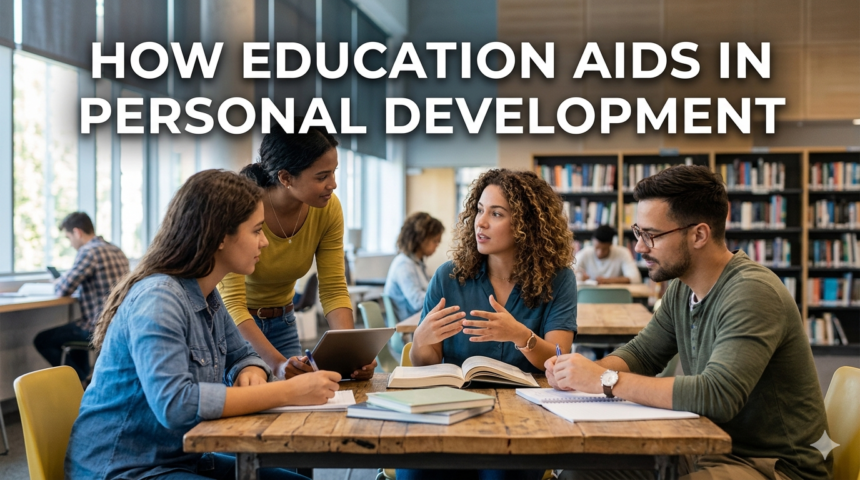
Education plays a pivotal role in facilitating personal development, contributing significantly to the enhancement of individual skills, accumulation of knowledge, and shaping of attitudes. From a young age, formal education systems introduce students to structured learning environments where critical thinking, problem-solving, and communication skills are cultivated. These foundational experiences not only prepare individuals for careers but also for life’s myriad challenges.
Moreover, education fosters self-awareness and confidence, allowing individuals to understand their strengths and weaknesses better. Through various subjects and extracurricular activities, students can explore their interests and passions, leading them to identify personal goals. This journey of self-discovery is crucial in guiding individuals toward achieving their ambitions and enhancing their overall quality of life.
Informal education, which encompasses learning outside traditional classrooms, also significantly contributes to personal development. Life experiences, community engagement, and social interactions provide rich contexts for acquiring knowledge and developing valuable life skills. For instance, volunteering or participating in group activities promotes teamwork, empathy, and social responsibility, skills that are essential for holistic personal growth.
In addition to emotional and cognitive growth, education can influence one’s attitudes toward societal issues. Exposure to diverse perspectives through various educational platforms encourages critical discourse, tolerance, and adaptability. This broadening of horizons enables individuals to navigate complex social landscapes and fosters a deeper understanding of cultural and global issues.
Furthermore, continuous learning and professional development opportunities allow individuals to refine their skills and maintain relevance in an ever-evolving job market. Engaging in lifelong learning is vital for personal and professional advancement, contributing to an individual’s self-worth and fulfillment.
Skills Development Through Education
Education plays a pivotal role in shaping an individual’s skill set, significantly contributing to both personal development and professional success. One of the most essential skills nurtured through education is critical thinking. This analytical capability allows individuals to assess situations, weigh options, and make informed decisions, proving vital in diverse circumstances ranging from everyday choices to complex problem-solving. By engaging in structured learning, individuals develop the ability to question assumptions and evaluate arguments critically, thus enhancing their cognitive flexibility.
Moreover, education fosters problem-solving skills, which are essential in both personal and professional domains. Through various academic disciplines, learners encounter problems that require innovative solutions. This experiential learning cultivates resilience and adaptability, equipping individuals with the strategies necessary to navigate challenges effectively. The ability to solve problems creatively not only empowers individuals but also contributes to their overall success in a competitive world.
Communication skills, another crucial component of personal development, are significantly enhanced through education. Effective communication is foundational for expressing ideas clearly and persuasively, whether in writing or oral presentations. Educational environments, such as classrooms and group projects, provide opportunities for individuals to practice articulating their thoughts and collaborate with others, fostering mutual understanding. In addition, strong communication skills are vital in professional settings, where teamwork and negotiations often underpin successful outcomes.
Finally, education encourages collaboration, nurturing the ability to work effectively with diverse groups. Through collaborative projects and team-oriented tasks, individuals learn to respect differing viewpoints and build consensus, equipping them for the diverse dynamics of modern workplaces. These interpersonal skills not only contribute to personal empowerment but also enhance collective productivity, reinforcing the importance of teamwork in achieving shared goals.
Building Self-Esteem and Confidence
The relationship between education and self-esteem is profound and multifaceted. As individuals acquire knowledge and skills through formal and informal educational settings, they engage in a journey that significantly contributes to the development of self-confidence. This personal growth begins with the foundational element of acquiring new information and practical skills, which helps to nurture a sense of accomplishment. Each new concept mastered or skill acquired adds to an individual’s self-efficacy, reinforcing their belief in their capabilities.
Education encourages self-awareness, allowing individuals to explore their strengths and weaknesses actively. Through various educational experiences, such as group projects or presentations, learners are afforded opportunities to step outside their comfort zones. Such experiences challenge them to develop resilience and adaptability, vital traits that bolster self-esteem. By overcoming obstacles in their educational pursuits, students learn not only about the subject matter but also about their capacity to tackle difficulties successfully.
Moreover, a positive self-image is often cultivated in educational environments that promote inclusive practices and highlight individual achievements. Educators who recognize and celebrate students’ progress foster a sense of belonging and acceptance. When learners feel valued and appreciated, they are more likely to engage positively with their education and contribute to their communities with confidence. As they progress through their educational journeys, individuals build a robust foundation for success, leading to significant personal achievements that extend beyond the classroom.
Ultimately, education serves as a catalyst for personal development by enhancing self-esteem and confidence. As individuals continually engage in learning, they develop a deeper understanding of themselves, cultivating a positive self-image that is crucial for thriving in various aspects of life.
Social Connections and Networking Opportunities
Education plays a significant role in fostering social connections and creating networking opportunities, allowing individuals to interact within diverse environments. The structured settings of educational institutions, such as schools and universities, provide fertile ground for building meaningful relationships. These interactions are pivotal in enhancing social skills, which are essential in both personal and professional life.
While pursuing their studies, students are frequently engaged in collaborative projects, group discussions, and extracurricular activities. These experiences cultivate teamwork and communication abilities, essential traits that extend beyond academic environments. Moreover, the diverse backgrounds of students contribute to a rich tapestry of perspectives, encouraging cultural awareness and sensitivity, which are crucial in today’s interconnected world.
Networking opportunities arise not only among peers but also through faculty and alumni connections. The establishment of relationships with mentors and industry professionals can significantly influence an individual’s career path. Institutions often organize workshops, seminars, and networking events that connect students with successful alumni and business leaders, thus providing invaluable insights and connections. These interactions enable students to gain industry knowledge, seek mentorship, and explore job prospects that may not have been accessible otherwise.
Additionally, social networks built during one’s educational journey often extend into personal and professional arenas. Friends and acquaintances formed during this time can evolve into collaborative partners in future projects, advocates within various communities, or valuable contacts in the job market. Such relationships can offer emotional support, guidance, and collaborations that facilitate both personal development and career advancement.
Fostering Lifelong Learning and Adaptability
Education plays a fundamental role in instilling a passion for lifelong learning and fostering adaptability traits in individuals. At its core, the process of education goes beyond mere acquisition of knowledge; it cultivates curiosity, critical thinking skills, and the ability to learn from experiences. This intrinsic motivation to learn forms the bedrock of personal development, enabling individuals to respond effectively to the rapid changes that characterize today’s world.
In so many professions and industries, the only constant is change. Technological advancements, evolving market dynamics, and shifts in societal expectations demand that individuals remain adaptable throughout their careers. Educational opportunities—whether formal or informal—equips learners with various strategies adaptable to diverse settings. These include not only intellectual skills but also soft skills such as effective communication, problem-solving, and emotional intelligence. Such capabilities are essential in navigating new challenges and seizing opportunities.
Lifelong learning is integral in ensuring one remains relevant amidst the complexities of modern life. Continuous education can take the form of workshops, online courses, seminars, or self-directed study, all designed to enhance personal skills. This commitment to learning encourages individuals to embrace change, rather than resist it, facilitating a smoother transition into new roles or environments. Moreover, this adaptability nurtured through education promotes resilience, as individuals who are open to learning are often more prepared to handle setbacks.
Ultimately, the synergy between education and personal development cannot be understated. An ongoing dedication to learning not only equips individuals to meet current challenges but also prepares them for unpredictable future demands. By fostering a culture of lifelong learning and adaptability, society empowers each individual to continue growing, evolving, and successfully facing the intricacies of an ever-changing landscape.
Overcoming Challenges and Resilience Through Education
Education serves as a powerful tool in the journey of personal development, enabling individuals to confront and overcome challenges that arise in both academic and social contexts. Through a structured learning environment, students encounter various obstacles—ranging from rigorous coursework to complex social interactions. These experiences not only test their limits but also build resilience, ultimately shaping their character and ability to face future adversities.
A prime example of overcoming academic challenges can be seen in students who struggle with particular subjects, such as mathematics or science. The process of seeking help from teachers, engaging in tutoring sessions, or collaborating with peers fosters problem-solving skills. Learning to persist in the face of difficulties builds a mindset geared toward resilience, where failure becomes an opportunity for growth rather than a point of discouragement.
Social challenges also play a significant role in this development. Educational institutions often serve as a melting pot of diverse backgrounds and perspectives, where students must learn to navigate relationships, group projects, and extracurricular activities. Students who face social hurdles, such as shyness or difficulty in making friends, often develop coping strategies that enhance their social skills over time. This growth contributes not just to their educational journey but also prepares them for real-world interactions.
Moreover, engaging in various educational settings, such as workshops, seminars, or community service, equips individuals with the ability to adapt to changing situations. These experiences instill a resilience that empowers learners to confront challenges head-on, fostering a sense of confidence and self-efficacy. As they triumph over their difficulties, they build a foundation that will support their future endeavors, both in and outside the realm of education.
Education and Goal Setting
Education plays a pivotal role in personal development, particularly in the domain of setting and achieving goals. The process of education equips individuals with knowledge and skills, which are essential for identifying personal and professional aspirations. By engaging in educational experiences, whether formal or informal, individuals are able to reflect on their strengths and weaknesses. This self-awareness is critical in goal setting, as it allows individuals to align their ambitions with their abilities, thus ensuring that goals are both attainable and relevant.
Furthermore, education provides individuals with the tools and frameworks to develop actionable plans for achieving their goals. For instance, through coursework, mentorship, and collaborative projects, students learn how to create structured approaches towards goal attainment. These educational processes often include the practice of setting specific, measurable, achievable, relevant, and time-bound (SMART) goals. By incorporating these practical strategies into their daily routines, individuals are better equipped to break down larger objectives into manageable tasks.
Additionally, ongoing education fosters a growth mindset. Individuals who continually seek knowledge are more likely to embrace challenges as opportunities for growth rather than obstacles. This perspective not only enhances resilience in the face of setbacks but also encourages individuals to pursue ambitious objectives that may have previously seemed out of reach. As a result, education not only shapes academic capabilities but also empowers individuals to set and strive for goals that contribute to their overall personal and professional development.
In essence, the relationship between education and goal setting is symbiotic; education provides the foundational skills and insights necessary for effective goal planning, while the pursuit of goals often inspires further educational endeavors. This dynamic encourages continuous learning and self-improvement, ultimately contributing to a more fulfilled and purpose-driven life.
Conclusion: The Transformative Power of Education
Education serves as a cornerstone for personal development, influencing various aspects of an individual’s life. Throughout this discussion, it has been emphasized how education opens doors to new opportunities, fosters critical thinking, and enhances self-awareness. By acquiring knowledge and skills, individuals are better equipped to navigate complexities in both professional and personal realms.
The process of education is not merely about academic achievement; it fundamentally shapes one’s character and worldview. Engaging with diverse perspectives through learning encourages empathy and understanding, essential components for personal growth in a multicultural society. Furthermore, education instills confidence, enabling individuals to express themselves and assert their rights effectively.
Investing in education prompts a ripple effect that can lead to transformative outcomes in both the individual and community. Educated individuals are more likely to pursue their passions, contribute positively to society, and inspire others to follow suit. This cycle of empowerment highlights the importance of accessible education for everyone, as it is crucial for nurturing future generations of leaders and innovators.
Moreover, as we delve into the various forms of education, including formal, non-formal, and informal methods, it becomes evident that lifelong learning plays a vital role in sustaining personal development. The commitment to continuous improvement and adaptation aligns with the dynamic nature of our world, where knowledge and skills must be consistently updated.
In conclusion, the undeniable impact of education on personal development cannot be overstated. By prioritizing education, individuals not only enhance their own lives but also contribute to the collective advancement of society. Investing in education is, therefore, an investment in a brighter, more equitable future for all.