


Introduction to the Future of Education
The current educational landscape is undergoing a significant transformation, primarily driven by advancements in technology. Classrooms are evolving from traditional setups to more dynamic environments that emphasize interactive learning and collaboration. As technology becomes increasingly pervasive, educators are not only integrating new tools but are also rethinking pedagogical approaches to enhance the learning experience.
With the rise of digital tools such as learning management systems, virtual classrooms, and online resources, students have access to a wealth of information and learning opportunities. This democratization of knowledge allows for personalized learning, accommodating diverse learning styles and individual student needs. Furthermore, the integration of artificial intelligence and data analytics can provide educators with insights into student performance, enabling them to tailor their instruction accordingly.
In recognition of the need for innovation, educational institutions are exploring new methodologies that facilitate experiential learning. Flipped classrooms, gamification, and project-based learning are emerging as effective strategies that leverage technology to engage students actively. By exposing learners to real-world challenges, these methods encourage critical thinking and problem-solving skills, which are essential in today’s society.
However, the rapid pace of technological change also presents challenges. Educators must be prepared to adjust their teaching practices and embrace continuous professional development to effectively incorporate new tools. Moreover, issues such as digital equity and accessibility must be addressed to ensure that all students benefit from the technological advancements in education.
As we look to the future of education, it is clear that technology will play an instrumental role in shaping teaching and learning landscapes. The ability to adapt to this changing environment not only enhances the educational experience but also prepares students for success in an increasingly interconnected world.
The Rise of EdTech: Understanding Educational Technology
In recent years, educational technology, or EdTech, has emerged as a transformative force in the field of education. It encompasses a range of technological innovations designed to enhance teaching and learning processes. Among the most prominent forms of EdTech are Learning Management Systems (LMS), online learning platforms, and interactive educational tools. Each of these technologies plays a significant role in modernizing education, making it more efficient and accessible.
Learning Management Systems are software applications that facilitate the administration, documentation, tracking, and reporting of educational courses. These platforms enable educators to create, manage, and deliver content to students, often through a central interface. With features like grading, assessments, and communication tools, LMS platforms streamline the educational experience for both teachers and learners, providing a structured pathway for knowledge acquisition.
Online learning platforms have also gained prominence, particularly in an increasingly digital world. These platforms, such as Coursera, Khan Academy, and edX, offer a diverse array of courses that cater to various subjects and skill levels. They enhance accessibility by allowing students to learn at their own pace and convenience, bridging educational gaps that may exist due to geographical or financial constraints. The on-demand availability of educational materials encourages lifelong learning, fostering a culture of continuous improvement.
Moreover, interactive tools such as educational apps, gamified learning systems, and virtual classrooms enable educators to engage students in innovative ways. These tools provide an enriched learning environment where students can collaborate, experiment, and explore, enhancing their educational experience. Overall, the rise of EdTech signifies a pivotal shift towards a more inclusive and effective educational landscape, where technology plays an integral role in shaping the future of learning.
Personalized Learning Experiences through Technology
The integration of technology in educational settings has paved the way for personalized learning experiences, fundamentally altering how students engage with content. One of the most significant advancements in this realm is the development of adaptive learning technologies. These systems utilize algorithms to tailor educational content based on real-time assessments of individual student performance. By identifying the strengths and weaknesses of each learner, adaptive learning platforms offer customized resources, ensuring that students can progress at their own pace.
Furthermore, data analytics plays a pivotal role in personalizing education. Educational institutions increasingly harness data to analyze patterns in student behavior, engagement, and achievement. This analytical approach allows educators to create targeted interventions and adjust teaching strategies effectively. For instance, by monitoring a student’s progress, teachers can identify when a pupil struggles with specific concepts and provide immediate, tailored support, thus fostering a more engaged learning environment.
AI-driven systems also contribute significantly to the personalization of learning experiences. These platforms can simulate one-on-one tutoring sessions, offering immediate feedback and guidance, which can help elucidate difficult topics. By leveraging artificial intelligence, these systems can adapt to each student’s learning style, whether they are visual, auditory, or kinesthetic learners. This tailored interaction not only enhances understanding but also boosts motivation, as students feel more invested in their educational journey.
As a result, technology-driven personalized learning pathways not only cater to individual learning preferences but also promote a deeper engagement with the material. By facilitating customized educational experiences, technology has the potential to significantly improve learning outcomes, preparing students for a rapidly evolving world.
Collaborative Learning in the Digital Age
In the contemporary educational landscape, technology plays a pivotal role in reshaping collaborative learning experiences. The integration of digital tools and platforms not only transforms how students interact but also enhances their capacity to work collectively. Various technologies facilitate teamwork and communication, asserting themselves as essential components in creating a collaborative educational atmosphere.
Platforms like Google Workspace and Microsoft Teams have become instrumental in fostering collaboration among students. These tools allow for real-time document editing, video conferencing, and project management, encouraging students to engage actively with their peers. As such, learners can contribute ideas, share resources, and provide feedback instantaneously, significantly enriching the learning process.
Additionally, learning management systems (LMS) such as Canvas and Moodle provide avenues for educators to create collaborative assignments that span outside traditional classroom boundaries. Through these platforms, teachers can assign group projects where students can collaborate on research, presentations, or discussions. This capability not only enhances students’ academic skills but also nurtures important interpersonal skills necessary for success in the modern workplace.
Moreover, social media tools and applications can further bolster collaborative learning initiatives. Forums and discussion boards enable students to share knowledge and insights beyond face-to-face interactions. Such interactions can enhance peer engagement, and students often find different perspectives that challenge their thinking and broaden their understanding of subjects.
In addition, gamification technology introduces a competitive element to collaborative tasks, engaging students in a manner that is both fun and educational. Leaderboards, challenges, and interactive simulations encourage teamwork and collective problem-solving. Therefore, technology not only promotes collaboration but also makes learning more dynamic and appealing for students.
Virtual and Augmented Reality in Classrooms
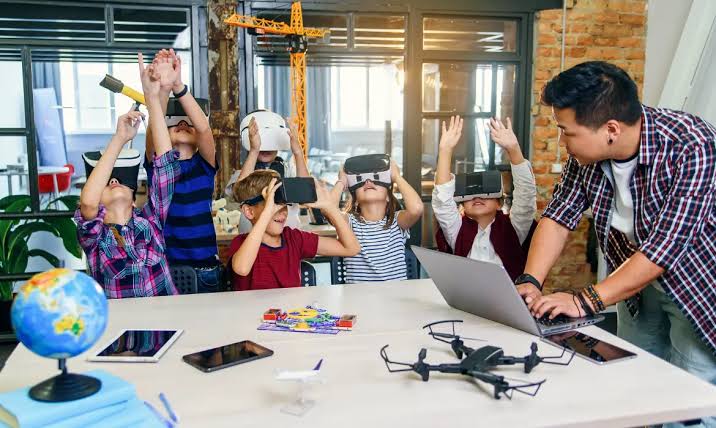
The integration of virtual reality (VR) and augmented reality (AR) in educational settings marks a significant transformation in how students experience learning. These immersive technologies facilitate experiential learning, allowing students to engage with complex subjects in a more tangible way. By simulating real-world environments, VR provides learners with opportunities to explore concepts that would otherwise be challenging to grasp through traditional teaching methods.
For instance, in a history class, VR can transport students back in time, enabling them to witness historical events as they unfold. This immersive experience deepens their understanding and retention of the material. Similarly, AR can overlay digital information onto the physical world, enhancing lessons in science or mathematics by providing interactive models that students can visualize and manipulate. Such approaches not only foster greater engagement but also cater to various learning styles, accommodating visual, auditory, and kinesthetic learners alike.
The educational benefits of incorporating VR and AR extend beyond mere engagement. These technologies promote collaboration among students, as they often work in teams to solve problems or complete projects within virtual environments. This not only helps develop critical thinking and problem-solving skills but also encourages communication and teamwork. Furthermore, teachers can utilize these tools to differentiate instruction, tailoring experiences to meet the individual needs of students. As VR and AR technology continues to advance and become more accessible, the potential for these tools in enhancing classroom learning becomes increasingly apparent.
In conclusion, the use of virtual and augmented reality in education represents a transformative shift in instructional strategies. By immersing students in interactive, simulated environments, educators can provide richer, more dynamic learning experiences that enhance understanding and retention of complex subjects.
The Role of Artificial Intelligence in Education
Artificial Intelligence (AI) is playing an increasingly crucial role in transforming educational environments. As educational institutions seek innovative paths to enhance learning experiences, AI technologies are stepping in to facilitate changes across various dimensions of the education sector. One of the primary advantages of AI is its ability to automate administrative tasks. This functionality alleviates burdensome paperwork for educators, enabling them to devote more time to teaching and engaging with students. Routine tasks such as grading assignments, processing attendance, and managing schedules can be efficiently managed by AI systems.
Additionally, AI is reshaping personalized learning through intelligent tutoring systems. These systems leverage algorithms to analyze individual student performance data and adapt instructional methods accordingly. By offering tailored resources and suggestions based on learners’ unique strengths and weaknesses, AI fosters an environment that supports diverse learning styles. Such systems not only promote student autonomy but also pave the way for enhanced mastery of subject matter.
The capacity for advanced analytics within AI also contributes to improved student feedback mechanisms. Educators can access real-time data to monitor student engagement and identify areas needing intervention. Consequently, teachers can provide more immediate, data-driven feedback that enhances the learning process. However, the integration of AI into classrooms is not without its challenges. Concerns regarding data privacy, algorithmic bias, and the potential depersonalization of the educational experience persist. Therefore, it is imperative for educators and policymakers to ensure that AI applications are implemented thoughtfully, prioritizing equity in access and maintaining the human element integral to teaching.
Challenges and Limitations of Technology in Education
As technology continues to evolve, its integration within classrooms presents various challenges and limitations that educators and institutions must navigate. One significant issue is the digital divide. This divide refers to the disparity in access to technology based on socioeconomic status, geographical location, and availability of resources. Students from lower-income families often lack sufficient access to computers and high-speed internet, thereby hindering their ability to utilize digital learning tools effectively. Addressing this inequity is paramount to ensure that all students can benefit from technological advancements in education.
Another challenge is the necessity for teacher training. While technology can enhance learning experiences, educators require substantial training to effectively incorporate these tools into their curriculum. Many teachers may feel overwhelmed or inadequately prepared to integrate new technologies, which can lead to inconsistent application in the classroom. Comprehensive professional development programs that focus on technology integration are essential for empowering teachers and maximizing the potential of educational technology.
Data privacy concerns also loom large in the context of educational technology. As schools increasingly adopt digital platforms for learning management and assessment, the protection of student data becomes critical. Schools must implement stringent security measures to safeguard sensitive information from data breaches. Furthermore, clear policies regarding data usage and privacy need to be established to ensure that all stakeholders are aware of their rights and responsibilities.
Lastly, there exists a potential for over-reliance on technology, which might diminish traditional learning methods and critical thinking skills. Educators must strive to strike a balance between leveraging technology for enhanced learning and maintaining a focus on foundational teaching strategies. This will preserve essential academic skills while harnessing the benefits that technology offers.
Future Trends in Educational Technology
As we look towards the future of education, it becomes increasingly clear that technology will play an integral role in shaping classrooms. Emerging trends such as gamification, mobile learning, and the use of blockchain are set to transform traditional teaching and learning methodologies.
Gamification introduces game-like elements into educational settings. By incorporating points, badges, and leaderboards, educators can enhance student engagement and motivation. This method not only makes learning more enjoyable but also fosters a competitive spirit among students. Research has shown that gamified learning experiences can lead to improved retention rates and greater academic performance.
Mobile learning, another significant trend, provides students with the flexibility to access educational content anytime and anywhere through their devices. This shift towards a more mobile-centric approach allows for personalized learning experiences, catering to individual learning paces and styles. With the proliferation of smartphones and tablets, educational apps are becoming essential tools for both teachers and students, promoting interactive and collaborative environments that can reach beyond the traditional classroom.
Additionally, blockchain technology is beginning to carve a niche within the educational sector. By offering secure, decentralized systems for credential verification and student records, blockchain can enhance the integrity of educational qualifications. It enables more efficient ways of sharing and validating achievements across institutions, reducing fraud and streamlining administrative processes. Furthermore, the transparency provided by blockchain can ensure that learning experiences and qualifications are recognized universally.
In conclusion, the integration of innovative technologies such as gamification, mobile learning, and blockchain will undoubtedly influence the future landscape of education. These trends promise not only to improve the effectiveness of teaching and learning but also to create a more engaging and secure environment for all stakeholders involved in the educational process.
Conclusion: Embracing Change in Education
As we move further into the digital age, it is imperative to acknowledge the profound impact technology is having on the educational landscape. Throughout this discussion, we examined how innovative tools and methodologies are reshaping the way educators deliver instruction and how students engage with content. The integration of technology in classrooms enhances accessibility, personalizes learning experiences, and fosters collaboration among students, which ultimately leads to improved learning outcomes.
For educators, embracing these technological advancements is not merely an option but a necessity. The traditional paradigms of teaching are evolving, and it is essential for teachers to adapt to these changes. This adaptation involves not only incorporating new technologies into their teaching practices but also continually updating their skills to effectively utilize these tools. Training and ongoing professional development opportunities play a critical role in this transition, enabling educators to leverage new technologies to enhance student engagement and comprehension.
Policymakers also play a crucial role in this transformation. It is essential for them to facilitate an environment that encourages the adoption of innovative educational technologies. This can be achieved through investing in infrastructure, providing necessary resources, and creating adaptable curricula that incorporates 21st-century skills. By doing so, they can ensure that all students, regardless of their background, have access to quality education that prepares them for future challenges.
Lastly, students must develop an openness to new methods of learning. The world is changing rapidly, and the skills acquired today will pave the way for future opportunities. By embracing technology as a tool to enhance their education, students can become more proactive and engaged learners, ready to thrive in an increasingly digital world. In conclusion, the future of education is brightly lit by the innovations at our disposal, and it is vital for all stakeholders in the educational sector to embrace this change for the benefit of future generations.
