

Understanding the Importance of University Interviews
University interviews play a significant role in the admissions process, serving as a crucial mechanism for institutions to evaluate prospective students beyond their academic credentials. These interviews allow admissions committees to gain deeper insights into a candidate’s personality, aspirations, and alignment with the university’s values and culture. This personal interaction can often illuminate qualities that standard application materials may not fully convey.
One of the primary objectives of a university interview is to assess a candidate’s motivation. Admissions officers seek students who demonstrate a genuine interest in their programs and are passionate about their chosen field of study. Through thoughtful questions and discussions, interviewers can gauge a candidate’s enthusiasm, commitment, and long-term goals. This assessment is particularly relevant in highly competitive admissions environments, where many applicants possess similar academic achievements.
Moreover, interviews provide an opportunity for universities to determine the overall fit of a candidate within their academic community. Each institution has a unique culture, and understanding whether a student’s values align with the university can be pivotal in the decision-making process. A candidate who embodies the attributes that the university forges may contribute positively to campus life, thus enhancing the collective experience for peers.
Ultimately, the impact of university interviews on admission decisions can be significant. A well-executed interview can set a candidate apart, making a compelling case for their acceptance even if other aspects of their application may be average. Therefore, understanding and preparing for this critical component is essential for students aiming to secure a place at their desired institution.
Preparing for the Interview: Research and Self-Reflection
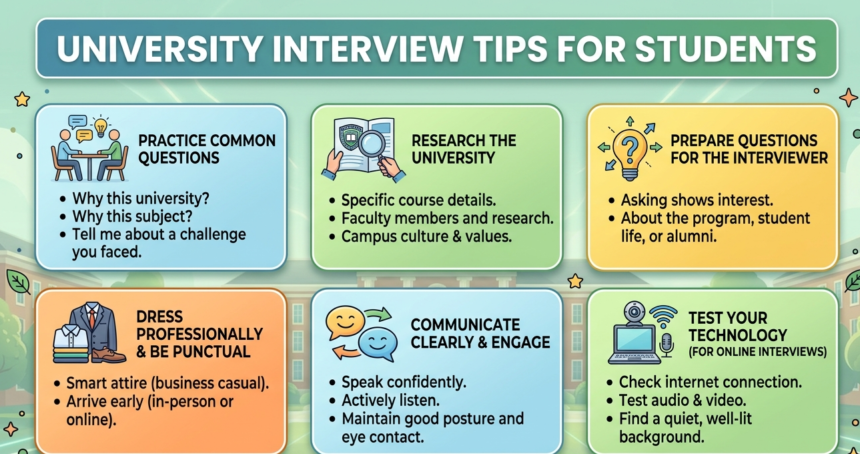
As students prepare for university interviews, two essential components must not be overlooked: thorough research of the university and honest self-reflection. Understanding the institution’s mission, values, and culture allows candidates to align their personal aspirations with what the university embodies. Familiarize yourself with the specific program you are applying to, including faculty members, ongoing research, and unique offerings. Such preparation not only strengthens your application but also equips you with invaluable insights for discussing why this university and program resonate with your academic and career goals.
To enhance your research, begin by visiting the university’s official website, exploring faculty publications, and reviewing news articles pertaining to the institution. Furthermore, if possible, reach out to current students or alumni to gather first-hand experiences and perspectives. Engaging with the university community will provide deeper insight that a website alone cannot convey. It demonstrates your genuine interest and allows you to articulate informed reasons for your choices during the interview.
In addition, self-reflection plays a pivotal role in crafting a compelling narrative about your journey. Consider your academic achievements, extracurricular activities, and personal motivations for pursuing higher education. Reflect on your long-term goals and how this prospective university fits within that framework. By compiling a list of your accomplishments and aspirations, you can strategically address common interview questions, such as “What motivates you to apply here?” or “How has your experience prepared you for this program?” This level of introspection will help you communicate your motivations clearly and confidently, ultimately making a strong impression on interviewers.
Common University Interview Questions
University interviews often include a range of common questions that help assess a candidate’s suitability for the course and institution. Understanding these questions and their underlying intentions can greatly enhance a student’s preparation.
One frequently asked question is, “Why do you want to study this subject?” Interviewers are looking for a genuine interest in the field, along with an understanding of what studying this subject entails. It is beneficial for students to articulate their passion clearly, perhaps by referring to a specific experience or insight that influenced their interest.
Another common query is, “What are your strengths and weaknesses?” This question gauges self-awareness and honesty. Students should respond by identifying two or three strong points relevant to their desired course, providing examples that demonstrate these strengths. When discussing weaknesses, students should show how they are working to improve or manage them, underscoring a commitment to personal growth.
Interviewers may also ask, “Can you describe a challenging situation you faced and how you dealt with it?” This question assesses problem-solving skills and resilience. A structured format like STAR (Situation, Task, Action, Result) can be utilized to frame the response effectively, helping students to provide a comprehensive answer that highlights their critical thinking and coping strategies.
Additionally, candidates might encounter hypothetical questions, such as “How would you approach a group project?” Here, interviewers seek to understand teamwork and leadership abilities. It is essential for students to illustrate their collaborative skills and to convey a willingness to engage and share ideas within a team setting.
By familiarizing themselves with these common interview questions, students can prepare thoughtful and reflective responses that not only represent their qualifications but also demonstrate their enthusiasm for the prospective academic journey.
Dressing for Success: The Importance of Appearance
When preparing for a university interview, one of the most critical aspects is choosing the appropriate outfit. Your appearance is often the first thing an interviewer notices, making it imperative to create a professional image that reflects your seriousness and readiness for the opportunity presented. Dressing appropriately not only helps in forming a favorable first impression but also boosts your confidence as you enter the interview room.
To ensure a polished look, consider the norms of the institution or the specific department you are interviewing with. Different fields may have varying expectations regarding professional attire. For example, business or finance roles may demand more formal clothing, while creative fields might prioritize personal expression while maintaining a degree of professionalism. Researching the culture of the university can provide insight into acceptable attire.
Colors and styles play a significant role in how you are perceived. Neutral colors such as navy, black, or gray often convey seriousness and professionalism, while brighter shades may give off a sense of creativity and enthusiasm. Regardless of color choice, it is advisable to ensure that your clothing is clean, well-fitted, and free from wrinkles. Accessories should be minimal and tasteful to avoid distractions.
Additionally, grooming is an integral part of your overall appearance. Hair should be tidy, and if applicable, makeup should be subtle and appropriate. Footwear is also an essential aspect; select shoes that are both comfortable and professional. Remember, the goal is to project an image of competence and readiness, which is achievable by paying attention to details in your appearance.
Body Language and Communication Skills
During university interviews, the importance of body language and communication skills cannot be overstated. Non-verbal cues often convey more than words themselves, providing insights into an applicant’s confidence and engagement level. Effective posture is essential; candidates should sit or stand up straight, portraying assurance and openness. Slouching or fidgeting can be perceived as nervousness or disinterest, which may detrimentally impact the interviewer’s perception.
Eye contact is another critical aspect of non-verbal communication. Maintaining appropriate eye contact demonstrates confidence and builds rapport with the interviewer. It is vital to strike a balance, as excessive eye contact may appear intrusive, while too little can indicate a lack of interest. Additionally, employing hand gestures can enhance verbal communication; they can help to emphasize points and convey enthusiasm. However, it is crucial to avoid overusing gestures, as this may distract from the overall message.
Verbal communication skills are equally important during an interview. Candidates should aim to communicate their thoughts clearly and concisely. This entails crafting thoughtful responses to interview questions, avoiding overly complex language while ensuring that the answers are sufficiently detailed. To achieve clarity, it is beneficial to practice responses to common interview questions while focusing on delivering them confidently.
Moreover, showing genuine interest in the university and its programs is key. Engaging in active listening will allow candidates to respond adequately to questions and indicate they value the conversation. By integrating strong non-verbal communication cues, such as proper posture, eye contact, and effective hand gestures, with articulate verbal skills, candidates can significantly enhance their chances of leaving a favorable impression during university interviews.
Practicing with Mock Interviews
Engaging in mock interviews serves as a critical tool for students preparing for university interviews. By simulating the interview environment, candidates can gain invaluable experience that helps diminish anxiety and build confidence. This practice is particularly beneficial when it comes to refining one’s responses to commonly asked questions, as it enables students to articulate their thoughts clearly and concisely.
Students can conduct mock interviews with various individuals, such as friends, family members, or even through career services offered by their educational institutions. Scheduling these practice interviews allows candidates to receive constructive feedback, highlighting areas for improvement and acknowledging strengths. For instance, a friend may point out nervous habits like fidgeting, while a family member can challenge assumptions and encourage more in-depth answers.
Moreover, when students participate in mock interviews, they become more familiar with the format and flow of real interviews. This familiarity can alleviate pressure and contribute to a more relaxed demeanor during the actual interview. Practicing with peers also encourages thoughtful dialogue and can spark new ideas or perspectives that the student may not have considered previously.
Utilizing online resources and platforms can further enhance the mock interview experience. This technology facilitates virtual interviews, which are increasingly common in today’s digital world. Recording these sessions can allow candidates to review their performance critically, identifying areas for verbal and non-verbal improvement. Overall, the practice of mock interviews is a powerful strategy in academic preparations, promoting readiness and self-assurance that can lead to success in university admissions.
Managing Stress and Anxiety Before the Interview
Preparing for a university interview can be a source of significant stress and anxiety for many students. As one prepares to enter an unfamiliar environment and engage with interviewers, it is essential to adopt effective strategies to manage these feelings and maintain composure. Several techniques can aid students in achieving a calm mindset and preventing negative thoughts from overwhelming their preparation.
One useful method for reducing pre-interview nerves is deep breathing. This technique involves taking slow, deep breaths to help lower heart rate and induce a state of relaxation. Students can practice inhaling deeply through the nose for a count of four, holding the breath for four counts, and exhaling slowly through the mouth for another count of four. Engaging in this practice a few times before the interview can help ground individuals and alleviate anxiety.
Another effective tool is visualization. Students can benefit from picturing themselves in the interview setting, responding to questions confidently and successfully. By mentally simulating the interview process, students can create a sense of familiarity, which may help to reduce feelings of apprehension. This visualization practice can be done in the days leading up to the interview, allowing students to prepare both mentally and emotionally.
In addition to breathing and visualization, positive affirmations can serve as powerful reinforcements. Students are encouraged to develop a set of uplifting statements that highlight their strengths and capabilities, such as “I am well-prepared for this interview” or “I have valuable insights to share.” Repeating these affirmations can build confidence and create a positive mindset leading into the interview.
Following Up After the Interview
After successfully completing a university interview, it is crucial to maintain communication with the interviewers through a thoughtful follow-up message. Sending a thank-you note or email serves as an essential part of the post-interview process. It not only shows your appreciation for the opportunity but also reiterates your interest in the program. Timing is important; aim to send your note within 24 to 48 hours of the interview.
When crafting your follow-up message, start by expressing gratitude for the interviewer’s time and consideration. A simple yet effective opening could be, “Thank you for the opportunity to discuss my application for [specific program] on [date].” This sets a positive tone for your message. It is also beneficial to reference a specific conversation point from the interview, which demonstrates your engagement and attentiveness during the discussion. For example, mentioning something you learned about the program or faculty can make your note more personalized.
Additionally, reaffirming your interest in the program is vital. You might include a sentence like, “I am very enthusiastic about the possibility of contributing to [specific program] and am excited about the opportunities it presents.” This reinforces your commitment and keeps you fresh in the interviewer’s mind. Finally, as you close your message, express your willingness to provide any more information and include your contact details. Ensure that your note is concise and free of grammatical errors, reflecting professionalism.
In summary, effective follow-up communication is essential for sealing a good impression and demonstrating professionalism in the university application process. Taking the time to craft a thoughtful thank-you note can significantly impact the final decision on your application.
Learning from the Experience: Reflecting on the Interview
Reflecting on an interview experience is an essential part of personal and professional development for students. Whether the outcome was successful or not, each interview serves as a valuable learning opportunity that can inform future endeavors. Engaging in a thorough reflection allows candidates to identify their strengths and weaknesses, enabling them to enhance their skills for subsequent interviews.
After the interview, it is beneficial to take some time to jot down immediate thoughts and feelings. Consider what aspects of the interview went well, such as effective communication, confident body language, or responding accurately to questions. Recognizing these strengths can boost confidence and reinforce positive behaviors to replicate in future interviews. Conversely, it is equally important to identify areas for improvement. Was there a question that caught you off guard? Did you feel unprepared for certain topics? By examining these setbacks, students can seek resources or practice opportunities to address these gaps in knowledge or skills.
Moreover, seeking feedback can significantly aid in the reflective process. If possible, students should consider reaching out to their interviewers or mentors for constructive criticism. This feedback provides insights that personal reflection may not reveal and can offer a different perspective on how to approach similar scenarios in the future. Networking with peers who have undergone similar experiences can also foster discussion and idea exchange, paving the way for mutual growth.
Ultimately, the experience of preparing for and attending an interview can be invaluable for students. By reflecting deeply and thoughtfully on both successes and challenges, one can develop resilience and adaptability—qualities that are essential not only in academic pursuits but in all aspects of life.