


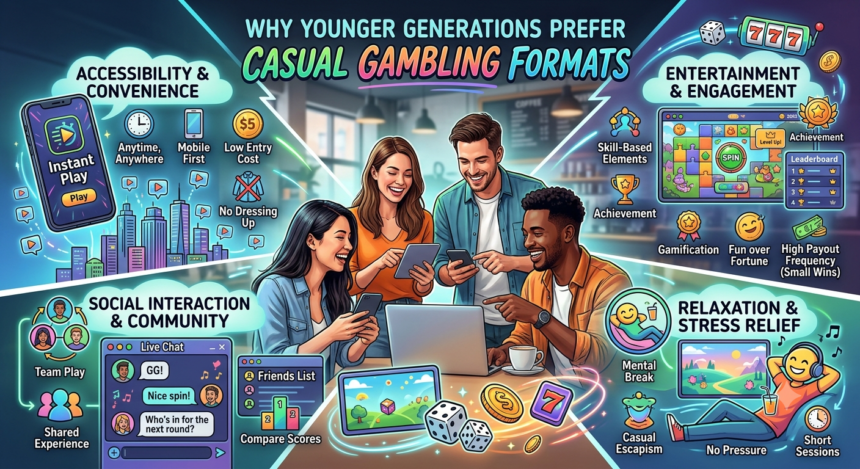
The Rise of Casual Gambling Among Digital-Native Generations
Digital entertainment habits have changed the way younger generations approach leisure, including gambling. Smartphones, mobile games and social platforms have created expectations around speed, simplicity and flexible access. Casual gambling has followed the same direction, moving away from fixed sessions towards shorter and more flexible formats.
From a psychological perspective, younger audiences are often drawn to gambling formats that match their existing digital habits. Gen Z usually prefers entertainment options with simple mechanics and shorter sessions, making casual gambling easier to include during brief periods of free time.
From Long Sessions to Flexible Entertainment Habits
Traditional gambling was often associated with planned visits, longer periods of play and dedicated leisure time. Digital formats have changed this approach by allowing users to choose when and where they engage with entertainment.
Casual gambling follows the same pattern as many other online activities. Similar to mobile games, streaming content and social applications, it is designed around quick access and simple interaction. The attraction often comes from the overall format: clear rules, visual elements and the ability to start without a lengthy preparation process.
Several habits influence why younger audiences prefer flexible digital entertainment:
- Short attention windows: Many online activities are built around brief interactions that fit between daily responsibilities.
- Mobile-first behaviour: Smartphones allow users to access entertainment during commuting, breaks or relaxed moments at home.
- Preference for simplicity: Clear interfaces reduce the time needed to understand how a digital product works.
- Social discovery: Online communities and creators influence how younger users find new forms of leisure.
These preferences are part of a broader shift towards convenience-based decision-making. People often choose activities that require less effort to begin and can adapt to changing schedules.
Why Mobile Became the Main Driver
Smartphones changed the way younger generations interact with digital content. For many Gen Z users, smartphones were the first point of contact with online entertainment, communication and social platforms.
Convenience Influences Digital Choices
Mobile access removes many restrictions connected with location and timing. Entertainment can be included between other activities instead of requiring a separate block of free time.
This pattern is especially visible in New Zealand, where smartphones are used across everyday activities, from communication and banking to shopping and entertainment. Digital services that work smoothly on mobile devices are more likely to match user expectations.
Familiar Design Reduces Barriers
Younger audiences are familiar with applications built around speed and simplicity. They expect clear menus, responsive controls and interfaces that do not require complicated explanations.
The same design principles appear across many online entertainment products. When users recognise familiar patterns, they can understand a service faster and decide whether it suits their preferences.
Gaming Culture and Modern Gambling Design
Video games have influenced how Gen Z and Millennials consume digital entertainment. Many players are used to reward systems, achievements, progress levels and interactive features that encourage continued engagement. These expectations have gradually moved into online gambling, where Spin City combines casino formats with simple navigation, visual elements and interaction patterns familiar to users of digital entertainment.
However, gaming and gambling remain different categories. Video games usually involve progression, practice and skill development, while gambling outcomes depend on chance. The connection between them is mainly found in interface design and the way digital products encourage engagement.
How Gen Z and Millennials Approach Digital Leisure
Although both generations are comfortable with online entertainment, their digital habits developed during different periods of technological change. Millennials experienced the move from desktop internet to smartphones, while Gen Z grew up with mobile platforms as a normal part of daily life.
| Habit | Gen Z | Millennials |
| Technology background | Grew up using smartphones, apps and social platforms from an early age. | Experienced the transition from desktop internet to mobile technology. |
| Entertainment preferences | Often chooses short, interactive and socially influenced content. | Often combines digital convenience with familiar formats. |
| Finding new activities | Frequently influenced by creators, communities and short videos. | Often relies on recommendations combined with own research. |
| Digital expectations | Looks for immediate access and popular content. | Values reliability, flexibility and efficient navigation. |
These differences show why younger audiences cannot be viewed as one identical group. Their expectations depend on the technology and online culture they encountered while growing up.
Personalisation and Social Media Influence
Digital users are increasingly familiar with personalised recommendations. Streaming platforms suggest films, music applications create playlists and social networks adjust feeds according to user behaviour.
As a result, younger audiences often expect digital services to adapt to their interests rather than present identical content to everyone. They often prefer services that help them discover suitable options rather than presenting the same content to everyone.
Social media also affects how people discover leisure activities. Online discussions, creators and community recommendations can shape opinions before users interact with a new product. Short videos, reviews and shared opinions often influence curiosity and expectations.
Why Casual Gambling Appeals to Younger Players
Casual gambling appeals to younger audiences because it combines several behaviours already common in digital leisure: short sessions, mobile access and recommended content. Younger audiences often prefer short gambling sessions that provide entertainment without requiring a large time commitment.
Personalisation influences how younger users discover online entertainment. Recommendations, tailored content and simple navigation help them find suitable options faster, while short-session formats fit around work, study and social activities.