


Introduction to the Current State of Education
The education systems within developing countries are often characterized by numerous systemic challenges. These challenges hinder access to quality education and ultimately affect the overall development of nations. Primarily, a significant lack of resources is apparent, as schools frequently operate with inadequate funding, leading to insufficient teaching materials, poor infrastructure, and overcrowded classrooms. This scarcity of resources creates an environment where both educators and students struggle to achieve optimal educational outcomes.
Another notable issue faced in these regions is the deficit in infrastructure. Many educational institutions may lack basic amenities such as clean water, electricity, and proper sanitation facilities, which are essential for creating conducive learning environments. Consequently, this affects not only the physical conditions of schools but also the mental well-being of students, thereby impacting their academic performance negatively.
High dropout rates represent yet another formidable challenge, often driven by factors such as poverty, cultural practices, and the pressing need for children to contribute economically to their families. In many cases, families may prioritize immediate financial support over long-term educational benefits. Consequently, the interruption of education at an early stage becomes common, perpetuating cycles of poverty and underdevelopment.
Equities in access to quality education further complicate the landscape. Marginalized groups, including girls and children from disadvantaged backgrounds, often encounter additional barriers when attempting to receive education. Issues like societal norms and economic constraints disproportionately affect these groups, resulting in higher rates of exclusion from educational opportunities.
Overall, education is a crucial vehicle for development, capable of fostering social change, economic growth, and empowering individuals. Addressing the existing challenges faced by developing countries’ educational systems is imperative for realizing these potential benefits, ultimately paving the way for a more prosperous future.
Adopting Innovative Teaching Methods
In the pursuit of improving the education system in developing countries, embracing innovative teaching methodologies stands out as an essential strategy. Traditional methods of education often rely heavily on rote memorization, which can be ineffective in promoting genuine understanding and critical thinking skills. Instead, alternative approaches such as project-based learning, experiential learning, and the effective use of technology can create more engaging classroom environments and significantly enhance student learning outcomes.
Project-based learning (PBL) allows students to investigate and respond to authentic, complex questions or challenges. This approach encourages students to take ownership of their learning, promoting collaboration, communication, and problem-solving skills. In developing countries, where resources may be limited, PBL can be adapted to utilize local contexts and materials, making the learning process both relevant and practical.
Experiential learning, on the other hand, emphasizes hands-on experience and reflection as key components of the learning process. By engaging students in real-world experiences, such as internships, field trips, and community service projects, this methodology fosters a deeper understanding of academic concepts. In a developing context, experiential learning not only enhances engagement but also encourages students to apply their knowledge in meaningful ways that can benefit their communities.
Furthermore, the integration of technology in the classroom can revolutionize the learning experience. With the widespread access to mobile devices and the internet, educators can leverage online resources, interactive tools, and digital collaboration platforms. This not only enhances accessibility to diverse information and learning materials but also prepares students for the technological demands of the modern workforce.
By adopting these innovative teaching methods, educators in developing countries can cultivate a more dynamic learning environment that not only engages students but also equips them with critical thinking skills necessary for their future success.
Community Involvement and Support
Community involvement plays a pivotal role in enhancing education systems in developing countries. Engaging parents and local communities in the educational process fosters a supportive environment that is beneficial for students and schools alike. By establishing clear communication channels between educators and parents, communities can actively participate in their children’s education, ultimately leading to improved academic outcomes.
One effective strategy to involve the community is through organized workshops and meeting sessions where parents can share their insights and experiences related to education. Schools can facilitate these meetings to encourage the exchange of ideas and resources. Additionally, local leaders can be instrumental in advocating for education, highlighting its importance and rallying support for collective efforts.
Another significant approach is to promote volunteer programs, which allow community members to contribute their time and skills to support educational initiatives. These initiatives could include tutoring students, assisting teachers in classrooms, or organizing extracurricular activities that promote holistic development. By having a stake in the educational system, community members often develop a sense of ownership, fostering a more profound commitment to the success of local schools.
Partnerships with local organizations, such as businesses, NGOs, or cultural groups, can also enhance resources available to schools. These collaborations can provide not only financial assistance but also expertise that can be invaluable in curriculum development or infrastructure improvements. For instance, businesses could sponsor events or provide internship opportunities for students, while NGOs might offer training programs for teachers.
Overall, the engagement of local communities in educational governance and activities is vital. It cultivates an environment where education is prioritized and seen as a collective responsibility. Such support not only enhances educational quality but also cultivates informed and engaged citizens who contribute positively to societal progress.
Investment in Teacher Training and Development
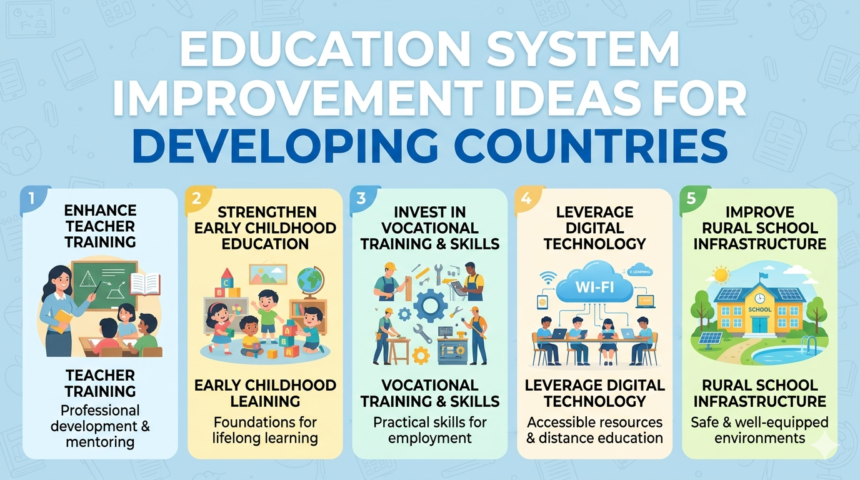
In many developing countries, the education system is suffering from a shortage of qualified teachers, inadequate training, and a lack of ongoing professional development. This situation calls for significant investment in teacher training and development, as it is essential for elevating the quality of education. Ongoing training programs are crucial in ensuring that educators are not only equipped with the necessary knowledge but also inspired to adopt modern pedagogical techniques that enhance learning outcomes.
One effective approach is the establishment of continuous professional development programs that are tailored to meet the unique challenges faced by teachers in these countries. These programs can include workshops, online courses, and mentoring systems that allow teachers to enhance their skills and share best practices with one another. Utilizing technology to deliver training can also help reach a wider audience, especially in remote areas where access to resources may be limited.
Moreover, training should encompass various aspects such as classroom management, instructional methodologies, and integration of information and communications technology (ICT) in teaching. Educators equipped with ICT skills can incorporate innovative teaching approaches that engage students and cater to diverse learning styles. Additionally, training programs should foster a culture of collaboration among educators, encouraging them to work collectively in improving their pedagogical practices.
It is also vital to recognize the significance of educational leadership in teacher training. By investing in leadership development, schools can empower principals and administrative staff to support their teachers in professional growth. Effective leadership can facilitate a positive school environment that values ongoing learning and cultivates a commitment to educational excellence.
In conclusion, investing in teacher training and development is imperative for improving the education system in developing countries. By prioritizing the professional growth of educators, we can realize more effective teaching practices and ultimately enhance the quality of education for all students.
Leveraging Technology for Educational Advancement
In the contemporary landscape of education, technology plays a pivotal role in enhancing learning opportunities, especially in developing countries. The growing prevalence of e-learning platforms stands out as a transformative initiative that allows learners to access educational materials remotely. These platforms provide diverse resources including video lectures, interactive quizzes, and virtual classrooms that accommodate various learning styles. Consequently, these tools empower students to learn at their own pace, offering flexibility that traditional education models often lack.
Access to online resources is another significant element in improving education in underprivileged regions. Websites hosting open educational resources (OER) enable both teachers and students to obtain knowledge freely. This democratization of information encourages self-directed learning and promotes a culture of curiosity among students. Moreover, mobile learning applications have emerged as a crucial technology in this context. Given the smartphone penetration rate in many developing countries, applications that deliver educational content through smartphones can effectively reach those who may otherwise have limited access to traditional school settings.
However, leveraging technology also presents challenges that must be addressed to ensure its effectiveness. A primary concern in this regard is internet connectivity. In many regions, lack of reliable internet access hampers the implementation of digital platforms. Efforts to improve infrastructure and provide affordable internet solutions are essential for educational technology initiatives to thrive. Additionally, the affordability of devices poses another hurdle; without access to computers or tablets, the potential benefits of online learning cannot be fully realized. Addressing these challenges is paramount, as only then can technology truly transform the educational landscape in developing nations and create pathways for future success.
Creating Inclusive Education Systems
Inclusivity in education is a crucial element for fostering a fair and equitable society, particularly in developing countries. It involves ensuring that education systems are accessible to all individuals, regardless of their gender, socioeconomic status, or physical ability. This approach recognizes the diverse needs of students, particularly those from marginalized groups such as girls, children with disabilities, and low-income households. To foster inclusive education, it is essential to implement comprehensive strategies that remove barriers to access and promote equitable learning opportunities.
One effective strategy is to develop policies aimed at increasing access to educational resources for marginalized communities. This may include scholarships targeted at girls and financially disadvantaged students, as well as provisions for transportation to and from school. By allocating resources to these groups, education systems can help level the playing field, allowing all children an equitable opportunity to succeed.
Another vital component is training teachers to recognize and address the unique challenges faced by students with disabilities. Implementing inclusive teaching practices can create a supportive learning environment where all pupils feel valued and capable of contributing. For instance, case studies in several African countries have demonstrated that specialized training for educators leads to improved outcomes for students with disabilities, enhancing their educational achievements and self-esteem.
Moreover, community involvement plays a significant role in promoting inclusion. Engaging parents, local leaders, and organizations in the educational process ensures that the needs of marginalized groups are acknowledged and addressed. Initiatives such as awareness campaigns and workshops can highlight the importance of education for all children, thereby shifting societal attitudes and reducing stigma.
In conclusion, creating inclusive education systems is a multifaceted endeavor that requires targeted strategies and community participation. By prioritizing equity, developing supportive policies, and empowering educators, developing countries can make significant strides towards an education system that truly benefits all its students, breaking the cycle of inequality and fostering social cohesion.
Policy Reforms and Government Initiatives
The role of government policy in shaping effective education systems cannot be overstated. Comprehensive education reforms serve as foundational pillars that guide the development and enhancement of these systems, particularly in developing countries where resources are frequently constrained. Initiatives that prioritize policies aimed at increasing access to quality education can significantly improve outcomes for students and communities alike.
One notable example of successful education reform is seen in Vietnam, where the government implemented a series of initiatives focused on curriculum enhancement, teacher training, and infrastructure development. The introduction of a national curriculum that promotes critical thinking and creativity has led to marked improvements in student performance on international assessments. Similar strategies can be extrapolated and adapted to the contexts of developing nations, ensuring local cultures and resources are considered in implementation.
Another striking case can be found in Morocco, which launched a comprehensive education reform in 2009 known as the “Emerging Schools” program. This initiative aimed to decentralize governance, allowing local authorities greater autonomy to tailor education delivery according to their unique demographic needs. By fostering community involvement and introducing accountability measures, Morocco demonstrated how decentralized efforts can spur innovation and responsiveness to local educational challenges.
Developing nations can look to these examples as blueprints for change. It is essential for governments to engage with local stakeholders, including educators, parents, and students, to foster a collaborative approach towards achieving educational improvement. Investments in technology and digital learning platforms also hold significant potential for broadening access to quality education, especially in rural and underserved areas. By harnessing effective policies, developing countries can actively work towards creating education systems that not only meet immediate needs but also support long-term societal growth.
Building Infrastructure and Providing Resources
In many developing countries, inadequate educational infrastructure represents a significant barrier to achieving quality education for all. The need for building and maintaining school facilities cannot be overstated, as access to safe and welcoming environments is essential for fostering student engagement and learning. Infrastructure improvements should focus not only on the construction of schools but also on ensuring that existing buildings are adequately maintained and equipped with necessary resources.
Access to learning materials is another crucial aspect of educational infrastructure. Students often face shortages of textbooks, writing materials, and technology, which hinders their ability to engage with the curriculum effectively. For instance, providing schools with up-to-date textbooks and resources can greatly enhance students’ learning experiences and academic performance. Moreover, incorporating technology into the classroom can facilitate interactive learning and broaden educational access, especially in remote areas.
In addition, the provision of basic amenities such as clean water and sanitation facilities is vital for maintaining both health and educational equity. Access to clean drinking water and proper sanitation not only promotes the well-being of students but also encourages higher attendance rates, particularly among girls. Schools should invest in sanitary infrastructure that meets the needs of all students, ensuring that they can learn in a safe and healthy environment.
Addressing these infrastructural deficits requires a coordinated effort between governments, local communities, and international organizations. By prioritizing the development of educational infrastructure and resource allocation, developing countries can create a more conducive learning environment. Ultimately, improved infrastructure and access to learning resources will play a key role in enhancing the overall quality of education, making it a fundamental component of educational reform initiatives.
Conclusion and Future Directions
In conclusion, the education system in developing countries faces diverse challenges that require multifaceted strategies for improvement. Throughout this blog post, we examined various approaches aimed at enhancing educational quality and accessibility, including teacher training, infrastructure development, curriculum reform, and technology integration. Each of these areas offers significant potential to foster an effective learning environment, ultimately contributing to better educational outcomes.
Looking forward, it is crucial that educational stakeholders continuously assess and adapt these strategies to remain effective in the face of evolving challenges. The landscape of education is not static; demographic changes, technological advancements, and socioeconomic shifts all play vital roles in shaping the needs of learners. Therefore, implementing a framework for regular evaluation can facilitate timely adjustments, ensuring that education systems in developing countries remain responsive and relevant.
Moreover, as we move towards the future, fostering partnerships between governments, NGOs, and local communities will prove essential. Collaborative efforts can enhance resource allocation and encourage innovative solutions. Furthermore, utilizing data-driven approaches to identify gaps in learning outcomes can direct focus on areas that require urgent attention.
Lastly, it is important to recognize the role of globalization in education. By learning from the experiences of other nations and integrating best practices into local contexts, developing countries can leapfrog challenges and forge paths toward sustainable educational progress. As we strive for educational equity, a collective commitment to ongoing improvement and innovation will be key to achieving significant advancements in learning opportunities for all students.