


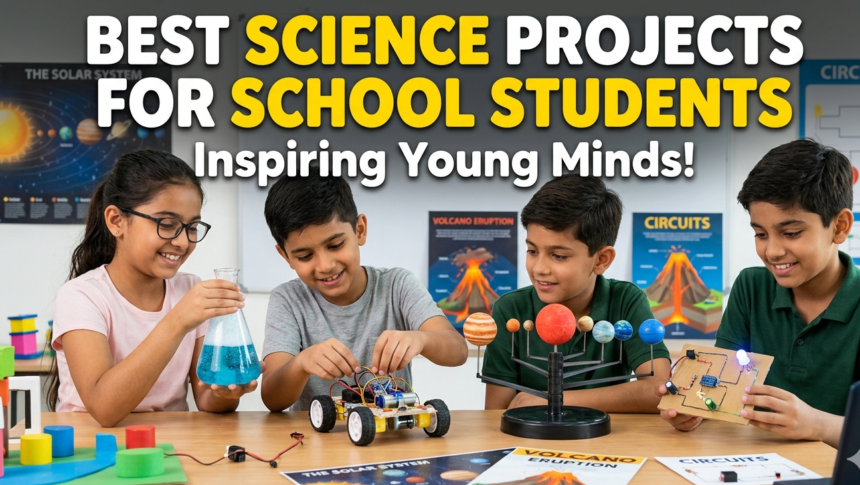
Introduction to Science Projects
Science projects play an essential role in the educational journey of school students. These hands-on activities are designed to deepen students’ understanding of scientific concepts while fostering a sense of curiosity and exploration. Engaging in science projects encourages critical thinking, as students must analyze their observations and align their findings with scientific principles. This active learning process goes beyond traditional methods of instruction, such as lectures and textbook assignments, by allowing students to apply theoretical knowledge to practical situations.
Furthermore, science projects nurture creativity. Students are often tasked with formulating their own hypotheses, designing experiments, and ultimately presenting their findings. This creative process encourages them to think outside the box and devise innovative solutions to scientific problems. As a result, they gain experience in project management skills, working collaboratively, and effective communication—all vital competencies they will need in their future academic and professional pursuits.
Importantly, science projects serve as a bridge between classroom learnings and real-world applications. By experimenting with scientific concepts firsthand, students develop a stronger grasp of the material, enhancing retention and understanding. They emerge with a practical knowledge of the scientific method, significant for any field of study they may choose in the future. Moreover, the excitement of discovery in conducting experiments can inspire a lifelong interest in science, motivating students to pursue further studies in STEM (science, technology, engineering, and mathematics) fields.
In essence, science projects are more than mere assignments; they are fundamental to cultivating a scientific mindset and equipping students with the requisite skills for both academic and professional success. As we delve into the best science projects for school students, we will explore a diverse range of project ideas that not only align with educational standards but also spark joy and enthusiasm for learning.
Choosing the Right Project
When selecting a science project, students should consider various critical factors that can significantly influence their overall experience and the success of the project. One of the primary considerations is the student’s personal interests. Choosing a project that resonates with their passions can increase engagement and motivation, making the entire process enjoyable. Whether it’s biology, chemistry, physics, or environmental science, aligning the project with their interests can foster a deeper understanding of the subject matter.
Another essential factor is the availability of materials. Students should assess what equipment and supplies they have access to, as this will limit or enhance their project options. Projects that require common household items can simplify the execution process, while more advanced projects may involve professional-grade materials, which could be expensive or challenging to procure. Therefore, a clear inventory and understanding of available resources are essential.
Age appropriateness is also a critical consideration. It’s important to match the project’s complexity with the student’s skill level and age group. Younger students may thrive with simpler experiments that are easy to understand and execute, while older students can handle more intricate projects that require analytical skills and critical thinking. Ensuring the project aligns with their educational level enhances confidence and fosters learning.
Additionally, students should define their goals for the project. Are they aiming to win a science fair, or do they wish to learn a specific scientific concept? Setting clear objectives helps in selecting a project that not only meets educational standards but also fulfills their personal aspirations. By thoughtfully assessing these factors, students can choose a science project that is enriching, achievable, and ultimately rewarding.
Popular Science Project Ideas for School Students
Science projects are a great way for students to engage with the scientific method and enhance their understanding of various scientific concepts. Below is a categorized list of popular science project ideas tailored to different grade levels, providing options that cater to both younger and older students.
Elementary School (Grades K-5)
1. Plant Growth Experiment: Explore how different factors like sunlight and water affect the growth of plants. Students can track and measure growth over a few weeks.
2. Simple Circuit Projects: Create basic circuits using batteries, wires, and light bulbs. This helps students understand the fundamentals of electricity.
3. Rain Gauge: Build a rain gauge to measure rainfall over a period of time, illustrating concepts of weather and measurement.
Middle School (Grades 6-8)
1. Volcano Eruption Experiment: Using baking soda and vinegar, students can simulate a volcanic eruption, which introduces them to chemical reactions.
2. Water Filtration System: Construct a model water filtration system using gravel, sand, and charcoal to teach about water purification processes.
3. Egg Drop Challenge: Design a structure that can protect an egg from breaking when dropped from a height, integrating principles of physics and engineering.
High School (Grades 9-12)
1. Renewable Energy Model: Create a working model of a solar panel or wind turbine to understand renewable energy sources and their impact on the environment.
2. Chemical Reaction Rates: Conduct experiments to investigate how temperature or concentration affects the rate of chemical reactions, promoting analytical skills.
3. Genetic Traits Experiment: Study genetic traits in plants or fruit flies to delve into concepts of heredity and genetics, fostering a deeper comprehension of biology.
Overall, these project ideas are designed to inspire curiosity, foster creativity, and promote the application of scientific concepts. Regardless of their grade level, students can find an engaging project that fits their interests and capabilities.
Tips for Conducting a Successful Science Project
When embarking on a science project, it is essential to approach it with a structured plan to ensure success. The first step involves careful planning and organization. Start by selecting a topic that interests you and aligns with the scientific concepts you intend to explore. Conduct preliminary research to gather background information, which will help in formulating a clear hypothesis. Once you have established your topic, create a detailed project timeline outlining each phase, from research to experimentation and presentation.
Documenting the process is vital for tracking your progress and providing evidence of your findings. Maintain a dedicated science journal to record your observations, results, and ideas as they develop. This documentation will not only aid in your final presentation but will also prove invaluable in reflecting on what worked and what didn’t throughout the project.
Safety should be a top priority when conducting experiments. Ensure to follow appropriate safety guidelines, particularly when handling chemicals or using equipment. Wear protective gear such as gloves and goggles, and always work in a well-ventilated area to avoid hazardous situations. If your project involves collaboration with others, brief your team on safety protocols to ensure everyone is aware and prepared.
Finally, be ready to troubleshoot potential problems that may arise during the project. It is common to encounter unforeseen challenges; a successful science project often hinges on how effectively you adapt to these obstacles. Regularly assess your progress and be willing to make adjustments to your methods when necessary. By adhering to these tips, you will be well on your way to conducting a successful science project that showcases your skills and understanding of scientific principles.
The Scientific Method Explained
The scientific method is a systematic approach utilized in scientific research and experimentation that allows individuals, particularly school students, to explore questions and derive conclusions based on empirical evidence. This method consists of five key steps: observation, hypothesis formulation, experimentation, analysis, and conclusion. Employing the scientific method can significantly enhance the learning process and the overall understanding of scientific concepts.
The first step, observation, involves carefully examining the world around us. Students might notice a phenomenon, such as plants growing taller in sunlight versus shade. This observation sets the stage for inquiry and exploration. Next, they formulate a hypothesis, which is a testable statement predicting an outcome based on the observations made. For instance, one could hypothesize that sunlight contributes to the increased growth of plants.
Presentation and Reporting of Science Projects
Effectively presenting and reporting on science projects is a crucial component of the scientific process. It allows students to share their findings and communicate their understanding of scientific concepts. A well-structured presentation not only reflects the quality of the research but also engages the audience, reinforcing key messages and findings. In this section, guidelines will be provided to help students create compelling displays and deliver impactful presentations.
A significant aspect of presentation preparation involves the creation of an engaging display. Students should aim to design a poster or presentation boards that are visually appealing and informative. Using a clean layout with organized sections—such as the introduction, methodology, results, and conclusion—can aid in guiding the audience through the project. Incorporating visuals, such as graphs, charts, and photographs, can enhance comprehension and retention of information. It is essential that these visual aids complement the spoken presentation, rather than overwhelm it.
Moreover, when delivering a presentation, clear communication is vital. Students should practice their speaking skills, ensuring they articulate their thoughts clearly and succinctly. Using appropriate terminology related to the scientific concepts being discussed can help establish credibility while maintaining audience understanding. Engaging the audience with questions or inviting feedback can create an interactive environment that promotes discussion and interest in the topic.
In conclusion, both the reporting and presentation of science projects are pivotal for effective communication. By adhering to these guidelines, students can enhance their public speaking abilities and leave a lasting impression on their audience, thereby fulfilling the educational objectives of their science projects.
Benefits of Engaging in Science Projects
Engaging in science projects provides numerous advantages for school students, enhancing their educational experience and fostering critical skills. One of the primary benefits is the improvement of analytical skills. When working on science projects, students are required to observe, analyze, and interpret data. This practice encourages them to cultivate a scientific mindset, allowing for better problem-solving abilities and logical reasoning. By dealing with real-world problems, students learn how to distill complex information into manageable components, facilitating a deeper comprehension of scientific concepts.
Additionally, participation in science projects helps in enhancing students’ understanding of scientific theories and principles. Engaging in hands-on activities allows students to see the practical applications of what they learn in the classroom. This experiential learning approach not only solidifies their theoretical knowledge but also ignites a passion for science and exploration. As students conduct experiments and gather evidence, they become more adept at forming hypotheses, drawing conclusions, and understanding the scientific method, thereby reinforcing their conceptual framework of science.
Moreover, science projects often require collaboration, which significantly aids in the development of teamwork and communication skills. Students frequently work in groups, sharing responsibilities and leveraging each other’s strengths to achieve a common goal. This collaborative environment promotes effective communication, as students must articulate their ideas clearly and listen to others’ perspectives. Such experiences prepare them for future endeavors in both academic and professional realms, where teamwork and communication are vital. Overall, engaging in science projects provides critical benefits that extend beyond the classroom, creating a well-rounded educational experience that is foundational for future success.
Resources for Science Projects
When embarking on a science project, it is crucial to equip oneself with the right resources that can provide guidance, inspiration, and educational value. Several online platforms offer a plethora of materials, ranging from project ideas to detailed instructions. Websites such as Science Buddies, Education.com, and National Geographic Kids are valuable starting points. These sites provide not only project ideas but also information on scientific methods, experiment techniques, and how to document findings effectively.
Books can also serve as an excellent resource for science projects. Titles like “The New Way Things Work” by David Macaulay and “Science Fair Success” are recommended for students looking for comprehensive guidance. These books highlight fundamental concepts in physics, chemistry, and biology, which can be applied in various projects. Furthermore, utilizing local libraries often unveils a wealth of resources including journals, encyclopedias, and periodicals that can enhance a student’s research.
Another key resource for students is participation in local science fairs. These events not only boost students’ learning experience but also provide an opportunity to engage with peers and professionals. Local schools, community centers, and universities often host these fairs, making them accessible to students. Participating in a science fair allows students to showcase their projects, receive constructive feedback, and network with individuals who share an interest in scientific exploration.
To maximize these resources effectively, students should approach each with a clear focus. Setting concise goals for project development aids in selecting the most relevant information. Organizing notes and findings systematically can ensure a coherent presentation at the end. Moreover, seeking advice from teachers or mentors throughout the research process will further enhance the overall quality of the project. Through the strategic use of diverse resources, students can elevate their science projects and deepen their understanding of scientific principles.
Conclusion and Final Thoughts
In this exploration of the best science projects for school students, we have uncovered a diverse range of activities that cater to various interests and skill levels. The projects discussed illustrate not only the fundamental principles of science but also the inherent joy of scientific discovery. Engaging in these projects fosters critical thinking, enhances problem-solving skills, and cultivates a deeper understanding of scientific concepts. Through hands-on experimentation, students can bridge the gap between theoretical knowledge and practical application.
It is essential to recognize that science projects provide an exceptional platform for creativity and innovation. Students are encouraged to think outside the box and design their experiments, allowing for personalization and expression of their unique ideas. Whether it involves conducting simple chemical reactions, observing environmental changes, or building engineering prototypes, the possibilities are virtually endless and can spark a passion for science that extends beyond the classroom.
Moreover, participating in science projects nurtures curiosity among students. The thrill of exploration and the satisfaction of discovery can transform perceptions of science as a mere subject into an exciting journey of learning. By encouraging students to experiment, hypothesize, and draw conclusions, educators play a pivotal role in shaping a generation of scientifically literate individuals who may one day contribute to advancements in various fields.
In conclusion, we encourage all school students to embrace the multitude of science projects available to them. Each project is an opportunity to explore, learn, and grow in the fascinating realm of science. So, gather your materials, ignite your curiosity, and embark on your next scientific adventure—who knows what discoveries await you!