


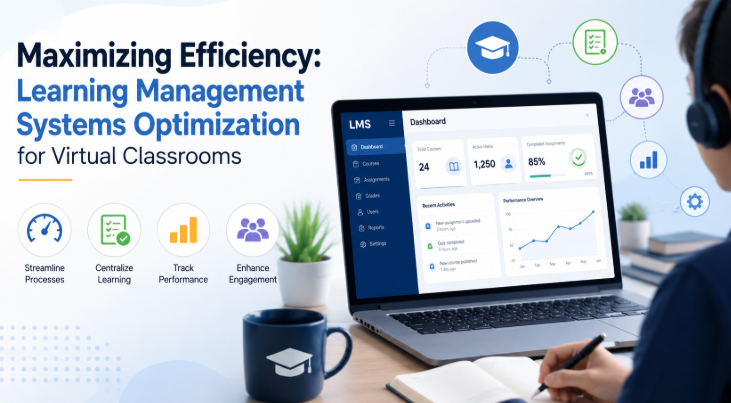
Introduction to Learning Management Systems (LMS)
Learning Management Systems (LMS) have emerged as pivotal tools in the realm of education, particularly as virtual classrooms gain prominence. An LMS is a software application designed to facilitate the administration, documentation, tracking, reporting, and delivery of educational courses and training programs. Over the years, the evolution of LMS has transformed the way educational content is crafted, delivered, and accessed by both instructors and students.
The significance of LMS in virtual classrooms cannot be overstated. With the increasing reliance on technology in education, these systems provide a centralized platform where lessons can be extensively organized, making them easily accessible for learners anywhere, at any time. This accessibility enables educators to implement a range of instructional strategies, from traditional course structures to more interactive and engaging online formats. Consequently, LMS fosters an environment conducive to diverse learning styles, allowing educators to tailor their courses to meet the varied needs of their students.
In conclusion, the role of Learning Management Systems in optimizing the virtual classroom experience is crucial. As educational institutions continue to adapt to technological advancements, understanding the capabilities and benefits of LMS will be essential for both educators and students in maximizing learning outcomes.
Key Features of Effective LMS
An effective Learning Management System (LMS) is imperative for optimizing virtual classrooms, enhancing both teaching and learning experiences. One of the core features of a successful LMS is its user-friendly interface. A simple and intuitive design allows educators and learners to navigate the system with ease. This accessibility reduces the time spent on technical difficulties and maximizes the time available for actual learning. A well-designed interface can significantly improve user engagement, making it more likely that students will actively participate in their educational journey.
Another crucial functionality is integrated communication tools. An effective LMS should incorporate chat, forums, or video conferencing capabilities to facilitate real-time interactions. These tools enable instructors to provide immediate feedback and foster collaboration among students, replicating the interactivity of physical classrooms. Such integration ensures that learners feel connected, even in a virtual setting, which is vital for maintaining motivation and engagement.
Assessment capabilities are also essential features of a robust LMS. The system should allow for a variety of assessment methods, including quizzes, assignments, and polls. This flexibility enables instructors to evaluate student understanding effectively, catering to different learning styles. By providing varied assessment options, an LMS can help ensure that all students have the opportunity to demonstrate their knowledge and skills.
Lastly, reporting metrics play a significant role in making an LMS effective. The ability to track student progress through detailed analytics empowers educators to make informed decisions about instructional practices. Data insights derived from performance reports can highlight areas where students may need additional support or resources, thus enhancing the overall learning experience. By focusing on these essential features, educational institutions can select LMS solutions that promote efficiency and drive successful virtual learning outcomes.
Challenges in Optimizing LMS for Virtual Classrooms
The use of Learning Management Systems (LMS) has become a cornerstone of modern educational practices, especially in virtual classrooms. However, optimizing these systems presents several challenges that educators must address to ensure effective learning outcomes.
One of the most significant barriers encountered is technological limitations. Not all students have access to high-speed internet or the necessary hardware to fully engage with an LMS. This digital divide can hinder participation and contribute to a disparity in learning experiences. Furthermore, technical issues related to software compatibility or system crashes can disrupt the educational process, requiring robust IT support to mitigate.
User engagement is another critical challenge. Maintaining the interest of students in a virtual environment is inherently more difficult than in face-to-face settings. With distractions prevalent at home, learners may find it challenging to stay focused during online sessions. This situation necessitates the incorporation of interactive elements within the LMS content to foster engagement and participation.
Content delivery also poses challenges, as educators must adapt traditional materials for digital platforms. Ensuring that the content is accessible, engaging, and suitable for varied learning styles is crucial for effective teaching. Additionally, instructional materials must be regularly updated to remain relevant in an ever-evolving digital landscape.
Finally, the need for training and support for both educators and students is paramount. Teachers often require guidance on how to utilize LMS features effectively, integrate technology into their teaching strategies, and respond to technical issues that may arise. Similarly, learners need training to navigate the LMS and make full use of its resources. Without proper training and ongoing support, the potential of an LMS can be underutilized, limiting the overall effectiveness of virtual classrooms.
Strategies for LMS Optimization
Optimizing Learning Management Systems (LMS) for virtual classrooms plays a crucial role in enhancing educational experiences. To achieve a conducive online learning environment, institutions must adopt effective strategies that align with their educational goals.
One effective approach is to prioritize content organization within the LMS. Clear and logical structuring of materials helps learners navigate through modules effortlessly. Educators should categorize content by themes or subjects, using headings and subheadings for better clarity. Implementing tagging systems can also assist learners in finding relevant resources quickly. Furthermore, incorporating multimedia elements, such as videos, podcasts, and interactive quizzes, can alleviate monotony and enhance engagement.
Engagement tactics are also essential for retaining student interest and participation. Utilizing discussion forums can foster interaction among students and educators, encouraging collaboration and peer learning. Incorporating gamification, such as leaderboards and reward systems, can motivate students to complete tasks effectively and enhance their learning journey. Regular check-ins via surveys or feedback forms can help gauge student satisfaction and engagement, allowing for timely adjustments to the course content.
Leveraging analytics within the LMS is another vital strategy for optimization. Many LMS platforms offer built-in analytics tools that allow educators to track student performance, completion rates, and participation levels. Analyzing this data can provide insights into students’ learning patterns and pinpoint areas needing improvement. Educators can then tailor interventions, such as personalized feedback or additional resources, ensuring that all learners achieve their academic potential.
By implementing these strategies—effective content organization, user engagement tactics, and leveraging analytics—educational institutions can optimize their LMS platforms, creating an effective virtual classroom conducive to maximizing learning outcomes.
Integrating Multimedia and Interactive Content
In the realm of virtual classrooms, the integration of multimedia and interactive content has become increasingly essential for enhancing the learning experience. Learning Management Systems (LMS) optimized for multimedia content can lead to more engaging and effective learning environments. Various types of multimedia, such as videos, simulations, and interactive quizzes, serve as compelling tools that cater to different learning preferences and styles.
Videos can be particularly powerful in a virtual classroom setting. They provide visual context to complex concepts and help to illustrate real-world applications of the material being studied. By incorporating short instructional videos, educators can break down difficult content into digestible segments, fostering greater comprehension and retention among students. Additionally, the use of animations and visual storytelling can help maintain viewer interest, allowing learners to stay focused.
Simulations and interactive content further heighten engagement levels in LMS platforms. These tools enable students to actively participate in their learning rather than being passive recipients of information. For instance, a virtual science lab simulation allows learners to conduct experiments in a controlled environment, better equipping them with practical skills. Such hands-on experiences can significantly improve understanding and retention rates.
Quizzes and discussions integrated into the LMS not only assess knowledge but also encourage collaboration among students. By prompting learners to answer questions or engage in dialogue about course materials, educational institutions can create a robust interactive atmosphere that promotes critical thinking and peer-to-peer learning.
Ultimately, by optimizing the LMS with multimedia and interactive elements, educators can enhance student engagement and retention. This approach ensures that learners are not only receiving information but are actively involved in the learning process, making education in virtual classrooms more effective and enjoyable.
The Role of Data Analytics in LMS Optimization
Data analytics plays a pivotal role in the optimization of Learning Management Systems (LMS), particularly within virtual classrooms. By systematically gathering and analyzing various types of data, educators and administrators can assess LMS performance and identify areas for improvement. The data collected can include student engagement metrics, assessment results, and user feedback, among other forms. This information serves as a crucial foundation for understanding how learners interact with the educational materials and the overall effectiveness of the LMS.
One prominent type of data involves tracking student interactions with the system, such as login frequency and time spent on particular courses. This type of engagement data can illuminate patterns of participation, helping educators recognize which content resonates most with learners. Additionally, assessment data provides insights into student comprehension, revealing knowledge gaps and topics requiring more focus. By analyzing this data collectively, educators can tailor their instructional strategies to better meet the needs of their students.
Interpreting data analytics is essential for driving educational improvements. For instance, if the data indicates that a significant percentage of students struggle with a specific module, instructors can implement targeted interventions, such as revising course content, offering supplementary resources, or incorporating interactive elements to enhance understanding. Conversely, positive engagement data may prompt educators to replicate successful strategies in other areas of the curriculum.
Furthermore, the insights derived from data analytics extend beyond individual courses. By evaluating trends across multiple courses or programs, institutions can adjust their overall teaching approaches and resource allocation, ensuring a more efficient and effective LMS. Ultimately, harnessing data analytics in LMS optimization not only enhances teaching methodologies but also significantly improves the learning experience for students in virtual classrooms.
Case Studies of Successful LMS Optimization
Many educational institutions have recognized the potential of Learning Management Systems (LMS) to enhance the learning experience and streamline administrative processes. Through strategic optimization of their LMS, these institutions have reported significant improvements in both student engagement and learning outcomes. This section examines several notable case studies that highlight effective approaches to LMS optimization.
One exemplary case is that of the University of Wisconsin, which undertook a comprehensive overhaul of its LMS to facilitate a more user-friendly experience. By integrating adaptive learning technologies, the university was able to personalize content delivery, thus catering to diverse learning styles. The implementation of data analytics within their LMS also allowed educators to track student progress more effectively, resulting in a 20% increase in course completion rates. This case illustrates that leveraging technology can lead to greater student success and retention.
Another compelling instance is the case of the Oakland Unified School District, which sought to improve engagement among middle and high school students. By optimizing their LMS with gamification elements, they created a more interactive learning environment. Students reported higher motivation levels and an increase in participation by 30%. Furthermore, feedback mechanisms were integrated, enabling real-time assessments and tailored support for students, ultimately leading to higher academic performance.
Finally, the Joensuu University of Applied Sciences in Finland optimized its LMS by incorporating collaborative tools that foster peer-to-peer learning. This approach not only improved student satisfaction but also facilitated knowledge sharing among learners. The university observed a notable uptick in group project scores and collaboration efficacy, demonstrating that social engagement within digital platforms is integral to successful educational outcomes.
These case studies exemplify how strategic LMS optimization can dramatically enhance the educational experience. By evaluating successful implementations, other institutions can identify effective strategies for their own LMS advancements, ensuring their virtual classrooms meet the evolving needs of learners.
Future Trends in LMS and Virtual Learning
The landscape of Learning Management Systems (LMS) and virtual learning is poised for significant transformation in the coming years, driven by advancements in technology and changing educational paradigms. One notable trend is the integration of artificial intelligence (AI) within LMS platforms. AI can enable personalized learning experiences, adapting content and methodologies to suit individual learner preferences and paces. This tailored approach enhances engagement and improves knowledge retention, making learning more effective.
Mobile learning is another emerging trend that is reshaping the way educational content is consumed. With the increasing reliance on smartphones and tablets, LMS platforms are optimizing their functionalities for mobile devices. This transition allows learners to access materials anytime and anywhere, promoting a more flexible and convenient learning experience. As mobile technology continues to evolve, LMS providers will likely enhance their features to accommodate a growing mobile-first approach.
Furthermore, the incorporation of virtual and augmented reality (VR and AR) into virtual classrooms is set to provide immersive learning experiences. These technologies create simulated environments where learners can engage in interactive scenarios that reinforce theoretical concepts. For example, medical students could practice surgery in a virtual setting, while engineering students could explore complex structures through augmented overlays. Such immersive experiences not only increase student engagement but also facilitate deeper understanding and retention of complex subjects.
As educational institutions and organizations prepare for these future trends, they must consider the implications of adopting new technologies. Continuous training for educators, alongside investment in cutting-edge LMS features, will be essential for maximizing the effectiveness of virtual classrooms. By thoughtfully integrating these innovations, institutions can ensure they remain at the forefront of educational excellence.
Conclusion and Call to Action
In conclusion, the optimization of Learning Management Systems (LMS) for virtual classrooms is a vital step in enhancing educational experiences. By adopting an effective LMS strategy, educators can significantly improve engagement, learning outcomes, and overall satisfaction among students. As highlighted throughout this blog post, prioritizing user-friendly interfaces, personalized learning paths, and seamless integration of technologies are critical components that contribute to a successful virtual teaching environment.
Educators are encouraged to reflect on their current LMS strategies, identifying areas of improvement and leveraging new features offered by contemporary systems. Continuous assessment and feedback will enable instructors to adapt their approaches, ultimately fostering a richer learning experience for their students. Moreover, embracing innovative solutions such as gamification, interactive content, and social learning can further enhance participation and retention rates in virtual classrooms.
As we move forward in a time where digital education is becoming increasingly prominent, it is essential to stay abreast of developments in LMS technology. Educators can benefit from engaging in professional development opportunities and collaborative exchanges with peers to share best practices. By committing to ongoing optimization of their LMS platforms, educators not only elevate their teaching strategies but also prepare their students for a rapidly evolving digital landscape.
We invite all educators to take action: revisit your current LMS usage, explore new functionalities, and seek feedback from students to create a more inclusive and interactive virtual learning space. Together, we can maximize the efficiency of our learning environments and ensure that every student has the opportunity to succeed in their educational journey.