


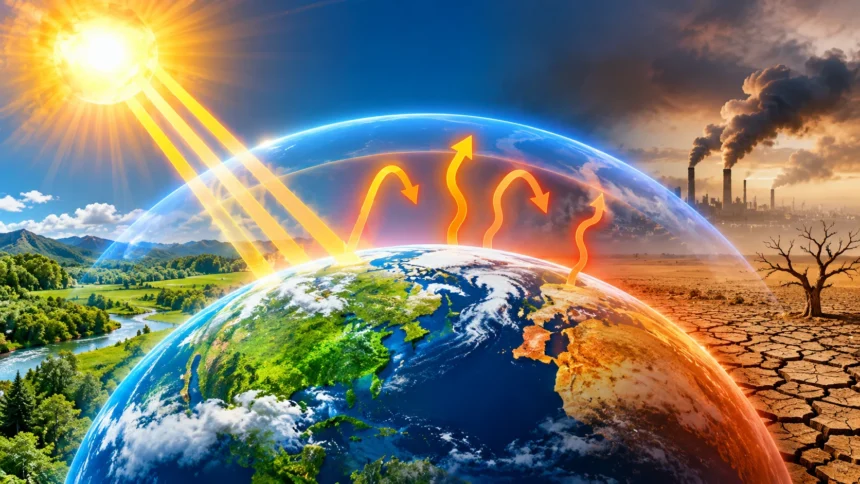
The greenhouse effect is a natural process that keeps Earth warm by trapping some of the heat that would otherwise escape into space. It occurs when gases in the atmosphere absorb and release infrared radiation emitted by Earth’s surface. Without this natural warming process, our planet would be much colder and less suitable for life as we know it.
However, human activities are increasing the concentration of greenhouse gases, making the atmosphere retain more heat. Burning fossil fuels, clearing forests, and certain agricultural practices contribute to this change. Understanding what the greenhouse effect is and why it matters helps explain global warming, climate change, and the importance of protecting Earth’s environment.
What Is the Greenhouse Effect?
The greenhouse effect is the process through which certain atmospheric gases absorb and emit heat energy, helping maintain Earth’s temperature. Sunlight reaches the planet and warms its surface, which then releases energy as infrared radiation. Greenhouse gases absorb some of this outgoing radiation and emit energy in different directions, including back toward Earth’s surface.
This natural process helps create temperatures suitable for plants, animals, and human communities. Without greenhouse gases, Earth’s average surface temperature would be approximately −18°C instead of about 15°C. The difference demonstrates how important atmospheric heat retention is for maintaining conditions that allow liquid water and many familiar forms of life to exist.
The greenhouse effect itself is not harmful because it is an essential part of Earth’s climate system. Problems develop when additional greenhouse gases strengthen the natural process and disturb the planet’s energy balance. Rising concentrations of carbon dioxide, methane, and other heat-trapping gases contribute to increasing global temperatures and long-term environmental changes.
How Does the Greenhouse Effect Work?
The greenhouse effect begins when energy from the Sun reaches Earth’s atmosphere. Some incoming sunlight is reflected into space by clouds, atmospheric particles, and bright surfaces. The remaining energy is absorbed by land, oceans, and other parts of the planet, causing them to warm and release heat as infrared radiation.
As this infrared energy travels upward, greenhouse gas molecules absorb radiation at particular wavelengths. These molecules then transfer energy through collisions or emit infrared radiation in different directions. Some emitted energy travels downward, contributing to surface warming, while energy escaping into space helps balance the planet’s incoming solar energy.
When greenhouse gas concentrations increase, the atmosphere becomes more effective at limiting the escape of infrared energy. This creates an energy imbalance that causes the climate system to warm until a new balance develops. The process involves atmospheric circulation, clouds, oceans, and other factors, making Earth’s temperature response more complex than simple heat trapping.
What Are the Main Greenhouse Gases?
Greenhouse gases are atmospheric substances that absorb and emit infrared radiation, influencing Earth’s temperature. Carbon dioxide, methane, nitrous oxide, water vapor, ozone, and certain industrial gases contribute to this process. Each gas has different sources, atmospheric properties, and effects on warming, so understanding their roles is important when studying climate change.
Carbon dioxide is a major driver of human-caused global warming because its concentration has increased substantially through fossil fuel combustion and land-use changes. Methane is another powerful greenhouse gas released through activities such as livestock farming, fossil fuel production, and waste decomposition. Nitrous oxide comes from various natural processes and human activities, including agricultural soil management.
Water vapor is the most abundant greenhouse gas, but it behaves differently from many human-emitted gases. Its concentration largely responds to atmospheric temperature, creating feedback that amplifies warming initiated by other causes. Certain manufactured gases can also trap substantial heat, even when present in relatively small atmospheric concentrations.
Why Is the Greenhouse Effect Important for Life?
The natural greenhouse effect helps maintain temperatures that support liquid water across much of Earth’s surface. Water is essential for biological processes, agricultural production, and the survival of ecosystems. Without sufficient atmospheric warming, many regions would experience conditions too cold to support the environments and communities that exist today.
Greenhouse gases also contribute to the climate conditions that support plant growth and ecological activity. Temperature influences growing seasons, biological processes, and the distribution of different species. However, living organisms depend on suitable environmental conditions rather than unlimited warming, which is why changes in global temperature can create difficulties.
The greenhouse effect also influences the movement of energy through Earth’s atmosphere and oceans. These interactions help shape weather patterns and regional climates over time. Maintaining a relatively stable climate system is important because human settlements, agricultural practices, and natural ecosystems have developed around particular temperature and rainfall conditions.
Natural Greenhouse Effect vs. Enhanced Greenhouse Effect
The natural greenhouse effect occurs because the atmosphere contains gases that absorb and emit infrared radiation. This process existed long before modern industrial activity and remains necessary for maintaining habitable temperatures. Natural sources and processes, including evaporation, biological activity, and exchanges between oceans and the atmosphere, contribute to atmospheric greenhouse gas concentrations.
The enhanced greenhouse effect refers to additional warming caused by increases in heat-trapping gases, primarily from human activities. Burning coal, oil, and natural gas releases carbon dioxide that adds to atmospheric concentrations. Deforestation and agricultural activities also influence the climate system by changing greenhouse gas emissions and the removal of carbon dioxide.
The key difference between these processes is their effect on Earth’s energy balance. Natural greenhouse warming supports life, while the human-driven increase is causing global temperatures to rise beyond historical conditions experienced by modern civilization. Understanding this distinction helps explain why scientists focus on reducing additional emissions rather than eliminating greenhouse gases entirely.
What Causes the Enhanced Greenhouse Effect?
Burning fossil fuels is the largest source of human-caused carbon dioxide emissions. Electricity generation, transportation, industrial production, and building heating frequently rely on coal, oil, or natural gas. When these fuels burn, stored carbon combines with oxygen and enters the atmosphere as carbon dioxide, contributing to long-term warming.
Deforestation also strengthens the enhanced greenhouse effect by releasing stored carbon and reducing the capacity of forests to absorb carbon dioxide. Trees remove carbon dioxide from the atmosphere during photosynthesis and store carbon in their tissues. Clearing or burning forests can release that stored carbon while changing the surrounding environment.
Agriculture and industrial activities produce additional greenhouse gases through several processes. Livestock digestion and some rice-growing practices release methane, while fertilizer use contributes to nitrous oxide emissions. Certain manufacturing activities also produce carbon dioxide or other warming gases, making climate change a challenge that involves multiple economic sectors.
How Does the Greenhouse Effect Cause Global Warming?
Global warming occurs when Earth’s average surface temperature increases over an extended period. The enhanced greenhouse effect contributes to this warming by reducing the rate at which heat energy escapes into space. As additional energy accumulates within the climate system, the atmosphere, oceans, and land gradually become warmer.
Temperature increases do not occur equally across every location or season. Land areas generally warm faster than oceans, and some high-latitude regions experience particularly rapid changes. Natural climate variability can influence short-term temperature patterns, but the long-term warming trend is primarily driven by increasing concentrations of human-produced greenhouse gases.
Warming can also trigger feedback processes that influence future climate conditions. For example, melting snow and ice expose darker surfaces that absorb more sunlight, increasing local heating. Similarly, warmer air can hold more water vapor, which strengthens greenhouse warming and contributes to additional temperature changes.
How Does the Greenhouse Effect Affect Climate Change?
Climate change involves long-term changes in temperatures, rainfall, seasonal patterns, and other characteristics of Earth’s climate. The enhanced greenhouse effect is the main cause of the current long-term global warming trend. As temperatures rise, the distribution of heat and moisture changes, influencing weather systems across different regions.
Warmer air can hold more water vapor, potentially increasing the intensity of heavy rainfall under suitable atmospheric conditions. Higher temperatures can also worsen certain drought conditions by increasing evaporation and drying soils. However, the effects vary by location, and individual weather events depend on several interacting factors.
Climate change also affects the timing of seasonal events and the conditions experienced by different ecosystems. Some regions may experience shifts in growing seasons, snowfall patterns, or water availability. These changes can create challenges for communities that depend on relatively predictable rainfall, temperatures, and environmental resources.
How Does the Greenhouse Effect Affect Oceans?
Oceans absorb much of the additional heat accumulating in Earth’s climate system. As greenhouse gas concentrations increase and global temperatures rise, ocean waters gradually become warmer. This warming can affect marine ecosystems, ocean circulation, and the conditions experienced by species adapted to particular temperature ranges.
Warmer seawater also expands, contributing to rising sea levels. Melting land-based glaciers and ice sheets add additional water to the oceans, increasing sea levels further. Coastal communities may face greater flooding risks, shoreline erosion, and saltwater intrusion as these long-term changes continue.
Increasing atmospheric carbon dioxide creates another challenge through ocean acidification. When seawater absorbs additional carbon dioxide, chemical reactions reduce its pH and alter carbonate availability. These changes can affect organisms that build shells or skeletons from calcium carbonate, creating additional pressures on marine environments alongside ocean warming.
Effects of the Greenhouse Effect on Plants and Animals
Rising temperatures can change the habitats and environmental conditions that plants and animals depend on. Some species may shift toward cooler regions or higher elevations as their traditional habitats become warmer. Others may struggle to move, adapt, or reproduce successfully when environmental changes occur faster than their natural responses.
Plant growth is influenced by temperature, sunlight, water availability, and carbon dioxide concentrations. Although additional carbon dioxide can support photosynthesis under certain conditions, extreme heat and water shortages may reduce these benefits. Changes in rainfall and seasonal temperatures can also influence flowering, pollination, and the availability of food for wildlife.
Climate-related changes can disrupt relationships between species within ecosystems. For example, plants may flower earlier while important pollinators follow different seasonal patterns. Habitat loss, changing temperatures, and extreme weather can combine with existing environmental pressures, making conservation and responsible land management increasingly important.
How Does the Greenhouse Effect Affect Human Health?
The enhanced greenhouse effect contributes to global warming, which can increase exposure to dangerous heat in many regions. Extended periods of high temperatures may cause heat-related illnesses and create additional risks for people working outdoors. Older adults, young children, and individuals with certain medical conditions may be especially vulnerable during extreme heat.
Changing temperatures and rainfall patterns can also influence the distribution of some disease-carrying insects. However, the spread of infectious diseases depends on multiple factors, including public health systems, local environments, and preventive measures. Climate change may also affect air quality through its influence on wildfire conditions and certain pollutants.
Food security and access to clean water can be affected by climate-related disruptions. Droughts, floods, and extreme heat may interfere with agricultural production and water infrastructure. Strengthening healthcare services, improving early-warning systems, and preparing communities for extreme weather can help reduce these risks.
How Does the Greenhouse Effect Impact Agriculture?
Agriculture depends on suitable temperatures, rainfall patterns, and soil conditions. As the enhanced greenhouse effect raises global temperatures, some farming regions experience greater exposure to heat stress and changing water availability. These conditions can influence crop development, reduce yields during extreme weather, and complicate agricultural planning.
Different crops respond to climate conditions in different ways. Some plants may benefit from longer growing seasons in certain regions, while others become less productive when temperatures exceed their preferred ranges. Increased carbon dioxide can influence growth, but nutrient availability, water shortages, and heat stress may limit potential benefits.
Farmers can respond through practical changes in crop management, irrigation, and soil conservation. Selecting suitable crop varieties and improving water efficiency may help reduce vulnerability to changing conditions. However, successful adaptation depends on local climate patterns, available resources, and access to reliable agricultural information.
What Are the Economic Effects of the Greenhouse Effect?
The enhanced greenhouse effect contributes to climate-related changes that can create economic costs for businesses and communities. Extreme heat, flooding, and other hazards may damage infrastructure or interrupt transportation and essential services. These disruptions can increase repair expenses and affect industries that depend on stable environmental conditions.
Agriculture, tourism, energy, and insurance are among the sectors that may experience climate-related financial pressures. For example, changing rainfall patterns can influence farming productivity, while rising temperatures may increase electricity demand for cooling. The economic effects vary between regions because infrastructure, resources, and exposure to climate hazards differ.
Climate adaptation and emissions reduction can also create opportunities for technological development and infrastructure improvement. Investments in energy efficiency, resilient buildings, and cleaner technologies may reduce certain long-term risks. Economic planning becomes more effective when decision-makers consider both the costs of climate impacts and the benefits of preventive action.
How Can We Reduce the Enhanced Greenhouse Effect?
Reducing the enhanced greenhouse effect requires lowering human-caused emissions of carbon dioxide and other greenhouse gases. Replacing high-emission energy sources with lower-emission alternatives can reduce the amount of additional heat-trapping gas entering the atmosphere. Renewable electricity, energy efficiency, and cleaner industrial processes are important parts of this transition.
Protecting forests and restoring degraded ecosystems can also support climate mitigation. Healthy forests absorb carbon dioxide and store carbon in vegetation and soils, although their storage capacity is not unlimited. Preventing unnecessary deforestation helps preserve biodiversity while reducing emissions associated with changes in land use.
Agriculture and waste management offer additional opportunities to reduce greenhouse gas emissions. Improved fertilizer practices, methane capture, and better waste handling can address particular emission sources. Combining these approaches with effective policies and technological innovation can support broader efforts to limit long-term global warming.
How Can Individuals Help Reduce Greenhouse Gas Emissions?
Individuals can contribute to emissions reduction by improving energy efficiency in everyday activities. Using efficient appliances, reducing unnecessary electricity consumption, and improving home insulation may lower energy demand. The environmental benefit depends on how electricity is generated, but reducing wasteful energy use is generally a practical starting point.
Transportation decisions can also influence personal greenhouse gas emissions. Walking, cycling, public transportation, and shared travel may reduce emissions compared with frequent individual car journeys when suitable options are available. Maintaining vehicles properly and combining unnecessary trips can provide additional ways to use transportation resources efficiently.
Responsible consumption and waste reduction offer further opportunities for environmental action. Repairing usable items, reducing food waste, and choosing durable products can limit some emissions associated with production and disposal. Individual choices matter, but broader improvements in energy systems, infrastructure, and public policy are also essential for meaningful climate progress.
Why Understanding the Greenhouse Effect Matters
Understanding the greenhouse effect helps explain the relationship between Earth’s atmosphere and global temperature. It shows why certain gases are necessary for life while also revealing how increasing their concentrations can alter the climate. This knowledge makes scientific discussions about global warming easier to understand and evaluate.
Climate education can also help people recognize the difference between natural climate processes and human-caused environmental changes. Weather conditions vary from day to day, while climate trends are evaluated over much longer periods. Understanding this distinction helps prevent confusion when individual cold days or unusual weather events are discussed.
Learning about the greenhouse effect supports more informed decisions about energy, environmental protection, and community planning. Individuals, businesses, and governments can use scientific knowledge to evaluate climate risks and possible solutions. Better understanding does not eliminate every challenge, but it provides a foundation for responsible action and long-term environmental planning.
Conclusion
The greenhouse effect is an essential natural process that helps keep Earth warm enough to support life. Greenhouse gases absorb and emit infrared radiation, influencing the planet’s temperature and energy balance. Without this process, Earth’s surface would be much colder and many familiar ecosystems would struggle to exist.
However, human activities have increased atmospheric greenhouse gas concentrations, strengthening the natural warming process. The resulting global warming contributes to changes in weather patterns, ocean conditions, ecosystems, and human communities. Understanding these effects is important because climate-related challenges often involve several connected environmental and social factors.
Reducing greenhouse gas emissions and preparing for climate impacts are important parts of protecting Earth’s future. Cleaner energy, responsible land management, efficient resource use, and informed public decisions can help address these challenges. By understanding how the greenhouse effect works, people can better appreciate both its natural importance and the need to limit additional warming.
Frequently Asked Questions
What Is the Greenhouse Effect in Simple Words?
The greenhouse effect is a natural process in which gases in Earth’s atmosphere absorb and release heat energy. This helps keep the planet warm enough for life, but increasing greenhouse gas concentrations causes additional warming.
What Are the Main Causes of the Greenhouse Effect?
The natural greenhouse effect occurs because gases such as water vapor, carbon dioxide, and methane absorb infrared radiation. Human activities, especially burning fossil fuels and deforestation, increase greenhouse gas concentrations and strengthen this warming process.
Why Is the Greenhouse Effect Important?
The greenhouse effect maintains temperatures that allow liquid water and support life on Earth. Without natural greenhouse warming, the planet would be much colder and unsuitable for many existing plants, animals, and ecosystems.
What Is the Difference Between Global Warming and the Greenhouse Effect?
The greenhouse effect is the process through which atmospheric gases influence Earth’s heat balance. Global warming refers to the long-term increase in Earth’s average surface temperature, primarily caused today by the enhanced greenhouse effect.
How Can We Reduce the Greenhouse Effect?
We cannot eliminate the natural greenhouse effect without making Earth much colder. However, we can reduce additional warming by cutting greenhouse gas emissions, improving energy efficiency, protecting forests, and adopting cleaner technologies.