


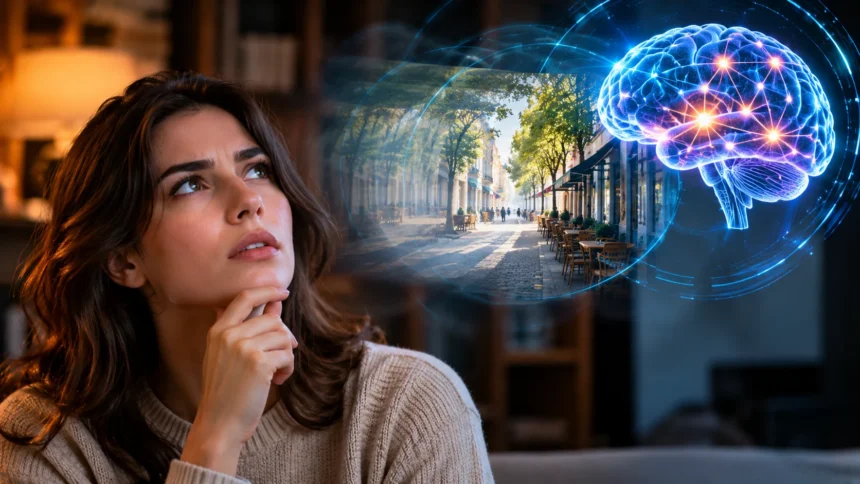
Have you ever visited a place for the first time but felt certain you had been there before? Perhaps you were having a conversation when everything suddenly seemed strangely familiar. This unusual experience is called déjà vu, and it has fascinated scientists, psychologists, and ordinary people for generations.
Déjà vu can make an unfamiliar moment feel like a memory, even when you know the situation is new. The sensation usually lasts only a few seconds before disappearing. Although it may feel mysterious, researchers believe it is closely connected to how the brain processes familiarity, recognition, and memory.
So, what causes deja vu, and what does science say about it? Researchers have developed several theories involving memory signals, brain activity, attention, and neurological processes. This guide explores the science behind déjà vu, why it happens, who experiences it, and when repeated episodes might deserve medical attention.
What Is Déjà Vu?
Déjà vu is a psychological experience in which a person feels that a current situation has happened before, despite recognizing that it is new. The phrase comes from French and means “already seen.” It describes a sudden sensation of familiarity that appears without a clear memory explaining its origin.
The experience may occur while walking through an unfamiliar building, meeting someone new, or listening to a conversation. Everything can briefly seem recognizable, even though the person cannot identify when the supposed earlier experience occurred. This conflict between familiarity and conscious knowledge makes déjà vu especially interesting to researchers.
Most episodes are brief and do not interfere with everyday activities. People generally remain aware of their surroundings and understand that the feeling may be misleading. Scientists study this experience because it provides valuable clues about how the human brain distinguishes genuine memories from feelings of familiarity.
What Causes Déjà Vu in the Brain?
Scientists have not identified one explanation that accounts for every déjà vu experience. However, several theories suggest that it occurs when the brain produces a feeling of familiarity without retrieving a matching memory. This temporary mismatch can make a new situation seem strangely recognizable.
One explanation involves brain regions associated with memory, particularly structures within the medial temporal lobe. These regions help process familiar information and retrieve previous experiences. If familiarity signals become active without appropriate contextual details, the brain may interpret the present moment as something previously encountered.
Another possibility involves similarities between current experiences and forgotten memories. A new environment might share visual patterns or spatial arrangements with a place encountered years earlier. The brain may recognize those similarities without identifying their source, creating the powerful impression that the entire situation has happened before.
How Does Memory Play a Role in Déjà Vu?
Memory is central to understanding why déjà vu occurs. The brain uses different processes to recognize familiar information and retrieve specific details about past experiences. These processes usually work together, but they do not always provide identical signals about whether something has been encountered previously.
Familiarity allows a person to recognize something without necessarily remembering where it was seen. Recollection provides additional information, such as the location, time, or circumstances of an earlier event. Déjà vu may occur when familiarity becomes unusually strong despite the absence of a corresponding recollection.
For example, entering a new café might remind the brain of another location with a similar layout. You may not consciously remember the earlier café, but certain features could trigger familiarity. Researchers have investigated how these partially recognized patterns might contribute to déjà vu, although the full mechanism remains uncertain.
What Does Science Say About Déjà Vu?
Scientific research suggests that déjà vu is closely related to memory processing rather than evidence of supernatural experiences. Researchers investigate the phenomenon through psychological experiments, brain imaging, and neurological observations. These approaches help explain how people can experience strong familiarity even when they cannot identify a genuine previous encounter.
Laboratory studies have shown that unfamiliar scenes can produce familiarity when their arrangements resemble previously viewed environments. Participants may feel that a new scene is recognizable without remembering the original source. These findings support the idea that hidden similarities between experiences can contribute to déjà vu.
Neurological research offers another perspective by examining memory-related brain activity. Some people with temporal lobe epilepsy experience déjà vu as part of a seizure. Although this connection provides useful scientific evidence, ordinary déjà vu is generally harmless and should not be confused with a neurological disorder.
Why Does Déjà Vu Feel So Real?
Déjà vu feels convincing because familiarity is a powerful mental signal. The brain normally uses this signal to help recognize people, places, and situations encountered previously. When familiarity appears without a supporting memory, the sensation can still carry the confidence associated with genuine recognition.
The feeling may become more noticeable when several features of an unfamiliar situation seem familiar at once. Lighting, sounds, conversations, or room arrangements might resemble something experienced earlier. However, researchers have not established that every episode results from a forgotten experience or a recognizable environmental similarity.
Another unusual feature is that people often recognize the contradiction while experiencing déjà vu. They may strongly feel that something happened before while knowing that it probably did not. This awareness separates many ordinary déjà vu experiences from firmly held false beliefs about past events.
Can Stress, Fatigue, or Lack of Sleep Cause Déjà Vu?
Stress, fatigue, and disrupted sleep are sometimes discussed as possible influences on déjà vu experiences. These conditions can affect attention, concentration, and memory performance. However, scientific evidence has not established that any one of them directly causes ordinary déjà vu in every person.
Fatigue may make it harder to process incoming information consistently. Some researchers have suggested that changes in attention or memory processing could contribute to unusual familiarity experiences. Nevertheless, this explanation remains a possibility rather than a confirmed mechanism for all episodes.
Sleep is important for memory organization and normal brain function. Maintaining a consistent sleep schedule can support concentration and general cognitive health. If déjà vu becomes unusually frequent or occurs alongside other concerning symptoms, medical evaluation is more useful than assuming tiredness is the explanation.
Who Experiences Déjà Vu Most Often?
Déjà vu is a relatively common experience reported by people from different backgrounds. Surveys suggest that many individuals experience it at least once during their lives. However, reported rates vary because people interpret the sensation differently and may not remember every episode.
Research commonly finds that déjà vu reports are more frequent among younger adults than older adults. The reasons for this difference are not fully understood. Changes in memory processing, opportunities for novel experiences, and differences in how people recall episodes may all contribute to reported patterns.
Some studies have also explored possible relationships between déjà vu, travel, education, and dream recall. These findings are not consistent enough to establish simple causes. Experiencing déjà vu occasionally does not indicate a particular personality type, intelligence level, or unusual mental ability.
Is Déjà Vu Connected to Dreams or Past Experiences?
Some people experience déjà vu in situations that seem connected to dreams they remember having. A location, conversation, or sequence of events may resemble something previously imagined during sleep. This similarity can make the present moment feel especially mysterious or emotionally noticeable.
Scientists have not established that dreams predict future events through déjà vu. Instead, remembered dream fragments may contribute to familiarity when similar details appear during waking life. Because dreams can contain ordinary locations, people, and situations, occasional resemblance does not necessarily indicate a meaningful connection.
Past experiences may also contribute without being consciously remembered. A person could have encountered a similar scene in a photograph, video, or earlier visit. The brain may register familiar features while failing to retrieve the original context, creating an experience that feels new and remembered simultaneously.
Is Déjà Vu Normal or a Sign of a Medical Problem?
Occasional déjà vu is generally considered a normal experience and is usually not a cause for concern. Most people who experience it remain alert and continue their activities without difficulty. A brief familiarity sensation alone does not mean that someone has a neurological or mental health condition.
However, repeated or unusual episodes can sometimes occur in association with certain neurological conditions. Temporal lobe seizures, for example, may involve sudden familiarity sensations alongside other changes in awareness or perception. The presence of additional symptoms is important when evaluating whether an episode needs medical attention.
Seek medical advice if déjà vu becomes frequent, prolonged, or significantly different from previous experiences. Episodes accompanied by confusion, unusual smells, memory gaps, or altered awareness also deserve professional evaluation. A healthcare professional can assess the symptoms and determine whether further investigation is necessary.
Common Myths and Misconceptions About Déjà Vu
One popular myth suggests that déjà vu proves a person has lived through the same moment in a previous life. Although this interpretation appears in popular culture, scientific research has not established such a connection. Existing evidence focuses on brain activity, familiarity, and memory processing.
Another belief is that déjà vu means someone can predict what will happen next. The strong familiarity sensation may create an impression that upcoming events are already known. However, experimental research has not demonstrated that ordinary déjà vu provides reliable information about future events.
Some people also assume that déjà vu always signals a brain problem. This belief overlooks how common brief familiarity experiences can be among otherwise healthy individuals. The important distinction is between occasional, uncomplicated déjà vu and recurring episodes associated with concerning neurological symptoms.
Conclusion
Déjà vu is a fascinating experience in which an unfamiliar situation suddenly feels recognizable. Scientists believe that memory processes and familiarity signals play important roles in producing this sensation. Although several explanations have been proposed, researchers have not identified a single mechanism responsible for every episode.
Research involving memory experiments and neurological observations has improved our understanding of déjà vu. Similarities between environments, unexpected familiarity signals, and activity in memory-related brain regions offer possible explanations. These findings suggest that the experience reflects how complicated human memory can be.
For most people, occasional déjà vu is brief, harmless, and part of normal human experience. Understanding its scientific background can make the sensation less mysterious. However, unusually frequent episodes or those accompanied by changes in awareness should be discussed with a healthcare professional.
Frequently Asked Questions
What is the main cause of déjà vu?
The exact cause remains uncertain, but researchers believe déjà vu involves a mismatch between familiarity and memory retrieval. The brain may briefly recognize a situation as familiar without identifying a genuine previous experience.
Is déjà vu a good or bad sign?
Occasional déjà vu is generally normal and is not considered a good or bad sign. However, frequent episodes accompanied by confusion, altered awareness, or other unusual symptoms may require medical evaluation.
Why do I experience déjà vu so often?
The frequency of déjà vu varies between individuals, and there is no single confirmed explanation. If episodes occur repeatedly, become disruptive, or involve unusual neurological symptoms, consult a healthcare professional.
Can déjà vu predict the future?
No scientific evidence shows that déjà vu allows people to predict future events. The sensation may create an impression of knowing what comes next, but controlled studies have not demonstrated reliable predictive ability.
What is the difference between déjà vu and jamais vu?
Déjà vu occurs when an unfamiliar situation feels strangely familiar. Jamais vu is almost the opposite experience, where something familiar temporarily feels unfamiliar or strange despite the person knowing they have encountered it before.