


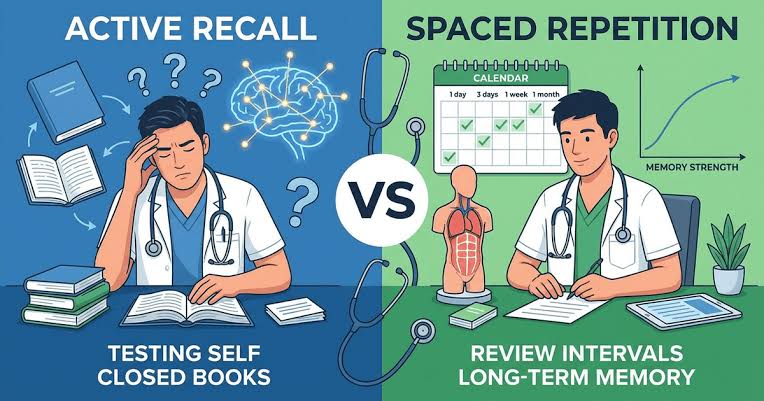
Introduction to Active Recall
Active recall is an innovative learning technique that emphasizes retrieval practice to enhance memory retention and understanding. Originating from cognitive science research, this method encourages learners to actively engage with the material, as opposed to passive study methods such as rote memorization or reading. By challenging oneself to recall information, active recall creates stronger neural connections and fosters deeper learning.
The fundamental principle of active recall is based on the cognitive concept known as the testing effect. Research indicates that when individuals retrieve information from memory, the act of recalling reinforces that information, making it more likely to be stored in long-term memory. This stands in stark contrast to traditional study techniques that often involve reading or highlighting, which tend to maintain a passive learning approach.
Active recall can be implemented through various methods, such as flashcards, practice tests, or by simply summarizing learned material from memory. Each of these methods incorporates retrieval practice, which not only solidifies the knowledge acquired but also helps to reveal gaps in understanding. This self-assessment aspect encourages learners to identify areas requiring additional focus, thus promoting a more effective and personalized study experience.
The benefits of active recall extend beyond mere memorization; it also fosters critical thinking and enhances comprehension. By actively engaging with the material, learners can develop a more profound understanding of concepts, ensuring that they are not merely memorizing facts but truly grasping the underlying principles involved. This approach is particularly advantageous in higher education, where the expectation for deep learning is paramount.
In conclusion, the active recall method represents a significant shift in how individuals approach their studies, prioritizing engagement and cognitive processes over passive review techniques. As education continues to evolve, understanding and implementing active recall will become increasingly crucial for students seeking to maximize their learning outcomes.
The Science Behind Active Recall
Active recall is a cognitive strategy that enhances memory retention by prompting learners to retrieve information from memory during the study process. Numerous studies support the effectiveness of this method compared to traditional passive studying techniques, such as reading or highlighting. One key study conducted by Roediger and Butler (2011) showed that students who engaged in active recall performed significantly better on subsequent tests than those who simply reviewed notes. This is largely due to the cognitive effort required to retrieve information, which strengthens the neural pathways associated with that knowledge.
Additionally, research indicates that the spacing effect plays a vital role in the efficacy of active recall. When students space their study sessions out over time, they enhance the likelihood of long-term retention. A meta-analysis by Cepeda et al. (2006) found that spreading learning over multiple sessions dramatically improves recall skills, particularly when combined with active retrieval methods. This dual approach fosters deeper processing and understanding of the material, leading to enhanced academic performance.
Moreover, active recall not only aids memory but also keeps students more engaged in their learning. A study published in the journal Psychology of Learning and Motivation revealed that students who used active recall techniques reported higher levels of motivation and enjoyment in their studies compared to those using passive methods. This heightened engagement can lead to a more positive learning experience, reinforcing the notion that active recall is not just about memorization but about creating a more interactive and stimulating educational environment.
In light of these findings, it is clear that active recall serves as a powerful tool in higher education. Incorporating this strategy can significantly elevate students’ mastery of complex material, ultimately leading to improved academic outcomes and a more enriching educational journey.
Benefits of Implementing Active Recall in Higher Education
Active recall, a learning technique that involves retrieving information from memory, has garnered attention in higher education for its myriad benefits. One of the primary advantages of employing active recall is the promotion of deeper learning. Students engage with content more critically, enabling them to form connections between concepts rather than merely memorizing facts. This approach nurtures a more profound understanding of the subject matter, which is essential in higher-level education.
Furthermore, active recall significantly enhances student engagement. Traditional methods of passive learning, such as lectures, often lead to diminished interest among students. In contrast, active recall invites students to participate proactively in their learning journey. This active involvement fosters a sense of ownership and accountability, encouraging individuals to take charge of their education. As a result, learning becomes not just a requirement but an experience that students are eager to embrace.
Another crucial benefit is the reduction of procrastination. Active recall techniques, such as self-quizzing or flashcards, create a structured approach to studying, which urges students to start their preparations early. By incorporating frequent retrieval practices into their routine, students can develop a consistent study schedule that mitigates last-minute cramming. This structured approach not only alleviates stress but also enhances retention and recall capabilities during assessments.
Moreover, active recall fosters lifelong learning skills. By encouraging students to continually engage with the material and apply their knowledge in various contexts, they develop a habit of self-directed learning that extends beyond academic boundaries. This skill set is increasingly vital in the rapidly evolving landscape of today’s workforce, making active recall an invaluable component of higher education curricula.
Barriers to Active Recall Adoption in Educational Systems
Active recall, which emphasizes retrieving information from memory, is a proven educational technique that could significantly enhance learning outcomes. However, its adoption in higher education systems faces several hurdles. One primary barrier is the inherent resistance to change found among educators and institutions. Traditional teaching methodologies have long been entrenched in educational practices, and introducing a new framework such as active recall can be met with skepticism. Teachers may feel comfortable with established methods, leading to reluctance to experiment with innovative strategies.
Additionally, there exists a notable lack of training when it comes to implementing active recall strategies effectively. Many educators are unaware of how to incorporate these techniques into their curricula. Without appropriate professional development and resources, educators might struggle to shift from passive learning models—like lectures and rote memorization—to more engaged approaches that require active participation. This lack of training can result in a failure to realize the benefits of active recall, which may reinforce the old habits rather than fostering an environment that encourages deeper learning.
Furthermore, misconceptions about student learning preferences complicate the situation. Many educators believe that students prefer passive learning methods; thus, they may be reluctant to adopt active recall strategies that require greater student engagement. This misunderstanding can lead to the assumption that active recall is not suitable or effective for all learners. This disparity can diminish the push for educational reform, ultimately stifling the implementation of evidence-based teaching methods that could transform student learning experiences. Addressing these barriers is crucial for the successful integration of active recall in education systems.
Strategies for Implementing Active Recall
Active recall is an effective method for enhancing memory retention and understanding, and its successful implementation in higher education requires careful planning and strategic execution. One of the most effective strategies is frequent low-stakes testing. By regularly assessing students with quizzes that focus on recent material, educators can encourage learners to engage actively with the content. This technique not only solidifies retention but also provides timely feedback to both students and instructors, allowing necessary adjustments in teaching methodologies.
Incorporating in-class retrieval quizzes is another key strategy. These quizzes can occur at the beginning or end of a class to prompt students to recall information learned previously. Such activities not only serve as a review mechanism but also foster a sense of accountability among students regarding their preparation and understanding of the course material.
Flashcards represent a time-tested tool in the application of active recall. They allow learners to engage with key concepts and terminology independently, facilitating self-paced review. Students can create digital or physical flashcards that incorporate questions on one side and answers on the other, promoting an interactive study experience. Moreover, integrating spaced repetition techniques with flashcard usage enhances recall efficiency by encouraging learners to review material at increasing intervals, thereby realigning their study habits with the brain’s natural learning processes.
Lastly, adopting technology for active recall, such as applications that specialize in spaced repetition and quiz generation, can significantly enhance the learning environment. These platforms often provide analytics that help educators tailor their instruction based on student progress and comprehension levels. By integrating these strategies thoughtfully, educators can create a robust framework for embedding active recall into their teaching practices, thereby improving student outcomes in higher education.
Case Studies of Active Recall in Action
Active recall is increasingly being integrated into higher education study systems as a proven method to enhance student retention and learning outcomes. Various institutions have embarked on innovative implementations of this technique, showcasing its transformative potential.
One notable example comes from Stanford University, where the Biomedical Informatics Department incorporated active recall through the use of frequent quizzes and self-assessment tests in its curriculum. By systematically revisiting material through spaced repetition and retrieval practice, students demonstrated marked improvements in their exam scores compared to previous cohorts. This approach fostered a deeper understanding of complex subjects, enabling students to retain information over longer periods.
Additionally, the University of Michigan has initiated an active recall program in its psychology courses, utilizing digital platforms to facilitate peer quizzing and collaborative learning. Here, students engage in crafting questions from their study materials and testing each other in small study groups. Surveys conducted post-implementation indicated that participants felt more confident in their knowledge and reported higher levels of engagement with the subject matter. The positive outcomes suggest that incorporating elements of active recall promotes not only higher academic performance but also a sense of community among learners.
Furthermore, the use of flashcards and mobile applications as tools for active recall has been widely adopted by various faculties across different universities. At the University of California, Berkeley, research indicates that students utilizing these platforms to engage with course content effectively improved their recall of vital concepts and improved their overall academic results. These case studies collectively underscore the efficacy of active recall implementations across diverse curricular contexts, revealing not only enhanced learning efficacy but also fostering a culture of collaborative scholarship.
Student Perspectives on Active Recall
Active recall is increasingly becoming a foundational study method among students in higher education, and many have voiced their experiences regarding its implementation. A significant number of students have reported that incorporating active recall techniques into their study routines enhances their retention and understanding of complex subjects. According to a survey conducted among students at various universities, 85% of respondents indicated that they felt more prepared for exams when using active recall methods, particularly in subjects that traditionally challenge their memory skills, such as science and mathematics.
One student shared, “Using flashcards for active recall has transformed the way I study. Initially, I was skeptical about its effectiveness, but over time, I noticed that I remember the material much better. It’s almost like training your brain to retrieve information when needed.” This sentiment is echoed by many, who find that the repeated retrieval practice solidifies the knowledge in their long-term memory. Moreover, students have remarked on the increased engagement levels they experience when utilizing active recall strategies compared to passive learning methods.
Another area of positive feedback surrounds the flexibility of active recall. Students appreciate that they can adapt this method to their personal study habits. For instance, many utilize mobile applications or online platforms that integrate active recall techniques seamlessly into their daily routines, allowing them to study efficiently amidst their busy schedules. One student noted, “My phone app allows me to quiz myself on the go, which makes studying less tedious and more interactive. I find myself looking forward to review sessions instead of dreading them.”
Overall, the implementation of active recall in higher education has garnered favorable reviews from students who perceive it as an effective learning tool. The feedback suggests that as more research and practice occur, this method could become a standard component of study systems in universities.
Measuring the Impact of Active Recall on Student Performance
Evaluating the effectiveness of active recall strategies within higher education is essential for determining their impact on student performance. Several methods can be utilized to assess how these techniques influence grades, retention rates, and overall academic success in courses where active recall is implemented.
Firstly, analyzing student grades provides a direct insight into the effectiveness of active recall. By comparing grades from courses employing active recall methodologies against those that utilize traditional study methods, educators can quantify differences in student performance. Studies often reveal that students engaged in active recall achieve higher grades due to improved understanding and retention of information.
Retention rates serve as another crucial indicator of the efficacy of active recall. Research indicates that this technique helps students retain information longer than passive study methods. By tracking retention rates across various cohorts, educators can illustrate the long-term benefits of integrating active recall into study systems. For instance, assessments conducted several weeks after course completion can serve to measure how well students remember the material.
Additionally, overall academic success can be assessed through various means, such as graduation rates and performance in subsequent courses. By evaluating how well students who utilized active recall techniques fare as they advance in their academic careers, institutions can better understand the long-lasting impacts of these methods. Feedback from students regarding their experiences with active recall can further enrich this analysis, providing qualitative data to complement the quantitative findings.
In conclusion, measuring the impact of active recall on student performance requires a multifaceted approach, integrating quantitative data from grades and retention rates, alongside qualitative insights. Such comprehensive evaluations are critical for forming evidence-based educational strategies to enhance student success in higher education.
Future Directions for Active Recall in Higher Education
As educational methodologies continue to evolve, the implementation of active recall in higher education presents numerous future opportunities that are poised to integrate with emerging technologies. One of the most significant advancements is the incorporation of artificial intelligence (AI) in personalized learning experiences. AI can facilitate adaptive learning platforms that not only assess students’ retention capabilities but also tailor active recall exercises based on individual performance patterns. This personalized approach could lead to enhanced engagement and deeper learning.
Moreover, the rise of online learning environments has underscored the necessity for effective study systems that incorporate active recall techniques. As more institutions adopt blended learning models that combine in-person and digital instruction, the demand for tools that promote active recall will undoubtedly grow. Interactive platforms that utilize multimedia resources—such as videos, quizzes, and discussions—can enhance the recall process by catering to different learning preferences and providing immediate feedback.
Ongoing research in the fields of cognitive science and educational psychology also supports the development of innovative active recall strategies. As our understanding of memory and retention deepens, information can be transformed into evidence-based practices. For instance, studies may reveal optimal intervals for spaced repetition, which can further refine the application of active recall techniques in curriculum design. Additionally, evaluating the effectiveness of these methods across diverse student populations will be essential in ensuring equitable access to quality education.
In conclusion, the future for active recall in higher education holds promise through the integration of technology, personalized learning experiences, and continued research. As these elements converge, active recall may become a cornerstone of effective educational practices, fostering greater student achievement and lifelong learning capabilities.