


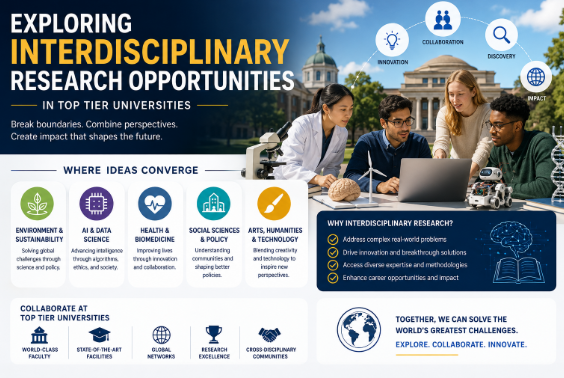
Introduction to Interdisciplinary Research
Interdisciplinary research has emerged as a pivotal approach in both academia and industry, facilitating innovative solutions to complex problems that cannot be effectively addressed within the boundaries of a single discipline. It is defined as a collaborative approach that integrates knowledge, theories, and methodologies from multiple academic fields to create a comprehensive understanding of multifaceted issues. The practice of blending various disciplines fosters an environment where insights and techniques from one field can enrich another, encouraging novel perspectives and discovery.
The growing importance of interdisciplinary research can be attributed to the increasingly complex nature of real-world challenges, such as climate change, public health crises, and socio-economic disparities. These challenges typically involve intricate interdependencies between various factors, making it essential to adopt a multidisciplinary perspective for effective solutions. By crossing traditional boundaries, interdisciplinary research promotes a holistic view, enabling researchers to investigate problems thoroughly by considering multiple dimensions.
At top-tier universities, the emphasis on interdisciplinary studies is evidenced by the establishment of dedicated research centers and collaborative initiatives. These institutions recognize that valuable breakthroughs often occur at the intersections of different disciplines, leading to remarkable advancements in fields such as bioinformatics, environmental science, and cognitive neuroscience, among others. Furthermore, interdisciplinary research not only enhances academic knowledge but also contributes substantially to societal advancement by addressing pressing issues faced by communities globally.
Consequently, fostering an interdisciplinary mindset has become paramount for both researchers and policy-makers. Embracing this collaborative approach can enhance innovation, improve problem-solving capabilities, and yield significant contributions to society, making it an essential part of contemporary research endeavors.
Benefits of Interdisciplinary Research
Interdisciplinary research offers a multitude of advantages that extend beyond traditional disciplinary boundaries. One of the foremost benefits is its ability to foster creativity. By integrating diverse perspectives and methodologies from various fields, researchers can develop innovative solutions to complex problems that a single discipline may not sufficiently address. This collaborative approach often leads to breakthroughs that wouldn’t be possible within the confines of one specialty to enhance the richness and depth of the research conducted.
Moreover, interdisciplinary research frequently attracts increased funding opportunities. Funding agencies are increasingly prioritizing projects that demonstrate a blend of disciplines, as these projects are seen to address multifaceted societal challenges. For example, the National Science Foundation (NSF) has initiated programs that specifically encourage collaborations across different scientific areas, leading to robust financial support for innovative interdisciplinary work.
Additionally, the scope of research is significantly broadened through interdisciplinary collaboration. When scholars from varying disciplines converge, they expand the questions they ask and the methodologies they employ. This confluence enriches the research process and contributes to a more holistic understanding of the issues at hand. Case studies, such as the integration of technology and environmental science to combat climate change, illustrate how merging different domains can yield practical, effective solutions.
Lastly, interdisciplinary research prepares students for diverse career paths. In today’s job market, employers value graduates who can think beyond silos and apply knowledge from multiple fields. Exposure to interdisciplinary projects equips students with the critical thinking and collaborative skills necessary to navigate an increasingly interconnected world, thus making them more versatile and employable.
Challenges in Interdisciplinary Research
Interdisciplinary research, while fostering innovation and depth of understanding, is fraught with challenges that can impede progress and collaboration. One of the most significant barriers is the existence of disciplinary silos. These silos arise as researchers often become entrenched in their specific fields, leading to a reluctance to engage with methodologies, terminologies, and perspectives from other disciplines. This can create an environment where communication becomes fragmented, limiting the potential for collaborative initiatives and shared visions of research goals.
Communication issues are prevalent in interdisciplinary research, and they manifest in various ways. Different academic backgrounds often come with distinctive vocabularies and theoretical frameworks. Researchers from different disciplines might encounter difficulties in expressing their ideas in a manner that is comprehensible to one another. This lack of a common linguistic ground can lead to misunderstandings, misinterpretations, and subsequently, an erosion of trust among collaborators.
Moreover, the integration of diverse methodologies poses another significant challenge. Each discipline typically has established conventions and practices for conducting research, which can make it challenging to merge these approaches coherently. For example, qualitative methods prevalent in the social sciences may be viewed as incompatible with the quantitative methods favored in the natural sciences. This disparity can result in a struggle to reach consensus regarding research design and analysis, ultimately jeopardizing the integrity and depth of the interdisciplinary team’s findings.
In addition to these barriers, institutions may not always support interdisciplinary endeavors effectively. Many grantfunding mechanisms still favor traditional disciplinary frameworks, thus discouraging researchers from pursuing cross-disciplinary projects. Such systemic challenges must be addressed to enhance the viability and effectiveness of interdisciplinary research in top-tier universities.
Case Studies of Successful Interdisciplinary Research
Interdisciplinary research has gained prominence in higher education, particularly among top-tier universities, as it effectively synthesizes knowledge from diverse fields to tackle complex issues. A prime example can be observed at Stanford University, where researchers from the disciplines of environmental science and engineering collaborated to develop innovative solutions for sustainable energy. By merging principles from chemistry, physics, and engineering, this team was able to create advanced solar technologies that improved energy efficiency and reduced costs. This project not only yielded groundbreaking findings but also underscored the importance of blending different academic perspectives to achieve superior outcomes.
Another influential case study is found at MIT, where the Media Lab fosters interdisciplinary collaboration among scientists, artists, and engineers. One of their noteworthy initiatives is the development of wearable technology designed to help individuals monitor their health in real time. Here, computer science intersected with design and health sciences, yielding products that have the potential to transform personal healthcare. This project exemplifies how integrating varying disciplines can lead to advancements that not only benefit research but also enhance the daily lives of individuals.
Furthermore, the collaboration between Johns Hopkins University’s School of Medicine and the Whiting School of Engineering serves as a testament to the power of interdisciplinary research. They have successfully worked together on projects related to biomedical engineering, focusing on developing artificial organs and advanced prosthetics. By combining the medical expertise of healthcare professionals with the technical skills of engineers, this partnership has resulted in the creation of life-saving technologies that improve patient outcomes significantly. Such case studies highlight the effectiveness of interdisciplinary research in generating impactful solutions and pushing the boundaries of innovation within top-tier universities.
Top Universities Known for Interdisciplinary Research
Interdisciplinary research has gained significant traction in academia as it enables scholars to merge knowledge across different fields, fostering innovation and solving complex problems. Several top-tier universities have been recognized for their robust interdisciplinary research programs, each offering a unique array of institutes, centers, and initiatives designed to promote collaboration among diverse disciplines.
One of the leading institutions is Stanford University, renowned for its interdisciplinary approach that bridges engineering, medicine, and the humanities. The Stanford Bio-X program brings together faculty, students, and facilities from across various departments to tackle substantial health challenges through collaborative research.
Another notable example is Massachusetts Institute of Technology (MIT), where the Institute for Medical Engineering and Science (IMES) exemplifies the combination of medicine with engineering and physical sciences. This initiative has led to groundbreaking advancements in areas such as biotechnology and medical devices, showcasing the power of interdisciplinary efforts.
Harvard University also stands out with its Harvard John A. Paulson School of Engineering and Applied Sciences, which emphasizes the integration of engineering with social sciences and public policy. This collaborative framework aims to address societal challenges by encouraging innovative solutions that transcend traditional academic boundaries.
The University of California, Berkeley, is applauded for its diverse research centers, such as the Berkeley Institute for Data Science, that facilitate collaboration among computer science, statistics, and social sciences. This institute exemplifies how data science can be utilized to understand societal issues, reflecting the essence of interdisciplinary research.
Lastly, the University of Cambridge is recognized for its interdisciplinary research by fostering cross-department collaborations through initiatives such as the Cambridge Centre for Misfolding Diseases. This center exemplifies how joint efforts in biology and chemistry can lead to advancements in understanding diseases like Alzheimer’s.
These top universities illustrate the importance and effectiveness of interdisciplinary research, highlighting their commitment to innovation and collaboration across various academic fields.
Funding Opportunities for Interdisciplinary Research
Interdisciplinary research has gained significant traction in the academic world, with top-tier universities recognizing its potential to address complex issues that span multiple fields. A crucial aspect of fostering interdisciplinary collaborations is the availability of funding opportunities designed specifically for these initiatives. Various grants, fellowships, and partnerships with industry stakeholders play pivotal roles in nurturing innovative projects that bridge the gap between diverse disciplines.
One of the primary sources of funding for interdisciplinary research is grants offered by governmental agencies and private foundations. For instance, the National Institutes of Health (NIH) and the National Science Foundation (NSF) have specific programs that encourage projects integrating knowledge from different scientific areas. These grants not only provide financial support but also create a framework for collaboration among researchers from disparate backgrounds.
In addition to governmental funding, many universities have initiated their own internal grants aimed at fostering interdisciplinary collaboration. These grants often target specific themes that require expertise from various disciplines, enabling institutions to leverage their resources effectively. Faculty members can also benefit from various fellowship programs designed to elevate interdisciplinary work. For example, the Ford Foundation and the Olin Fellowship offer unique opportunities for scholars to conduct research that crosses traditional academic boundaries.
Furthermore, forming partnerships with industry can substantially enhance funding prospects. Businesses are increasingly interested in collaborating with academic researchers on projects that promise to yield innovative solutions to real-world problems. Such collaborations not only provide additional financial resources but also offer access to practical insights and data that may be critical for research success.
In conclusion, the landscape of funding opportunities for interdisciplinary research is diverse and evolving. By tapping into grants, fellowships, and industry collaborations, researchers can access valuable resources that enable them to tackle multifaceted challenges and advance knowledge across fields.
Networking plays an integral role in fostering interdisciplinary research, enabling scholars to merge diverse perspectives and expertise. Engaging with professionals from varying fields can lead to innovative solutions and a holistic understanding of complex issues. To achieve fruitful collaborations, it is crucial for researchers to develop strong networking skills that facilitate connections with experts outside their immediate disciplines.
Attending academic conferences is one of the most effective strategies for building these collaborative relationships. These gatherings provide an opportunity to meet fellow researchers, exchange ideas, and discuss potential joint projects. It’s advisable to prepare in advance by identifying key individuals or sessions that align with your interests. Engaging in conversations during breaks or attending workshops can help establish rapport, ensuring that your work becomes recognized within a broader research community.
Another modern tool for networking is the utilization of social media platforms. Websites such as LinkedIn, ResearchGate, and Twitter have become essential for researchers seeking to connect with peers and showcase their work. By sharing insights, articles, and collaborating with others online, scholars can enhance visibility and engage in discussions that may lead to future partnerships. Joining groups and forums related to your field can further supplement your research network, providing access to a variety of perspectives and expertise.
Prioritizing outreach is crucial to enriching interdisciplinary research. Engage actively with others by following up with contacts made at conferences or through social media. Cultivating these relationships requires a sustained effort of communication and collaboration, thus reinforcing your research pursuits.
In conclusion, the essence of networking lies in its ability to broaden the horizons of academic inquiry. By strategically attending conferences and embracing digital platforms, researchers can significantly enhance their collaborative prospects across disciplines.
Future Trends in Interdisciplinary Research
The landscape of interdisciplinary research is continually evolving, driven by rapid advancements in technology and the increasing complexity of societal challenges. As universities seek to remain at the forefront of research innovation, they must adapt to these emerging trends which promise to reshape the way knowledge is produced and applied.
One significant trend is the increasing convergence of artificial intelligence (AI) with various fields such as healthcare, environmental science, and social sciences. For instance, the integration of AI in medical research has led to breakthroughs in precision medicine, where machine learning algorithms analyze vast datasets to identify effective treatment pathways tailored to individual patients. This intersection showcases the potential for collaboration between computer science and health disciplines, creating a fertile ground for interdisciplinary projects.
Another noteworthy direction is the growing emphasis on sustainability and climate change research. As universities acknowledge the urgency of addressing environmental challenges, interdisciplinary programs that combine insights from engineering, economics, law, and policy are becoming more prevalent. By leveraging diverse disciplinary perspectives, researchers can develop innovative solutions that factor in the ecological, social, and economic dimensions of sustainability.
In addition, the rise of big data analytics offers new opportunities for interdisciplinarity. Fields such as sociology, marketing, and urban planning can benefit from shared methodologies and analytical frameworks that enhance understanding of complex systems. By fostering partnerships across these disciplines, universities can build comprehensive research initiatives that address pressing global issues.
Moreover, as international collaborations become more essential, universities are increasingly leveraging global partnerships to enhance interdisciplinary research efforts. This global approach not only enriches the research environment but also facilitates the exchange of ideas and resources across borders, further enhancing the potential for transformative research outcomes.
Conclusion and Call to Action
In conclusion, interdisciplinary research opportunities in top-tier universities play a crucial role in addressing complex global challenges. By fostering collaboration between diverse academic disciplines, institutions not only enhance the depth and breadth of research but also cultivate innovative solutions that are both practical and effective. The integration of knowledge from various fields enriches the academic environment and encourages students and faculty alike to pursue questions that demand more than a singular perspective.
The conversations around sustainability, public health, and technological advancement demonstrate the pressing need for interdisciplinary approaches. By engaging with multiple disciplines, researchers can leverage their unique expertise and insights, leading to breakthroughs that would be improbable within a traditional research framework. This approach is not merely beneficial; it is increasingly necessary in our interconnected world.
As you consider your own academic journey, we encourage you to actively seek interdisciplinary research opportunities. Whether you are a student, educator, or researcher, look for ways to collaborate with individuals from different fields. Explore programs that promote interdisciplinary studies, attend seminars that feature speakers from various disciplines, and engage in projects that require insights beyond your own area of expertise.
The future of research greatly depends on our willingness to cross traditional boundaries. By embracing and promoting interdisciplinary collaboration, we can enhance our capability to tackle the grand challenges that face society today. Join the movement to foster interdisciplinary research in your own academic pursuits. Together, we can cultivate innovative ideas and solutions that will not only contribute to our fields of study but also make a meaningful impact on the world around us.