


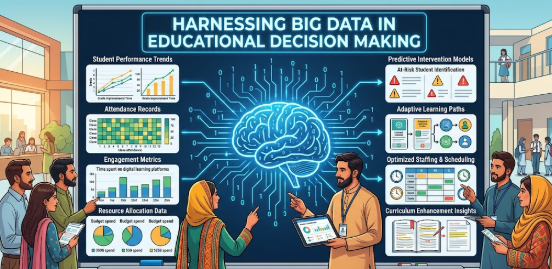
Introduction to Big Data in Education
Big data refers to the vast volumes of data generated, collected, and analyzed in various domains, particularly in the digital era. In the context of education, big data encompasses information from multiple sources, including student records, demographics, online learning activities, assessments, and even social media interactions. The defining characteristics of big data are often described by the three Vs: volume, velocity, and variety. Volume pertains to the immense quantity of data available; velocity indicates the rapidity with which data is generated and processed; and variety refers to the diverse formats and sources of data.
The significance of big data in the education sector has been steadily increasing. Educational institutions, such as universities and schools, can harness this information to drive improvements in learning outcomes, operational efficiencies, and strategic planning. The analysis of big data provides insights into student performance trends, classroom engagement, and educational pathways, enabling educators to make informed decisions tailored to learner needs.
Stakeholders in education, including administrators, teachers, and policymakers, are increasingly recognizing the relevance of big data as a critical tool for enhancing the educational experience. For instance, by analyzing patterns within student learning data, educators can identify at-risk learners and implement timely interventions. Additionally, academic institutions can optimize their resource allocation and curriculum design by understanding the effective teaching methodologies backed by empirical data.
In summary, big data not only presents a promising opportunity for educational advancement but also poses challenges related to data privacy, analytics capacity, and interpretation of findings. As educational institutions seek to integrate big data into their decision-making processes, a thorough understanding of its implications and potential will be essential for fostering an innovative and effective educational landscape.
The Importance of Data-Driven Decision Making in Education
Data-driven decision-making in education has become increasingly vital in fostering improved academic outcomes and effective resource allocations. By leveraging big data analytics, educational institutions can analyze vast amounts of information to identify trends, assess performance, and make informed choices that enhance the learning experience. The integration of data-driven methodologies empowers educators and administrators to make decisions rooted in empirical evidence rather than intuition or tradition.
One significant advantage of utilizing data in educational decision-making is the capacity to improve academic performance for diverse student populations. By systematically analyzing student data, including test scores, attendance records, and behavioral markers, educators can identify at-risk students and implement targeted interventions to help them succeed. This proactive approach not only benefits individual learners but also contributes to overall school performance metrics.
Furthermore, data-driven decision-making fosters more efficient resource allocation within educational institutions. By understanding which programs or initiatives yield the best outcomes, administrators can allocate funds and resources more strategically. For instance, if data indicates that specific teaching methods or technologies lead to higher engagement and learning, schools can prioritize funding in those areas. This targeted approach ensures that investments yield the highest possible returns in terms of student achievement and institutional effectiveness.
Moreover, the commitment to a data-driven culture in education facilitates continuous improvement. Schools and educators can routinely collect and analyze data, allowing for ongoing evaluation and refinement of teaching strategies and curricula. This iterative process promotes an environment where adjustments can be made based on real-time insights, ultimately enhancing educational outcomes.
In conclusion, embracing data-driven decision-making is essential for educational institutions committed to improving academic performance, optimizing resource allocation, and achieving favorable educational outcomes. The effective use of big data not only transforms how decisions are made but also significantly enhances the quality of education provided to students.
Types of Big Data Used in Education
In the realm of education, the application of big data encompasses various types that are essential for making informed decisions. One of the primary categories of big data is student performance data. This data includes grades, test scores, and progress reports that provide insights into a student’s academic strengths and areas for improvement. By analyzing this information, educators can tailor their teaching strategies to better support individual student needs, enhancing overall learning outcomes.
Another significant type of data collected in educational settings is demographic data. This data usually comprises details such as age, gender, ethnicity, and socio-economic background. Understanding the demographic context of students allows schools to identify trends and disparities in educational attainment. It assists policymakers in developing targeted programs and allocating resources effectively to promote equity in education.
Attendance records are also a critical component of big data in education. These records help identify patterns related to student attendance and engagement levels. For instance, frequent absenteeism may indicate underlying issues that need to be addressed, such as bullying or lack of motivation. Analyzing attendance data can help educators implement interventions to improve student engagement and retention.
Furthermore, engagement analytics examines how students interact with various learning materials and platforms. This type of data encompasses metrics such as participation in online discussions, time spent on assignments, and interaction with multimedia resources. By evaluating engagement, educators and administrators can adjust their instructional approaches to foster higher levels of student involvement and academic achievement.
In summary, the various types of big data utilized in educational environments not only aid in understanding student needs but also equip educators with the necessary tools to enhance learning experiences. By implementing data-driven decision-making strategies, educational institutions can effectively address the diverse challenges faced by students.
Applications of Big Data in Curriculum Development
Big data is increasingly becoming a central component in the development of educational curricula, allowing for data-driven decision-making that enhances teaching and learning experiences. One of the primary applications of big data in this context is its ability to identify gaps in student learning. By analyzing vast amounts of educational data, educators can pinpoint specific areas where students struggle, enabling them to adjust teaching strategies and curricular content accordingly. This targeted approach not only helps educators address deficiencies but also enhances overall educational outcomes.
Furthermore, big data facilitates the personalization of learning experiences. By utilizing data analytics, institutions can tailor curriculum offerings to suit the diverse needs and learning styles of individual students. For instance, predictive analytics can help identify students at risk of falling behind, allowing for timely interventions such as personalized tutoring or customized learning materials. This level of customization promotes student engagement and can significantly improve academic performance.
Additionally, big data allows for the ongoing adaptation of curricula to accommodate various learning needs. As student populations evolve, educational institutions can leverage data insights to ensure that their curricula remain relevant and effective. By continuously monitoring student performance and feedback, educators can make informed adjustments that reflect the changing dynamics of the classroom environment. This adaptability is particularly significant in today’s fast-paced educational landscape, where the emergence of new technologies and teaching methodologies frequently reshapes how knowledge is imparted.
Ultimately, by integrating big data into curriculum development, educational stakeholders can create more effective, inclusive, and responsive learning environments. This transformation not only benefits educators—who can rely on empirical evidence to guide their decisions—but also students, who gain access to tailor-made educational experiences that cater to their unique needs.
Enhancing Student Engagement and Success with Big Data
In the contemporary educational landscape, big data plays a crucial role in enhancing student engagement and success. By leveraging large datasets, educational institutions can analyze patterns and trends that reveal essential insights about student behavior and performance. One of the primary applications of big data in this context is predictive analytics, which enables institutions to anticipate the needs of their students effectively.
Predictive analytics works by harnessing historical data to identify students at risk of underperformance or disengagement. For example, by analyzing factors such as attendance records, assignment submissions, and exam scores, educators can identify which students may benefit from timely interventions. This proactive approach allows institutions to implement early intervention strategies, providing targeted support before problems escalate. When students receive help through tutoring programs or academic coaching, their chances of success increase significantly.
Moreover, big data facilitates a more personalized learning experience for students. By analyzing learner preferences and interactions with educational content, institutions can tailor resources that resonate with individual learning styles. This level of customization fosters a more engaging environment, encouraging students to take ownership of their education. As a result, students are more likely to participate actively in their learning process and remain committed to achieving their academic goals.
Additionally, schools and universities are using big data to create a supportive learning environment. By integrating feedback mechanisms, such as surveys and learning analytics, educators can gauge student satisfaction and identify areas for improvement. Analyzing this data helps institutions refine their teaching strategies and curricular offerings, ensuring they meet student needs more effectively. These data-driven enhancements contribute to higher retention rates, enhanced student satisfaction, and ultimately, improved educational outcomes.
Data Privacy and Ethical Considerations
The integration of big data into educational systems presents significant opportunities for enhanced decision-making and personalized learning experiences. However, these advantages come with a host of ethical considerations, particularly concerning data privacy and the protection of student information. The collection and analysis of vast amounts of student data necessitate an unwavering commitment to safeguarding sensitive information against misuse, breaches, and unauthorized access.
One of the core ethical challenges associated with big data in education is ensuring informed consent. Stakeholders, including students and parents, must be fully aware of what personal data is being collected, how it will be used, and for what purposes. Educational institutions must establish transparent policies that articulate these aspects clearly, allowing individuals to make informed decisions about their data. Additionally, educational technology providers should implement robust consent frameworks that respect users’ rights while promoting data literacy.
Another important ethical consideration is the potential for bias and discrimination in algorithms that analyze big data. If not carefully managed, these algorithms may inadvertently perpetuate existing inequalities, affecting various groups of students differently. Institutions must evaluate the tools and models they deploy to ensure they do not reinforce stereotypes or disadvantage specific populations, underscoring the need for fairness and equity within data-driven educational environments.
Furthermore, the responsible management of student data extends beyond compliance with legal regulations. It emphasizes the necessity of cultivating a culture of privacy within educational institutions, where the ethical implications of data use are constantly evaluated. This approach ensures that while harnessing the power of big data for improved educational outcomes, the rights and protections of individuals are prioritized, paving the way for trust and integrity in data practices.
Challenges in Implementing Big Data in Education
The integration of big data in educational institutions presents numerous challenges that can hinder the effectiveness of data-driven decision-making. One significant barrier is the inadequate infrastructure that many educational organizations face. Properly harnessing big data requires substantial investments in technology infrastructure, including secure storage and advanced analytics tools. Unfortunately, many institutions, particularly those in underfunded areas, lack the necessary resources and facilities to implement these solutions effectively.
Furthermore, the educational landscape often struggles with a lack of data literacy among educators and administrators. Many individuals in these roles are not adequately trained to analyze and interpret large data sets. This knowledge gap can lead to misinterpretations of data insights, undermining the potential benefits of big data initiatives. Therefore, enhancing data literacy through professional development programs is essential to ensure that educational practitioners can leverage data effectively.
Additionally, resistance to change is a common challenge in implementing big data solutions in educational settings. Many stakeholders, including faculty and administrative personnel, may be hesitant to adopt new technologies and practices. This apprehension can stem from a variety of factors, including fear of job displacement, uncertainty about the reliability of data, and the complexity of integrating new systems into existing workflows. Overcoming this resistance requires effective change management strategies that involve clear communication, training, and demonstrating the value of data-driven decision-making.
Lastly, ethical concerns surrounding data privacy and security must also be addressed when implementing big data in education. Protecting student and staff information is paramount, and educational institutions must ensure that they comply with regulations such as FERPA. Thus, the successful adoption of big data in educational decision-making is contingent upon overcoming these significant barriers.
Future Trends in Big Data and Education
As technological advancements continue to evolve, the application of big data in education is expected to grow significantly. Educational institutions are increasingly leveraging big data analytics to enhance decision-making processes, improve student outcomes, and create tailored educational experiences. One notable trend is the integration of Artificial Intelligence (AI) in data analytics. AI algorithms can process vast amounts of educational data, providing insights that enable institutions to anticipate student needs and personalize learning pathways.
Another emerging technology is the use of predictive analytics. By analyzing historical data, educators can identify patterns that may indicate a student’s likelihood of success or challenges. This proactive approach allows for targeted interventions, ultimately reducing dropout rates and improving academic performance. Institutions are urged to harness predictive analytics to not only enhance their curricula but also to support at-risk students more effectively.
Moreover, the rise of Internet of Things (IoT) devices in educational environments signifies the potential for real-time data capture and analysis. Devices such as smart boards, learning management systems, and even wearables can contribute to a continuous flow of data regarding student engagement and progress. By incorporating IoT, educational institutions will be able to gather more nuanced insights and adapt their teaching methods accordingly.
In addition to technological trends, there is a growing emphasis on data privacy and ethical considerations. As educational institutions begin to employ big data strategies, ensuring the protection of student information remains paramount. Compliance with regulations like GDPR (General Data Protection Regulation) and FERPA (Family Educational Rights and Privacy Act) is essential for maintaining trust and safeguarding the educational environment.
To conclude, the future of big data in education looks promising, with numerous trends that hold the potential to revolutionize teaching and learning. Educational institutions must stay abreast of these innovations and adapt their strategies accordingly to remain competitive and effectively support the evolving needs of learners.
Conclusion: The Future of Educational Decision Making with Big Data
Throughout this discussion on harnessing big data in educational decision-making, we have explored the transformative potential that data holds in improving educational outcomes. The integration of big data analytics in education allows educators and administrators to make informed decisions based on robust evidence rather than anecdotal observations. This shift towards a data-driven culture seeks to enhance personal learning experiences, optimize resource allocation, and ultimately foster environments conducive to student achievement.
By employing advanced data analysis techniques, educational institutions can identify trends, patterns, and areas needing improvement. This empowers leaders to address challenges proactively, mitigate risks, and tailor interventions to meet the diverse needs of learners. Notably, the insights derived from big data can augment traditional pedagogical methods, supporting teachers in refining their instructional strategies and ensuring that every student is provided with the support they require to succeed.
Moreover, the future of educational decision-making with big data seems promising, as advancements in technology continue to facilitate the processing and analysis of vast amounts of information. As institutions adopt comprehensive data systems, the capability to track student progress over time will become increasingly sophisticated. Consequently, this will allow for more personalized learning pathways, enhancing student engagement and retention.
In conclusion, embracing big data in educational settings is crucial for driving positive change. Educators and leaders must recognize the value of data-driven decision-making as a vital tool in achieving excellence in education. By committing to this approach, they can pave the way for lasting improvements in the educational landscape, ultimately benefiting learners, educators, and communities alike.