


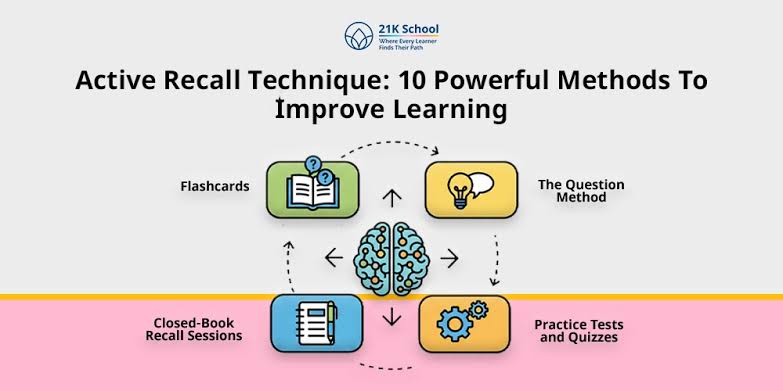
Introduction to Active Recall
Active recall is a cognitive learning technique that emphasizes retrieving information from memory rather than passively reviewing material. This method is grounded in psychological theories related to memory and learning, notably the Testing Effect that suggests that actively recalling information strengthens memory and enhances long-term retention. Unlike traditional study methods, which often rely on re-reading texts or highlighting information, active recall requires engaging with the material through self-testing and requiring learners to actively produce answers from memory, thus reinforcing connections in the brain.
The historical roots of active recall can be traced back to educational psychology, particularly through research conducted by psychologists in the late 19th and early 20th centuries. Notably, Hermann Ebbinghaus pioneered experiments in memory and forgetting, laying the groundwork for understanding how information is processed. His findings highlighted that information is more likely to be retained when actively recalled over time, establishing a solid basis for the methodology that would later be termed active recall.
Active recall also contrasts sharply with conventional study practices. Students often engage in repetitive reading or highlighting key phrases, underestimating the effectiveness of retrieval-based learning. By employing techniques such as flashcards or practice tests, learners can assess their knowledge actively, identify gaps in understanding, and enhance memory consolidation. This methodology not only promotes a more profound comprehension of subject matter but also facilitates faster learning outcomes, making it particularly beneficial in higher education environments where retention of complex information is critical.
Benefits of Active Recall in Education
Active recall, a method that encourages learners to actively engage with the material, presents numerous advantages in higher education settings. One of the primary benefits is the notable improvement in retention rates among students. Research has shown that when learners retrieve information from memory, they reinforce neural pathways, making it easier to access that information later. This leads to longer-lasting retention of the material compared to passive review methods such as re-reading or highlighting.
In addition to enhancing retention, active recall fosters a deeper understanding of the subject matter. By forcing students to recall information rather than simply consuming it, this technique encourages critical thinking and comprehension. Students are not merely memorizing facts; they are connecting concepts, identifying relationships, and synthesizing knowledge. This process is vital in higher education, where the ability to grasp complex ideas is essential for academic success.
Moreover, employing active recall can significantly enhance exam performance. Studies have demonstrated that students who utilize this method typically outperform their peers during assessments. Engaging in frequent self-testing not only prepares students for the types of questions they may encounter but also reduces anxiety surrounding examinations. This psychological benefit is particularly relevant in high-stakes testing environments, where confidence can directly impact outcomes.
Lastly, the principles behind active recall align with cognitive theories that emphasize the importance of retrieval practice. By incorporating strategies such as flashcards, practice tests, or teaching concepts to peers, students can create a dynamic learning environment. This active engagement not only enriches their educational experience but also cultivates a resilient approach to learning that prepares them for future challenges. Hence, the benefits of active recall are multifaceted, contributing to improved academic achievement and a deeper appreciation of the material.
How Active Recall Works
Active recall is a powerful learning strategy that enhances memory retention by engaging learners in retrieving information from memory, rather than passively reviewing materials. The fundamental mechanics of active recall revolve around various techniques that stimulate this retrieval process. Among the most effective techniques are flashcards, self-quizzing, and spaced repetition.
Flashcards are one of the most widely used tools in the active recall method. They consist of a prompt or question on one side, with the corresponding answer on the reverse. When using flashcards, learners are encouraged to actively attempt to recall the answer before checking the reverse side. This not only reinforces memory but also aids in identifying knowledge gaps that require further study.
Self-quizzing, another key component of active recall, involves learners creating their own questions based on the material studied. This method allows individuals to tailor their examination to their unique study needs. Through self-quizzing, students actively engage with the content, prompting deeper cognitive processing, and thereby enhancing retention.
Spaced repetition complements these techniques by timing the intervals between review sessions. This method takes advantage of the psychological spacing effect, where information is more easily recalled if it is studied over increasing intervals. Implementing a spaced repetition schedule means reviewing material just as one is about to forget it, effectively consolidating knowledge and improving long-lasting retention.
Utilizing active recall within educational environments encourages a more dynamic learning approach. Engaging in these techniques allows students to take an active role in their education, leading to greater mastery of the material. By systematically integrating active recall into study routines, students not only enhance their learning experience but also prepare themselves for improved academic performance.
Challenges in Implementing Active Recall
The incorporation of active recall strategies in higher education study systems presents several challenges both for institutions and students. One significant barrier is student resistance. Traditional learning methods, which often emphasize passive information consumption, have ingrained a comfort level in students. The transition to active recall, which requires more effort and engagement, can be met with reluctance. Many students may initially respond negatively to the increased responsibility for their learning, viewing active recall as cumbersome compared to familiar rote memorization techniques.
Additionally, the lack of training and resources can hinder the effective implementation of active recall. Faculty and institutions often require workshops and professional development opportunities to become adept at integrating these strategies into their curriculum. Without adequate training, educators may struggle to guide students in how to effectively utilize active recall techniques, thus diminishing their potential benefits. Consequently, the absence of sufficient instructional resources can lead to inconsistent application across different courses and departments, further complicating the adoption process.
A cultural shift is also necessary for the successful implementation of active recall methods. Many institutions currently emphasize grades and assessments that prioritize memorized knowledge over understanding and retention. To fully embrace active recall, a change in mindset is required—not just from students, but also from educators and administration. This shift entails redefining success in academic environments to include the demonstration of learning retention and long-term memory development. Without this cultural transformation, even the well-designed active recall strategies may fail to achieve their intended outcomes, emphasizing the systemic challenges faced in promoting innovative educational methodologies.
Case Studies of Active Recall in Practice
Active recall has gained traction in various higher education institutions, successfully aiding students in maximizing their learning potential. One notable example can be drawn from Stanford University, where the psychology department implemented active recall techniques in their introductory courses. By incorporating regular low-stakes quizzes that required students to retrieve information, faculty observed a marked improvement in final exam scores, indicating the effectiveness of this approach.
Another interesting case is the University of Cambridge, where the medical school restructured its curriculum to include active recall strategies. Students were encouraged to engage in spaced repetition using flashcards, enabling better retention of critical course content. The data gathered revealed that participating students showed a 20% increase in exam performance compared to previous cohorts who did not utilize these methods, illustrating the substantial benefits of applying active recall in a rigorous academic setting.
Furthermore, the University of California, Los Angeles (UCLA) adopted a blended learning model that featured active recall as a core component. In specific courses, instructors facilitated interactive review sessions where students were prompted to summarize lectures and recall key points. The resultant feedback demonstrated enhanced engagement and a deeper understanding of complex topics, suggesting that integrating active recall into traditional instruction can pave the way for a richer educational experience.
These case studies highlight the diverse methodologies employed by higher education institutions to implement active recall. Each institution tailored its approach to fit the unique needs of its students while achieving notable improvements in knowledge retention and academic performance. Such real-world evidence underscores the potential of active recall to transform learning environments and sets a precedent for other schools considering similar strategies.
Tools and Resources for Active Recall
Implementing active recall in higher education can be significantly enhanced through the use of various tools and resources designed to facilitate this learning method. One highly recommended resource is flashcard software. Applications such as Anki and Quizlet allow students to create and use custom flashcards featuring questions and answers that promote spaced repetition, a key element of effective active recall. The ability to access these applications on both mobile and desktop platforms increases their usability, allowing students to study anywhere and anytime.
Another valuable tool for active recall is educational platforms that automate the retrieval practice process. Platforms like Memrise and Brainscape utilize scientifically-backed algorithms to help learners retain information through a series of timed questions that adapt based on the user’s performance. The interactive nature of these platforms not only aids in memory retention but also engages students, making the process of learning more enjoyable.
The use of physical resources, such as textbooks and study guides, also plays a crucial role. Many students benefit from incorporating these traditional materials into their study routines alongside digital tools. Interactive study guides that prompt self-quizzing help reinforce knowledge, while traditional textbooks can provide comprehensive content for deeper understanding. Furthermore, resources like online forums and study groups encourage collaborative active recall; peers can quiz each other and discuss challenging topics, enhancing the learning experience.
Additional resources such as educational YouTube channels and podcasts can also support active recall methods. These alternatives allow students to engage with course content in varied formats, catering to different learning styles while promoting the retention of information through active passive listening and note-taking strategies.
Training Faculty and Students on Active Recall
Training educators and students on the principles and techniques of active recall is essential for successful implementation of this learning strategy within higher education institutions. One effective approach to achieving this goal is through organized workshops that provide both theoretical insights and practical applications of active recall. Workshops should focus on explaining the cognitive science behind active recall and its benefits in enhancing memory retention and comprehension, fostering a deeper understanding of how this technique can be seamlessly incorporated into academic settings.
Moreover, regular seminars can serve as a platform for discussions, enabling faculty and students to share their experiences and strategies regarding active recall. These seminars should encourage participants to reflect on their learning goals and collaborate on developing effective study materials that utilize active recall methods. Such engagements not only strengthen the understanding of active recall but also create a supportive community that motivates educators and students alike to cultivate their cognitive skills.
Furthermore, developing comprehensive educational materials, such as instructional guides, video tutorials, and online modules, can significantly aid in disseminating knowledge about active recall. These resources should be made accessible to all stakeholders within the learning environment to promote a wider adoption of this technique. By equipping faculty with the right tools and knowledge, they can design assessments and coursework that integrate active recall principles, helping students reinforce their learning effectively.
To summarize, training programs that employ a multi-faceted approach—including workshops, seminars, and robust educational resources—are vital for facilitating the mastery of active recall. This collaborative effort will ultimately empower both faculty and students to enhance their learning experience through strengthened recall abilities.
Future of Active Recall in Higher Education
The integration of active recall strategies into higher education continues to evolve, driven by advancements in technology and developments in pedagogical theories. As educational institutions increasingly embrace digital learning platforms, the potential for active recall techniques to be implemented in innovative ways grows substantially. In the same vein, the theory behind active recall is undergoing transformation, shifting from a purely memorization-based approach to a more holistic understanding of retention and comprehension.
One foreseeable trend is the incorporation of artificial intelligence (AI) within educational tools. This enables personalized learning experiences that adapt to individual student needs, thereby optimizing engagement with active recall methods. For example, AI-powered applications could analyze a student’s strengths and weaknesses, suggesting tailored recall exercises that focus on areas requiring reinforcement. Such adaptive learning technology complements active recall by ensuring that students not only engage with content repetitively but also in a targeted manner that promotes meaningful learning.
Additionally, the continued rise of blended learning environments merges traditional classroom instruction with online resources. This hybrid model fosters an atmosphere where active recall can flourish, as educators can blend spontaneous in-class quizzes with digital platforms that facilitate ongoing engagement outside the classroom. As more universities adopt frameworks that allow for flexible learning arrangements, the reinforcement of active recall strategies will be increasingly prevalent.
Furthermore, research into cognitive science is likely to influence the development of future active recall methodologies. As our understanding of memory and learning processes deepens, educators will be better equipped to refine and adapt active recall strategies to fit a diverse student demographic. This could lead to the emergence of novel pedagogical practices that prioritize active, rather than passive, learning experiences, fundamentally reshaping how knowledge is acquired and retained in higher education.
Conclusion and Call to Action
In summary, implementing active recall in higher education study systems can significantly enhance students’ retention and understanding of material. By leveraging techniques such as spaced repetition, self-testing, and retrieval practice, educational institutions can foster an environment that prioritizes effective learning strategies. The critical evidence supporting the efficacy of these methods indicates that students who engage in active recall tend to outperform their peers who rely solely on passive study techniques.
To promote the integration of active recall, institutions can start by providing training for both students and faculty. Workshops and seminars focused on active learning strategies can empower educators to incorporate these techniques into their teaching practices. Additionally, developing resources such as flashcards, quizzes, and practice exams tailored to specific subjects can assist students in making active recall a fundamental aspect of their study routines.
Moreover, creating a culture that encourages questioning and frequent self-assessment will help normalize the use of active recall. Schools should aim to cultivate an atmosphere where continuous feedback is valued, allowing students to engage in self-reflection about their academic progress.
As stakeholders in the educational process, it is essential for both faculty and students to embrace active recall as a foundational element of their learning and teaching methodologies. By taking actionable steps towards its integration, institutions can enhance the overall learning experience, leading to improved academic performance and greater retention of knowledge among students. It is time for educational institutions to prioritize active recall within their frameworks, promoting not just learning but lifelong retention of critical knowledge and skills.