


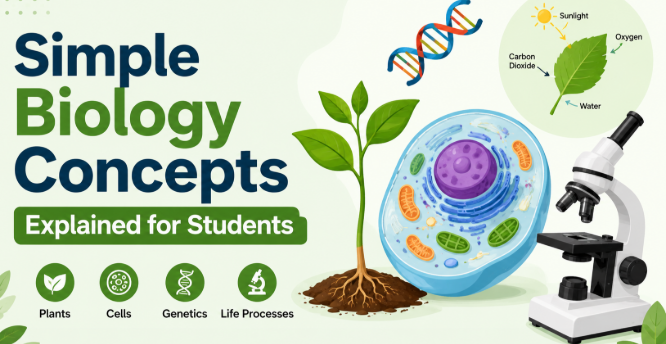
Introduction to Biology
Biology is a natural science that explores the intricacies of life and living organisms. It encompasses a broad spectrum of subjects, ranging from the molecular mechanisms of cells to complex ecosystems that sustain diverse forms of life. The significance of biology lies in its ability to unravel the complexities of life processes, enabling us to understand how organisms develop, function, evolve, and interact with their environments.
As a foundational discipline, biology is essential for students who aim to pursue careers in fields such as medicine, environmental science, biotechnology, and agricultural sciences, among others. The study of biology equips students with knowledge that is crucial for addressing some of humanity’s most pressing challenges, including disease prevention, biodiversity conservation, and sustainable resource management.
Biology is typically broken down into various sub-disciplines. Cell biology focuses on the structure and function of the cell, the fundamental unit of life. Genetics delves into heredity and the variation of inherited traits, while ecology examines the relationships between organisms and their physical surroundings. Evolutionary biology investigates the origins and changes in species over time, illuminating the processes that drive the diversity of life we observe. Additionally, physiology studies the functions and processes of organisms, enriching our understanding of how biological systems operate.
This multi-faceted nature of biology not only underscores the interconnectedness of living organisms but also highlights the relevance of biological research in everyday life. From medical advancements to environmental conservation efforts, the principles and discoveries of biology continue to play a pivotal role in shaping our understanding of the world and enhancing our quality of life. Therefore, a solid grasp of biological concepts is vital for any student embarking on a journey through the realms of science.
Cells: The Building Blocks of Life
Cells are recognized as the fundamental units of life, forming the basis for all living organisms. They come in various shapes and sizes, primarily categorized into two types: prokaryotic and eukaryotic cells. Prokaryotic cells, which include bacteria and archaea, are simpler in structure, lacking a nucleus and membrane-bound organelles. They possess a cell membrane, cytoplasm, and genetic material, generally organized in a single circular chromosome. In contrast, eukaryotic cells, found in plants, animals, fungi, and protists, are more complex. These cells contain a defined nucleus, where the DNA is housed, along with numerous organelles such as the mitochondria, endoplasmic reticulum, and Golgi apparatus, each serving distinct functions essential to cellular activities.
The organelles within eukaryotic cells play crucial roles in maintaining cellular functions. For instance, mitochondria are integral for energy production through cellular respiration, while the ribosomes are responsible for protein synthesis. The endoplasmic reticulum aids in the transport and processing of biomolecules, and the Golgi apparatus modifies, sorts, and packages proteins and lipids for secretion or use within the cell.
Cellular processes such as mitosis and meiosis are vital for growth, development, and reproduction. Mitosis is the process by which a eukaryotic cell divides to produce two identical daughter cells, ensuring genetic continuity. This process is essential for tissue growth and repair. Meiosis, however, is a specialized form of cell division occurring in the production of gametes, which introduces genetic diversity through processes like crossing over and independent assortment. Understanding cells and their processes enables students to appreciate the intricate biological systems that sustain life and underscores the significance of these microscopic units in the larger context of biology.
Genetics: The Study of Heredity
Genetics is a branch of biology that focuses on the study of heredity and variation in organisms. At the core of genetics lies the concept of DNA (deoxyribonucleic acid), which serves as the hereditary material in most living organisms. DNA is structured as a double helix and carries the instructions necessary for the development, functioning, growth, and reproduction of all known life forms.
Within DNA, genes are the fundamental units of heredity. A gene is a segment of DNA that encodes a specific trait. Traits, or characteristics, can be physical, such as height and eye color, or biochemical, like blood type. The combination of genes inherited from both parents contributes to the unique genetic makeup of an individual. This process of inheritance is often governed by well-defined rules, famously outlined by Gregor Mendel in his studies of pea plants.
Mendelian genetics demonstrates that traits are inherited in specific ratios, dependent on dominant and recessive alleles. For example, a dominant allele can mask the effect of a recessive allele, influencing the phenotype—an organism’s observable characteristics. Genetic diversity is also introduced through mutations, which are alterations in the DNA sequence. These mutations can occur spontaneously or be induced by environmental factors, contributing to variation within populations.
Moreover, the principles of genetics extend beyond individual traits to populations at large. The study of population genetics examines how alleles (versions of genes) distribute in a population over time, influenced by mechanisms such as natural selection, genetic drift, and gene flow. These processes ensure the continuous evolution of species and the adaptation of organisms to their environments.
Photosynthesis and Cellular Respiration
Photosynthesis and cellular respiration are two fundamental biological processes that sustain life on Earth. Photosynthesis occurs in the chloroplasts of plant cells, where light energy is transformed into chemical energy. During this process, plants absorb carbon dioxide from the atmosphere and water from the soil, utilizing sunlight to convert these substrates into glucose and oxygen. The overall chemical equation for photosynthesis can be summarized as:
6CO2 + 6H2O + light energy → C6H12O6 + 6O2
This transformation is crucial as it forms the base of the food chain; plants serve as primary producers, using the energy from sunlight to create organic compounds. The glucose produced serves as a source of energy and building material for the plant itself and, indirectly, for all consumers in the ecosystem, including humans.
Cellular respiration, on the other hand, is the process by which living organisms convert glucose into usable energy. This process occurs in the mitochondria of cells and can occur aerobically (with oxygen) or anaerobically (without oxygen). The general equation for aerobic cellular respiration is:
C6H12O6 + 6O2 → 6CO2 + 6H2O + energy (ATP)
During cellular respiration, the chemical energy stored in glucose is released, enabling organisms to perform vital functions such as growth, movement, and reproduction. The interdependence of photosynthesis and cellular respiration highlights a critical cycle in nature: while photosynthesis captures energy and forms organic material, cellular respiration utilizes that energy, ultimately sustaining life across various ecosystems.
Evolution: The Science of Change
Evolution is a fundamental concept in biology that explains the changes in living organisms over time through processes such as natural selection, adaptation, and speciation. At its core, evolution posits that species undergo gradual changes, which enhances their survival and reproductive success in diverse environments.
Natural selection, a principle introduced by Charles Darwin in the 19th century, is often described as the mechanism of evolution. It describes the process by which organisms with traits favorable for their environment are more likely to survive and reproduce. This leads to the gradual accumulation of these advantageous traits in a population over generations. For instance, butterflies that are better camouflaged from predators are more likely to thrive, thus passing on their traits to their offspring.
Adaptation is another key component of evolution that refers to the adjustments made by organisms to fit their environment better. These adaptations can be structural, physiological, or behavioral, allowing species to respond effectively to environmental challenges. A prime example of adaptation is the thick fur of polar bears, which helps them survive in frigid Arctic conditions.
Speciation is the process through which new species arise. It can occur due to various factors, such as geographic isolation or environmental changes, leading to the divergence of populations. Over time, these populations evolve independently, potentially resulting in the formation of new species. Evidence of speciation can be found in the diverse array of finches observed by Darwin in the Galápagos Islands, which adapted to various ecological niches.
The theory of evolution is supported by extensive evidence from various scientific disciplines, including genetics, paleontology, and comparative anatomy. The fossil record showcases transitional forms that highlight the gradual changes between species, while molecular biology reveals the shared genetic material among all living organisms. Understanding evolution is crucial for appreciating biodiversity and the interconnectedness of life on Earth.
Ecology: Interactions and Ecosystems
Ecology is a branch of biology that delves into the complex interactions between organisms and their environments. It encompasses a myriad of relationships that form the fabric of life, highlighting the delicate balance that sustains ecosystems. One of the foundational concepts in ecology is the food web, which illustrates how energy and nutrients flow through multiple trophic levels. This intricate network of producers, consumers, and decomposers showcases the interdependence of species and the critical role each plays in maintaining ecosystem stability.
Biomes, distinct ecological regions characterized by their climate, flora, and fauna, also form a core aspect of ecological study. From the arid deserts to the lush rainforests, each biome supports unique communities of organisms, demonstrating adaptability and diversity in life forms. Understanding biomes helps ecologists gauge the impact of climate changes on living organisms and their habitats. Moreover, ecological succession plays a vital role in ecosystem dynamics; this process describes how communities evolve over time, transitioning from pioneer species to a more stable, mature ecosystem.
Human activities have a profound impact on ecosystems, often leading to significant alterations that disrupt natural processes. Urbanization, pollution, and deforestation are just a few examples of how anthropogenic factors can degrade the delicate balance of an ecosystem. These actions can lead to biodiversity loss, habitat fragmentation, and the introduction of invasive species that threaten native flora and fauna. Consequently, ecologists advocate for sustainable practices that promote the health of ecosystems and protect the planet’s biological diversity.
Human Biology: Anatomy and Physiology
Human biology encompasses the study of the human body’s structure and function, which is divided into various systems that operate in unison to maintain homeostasis. The primary systems include the circulatory, respiratory, digestive, and nervous systems, each playing a pivotal role in sustaining life and ensuring the body’s balance.
The circulatory system is essential for transporting oxygen, nutrients, and hormones throughout the body while removing waste products. This system comprises the heart, blood vessels, and blood. The heart serves as a muscular pump that maintains blood circulation, reacting to the body’s demands for oxygen and nutrients during various activities.
Next, the respiratory system is responsible for gas exchange, primarily oxygen intake and carbon dioxide removal. It consists of structures such as the lungs, trachea, and diaphragm. Through the process of inhalation, oxygen enters the lungs where it is exchanged with carbon dioxide in the blood, ensuring cells receive the oxygen they need to function efficiently.
The digestive system processes food, transforming it into essential nutrients that fuel the body’s functions. Starting from the mouth and extending through the esophagus, stomach, and intestines, this system aids in breaking down food mechanically and chemically. Nutrients are absorbed primarily in the small intestine, subsequently entering the bloodstream to nourish cells.
Finally, the nervous system coordinates voluntary and involuntary actions, encompassing the brain, spinal cord, and peripheral nerves. It is responsible for transmitting signals between different parts of the body, allowing for quick reactions to changes in the environment and maintaining overall coordination among bodily functions.
Understanding these interrelated systems is crucial for students studying human biology, as it provides insight into the intricate mechanisms that support life and adaptability within the human organism.
Microbiology: The Invisible World
Microbiology is the branch of science that focuses on the study of microorganisms, which include bacteria, viruses, fungi, and protozoa. These microscopic entities are an integral part of life on Earth, and they play a crucial role in maintaining ecological balance. Despite their small size, microorganisms possess significant impacts on both natural ecosystems and human health.
Bacteria, for example, are ubiquitous and exist in various environments. They can be beneficial, as well as harmful. Beneficial bacteria help in processes such as digestion and nutrient recycling in ecosystems. Some species are essential for processes like nitrogen fixation, which is vital for plant growth. Conversely, pathogenic bacteria can lead to diseases in humans, animals, and plants. Understanding the duality of bacteria’s role is key in fields such as medicine and environmental science.
Viruses, though often misunderstood, are another important group of microorganisms. They differ from bacteria in that they cannot reproduce independently and require a host cell for replication. While many viruses are known to cause diseases, such as influenza, others have applications in gene therapy and vaccine development, highlighting their dual roles in health and biotechnology.
Fungi also play a significant role in various ecosystems. They decompose organic material, returning nutrients to the soil, which is essential for plant life. In human applications, fungi are utilized in food production, such as baking and brewing, and are also being researched for their potential in medicine, particularly in antibiotic production.
Protozoa, single-celled organisms, contribute to nutrient cycles and energy flow within ecosystems. Some species are beneficial for soil health, while others can be pathogenic, affecting both humans and other animals. The study of these microorganisms not only offers insights into the mechanisms of life but also emphasizes the importance of microorganisms in biotechnology, environmental sustainability, and health sciences.
Conclusion: The Future of Biology
As we have explored in this blog post, various fundamental concepts of biology play a crucial role in enhancing our understanding of life processes and their underlying mechanisms. From the intricacies of cellular structures to the vast experiences of ecosystems, biology provides insights that are vital, especially in light of contemporary global challenges. Understanding the basics of biology not only equips students with knowledge but also fosters a greater appreciation for the interconnectedness of all living entities.
One of the most pressing issues we face today is climate change, which profoundly affects biodiversity and ecosystem stability. By studying biology, students can contribute to innovative solutions that address environmental problems and promote sustainability. The role of biologists extends beyond academia; it encompasses active participation in conservation efforts, ecological research, and environmental policy advocacy that influence our planet’s future.
Additionally, healthcare is another critical area wherein biology’s relevance cannot be overstated. With rapid advancements in medical technologies and biological research, there is a growing demand for professionals skilled in biotechnology, genetics, and microbiology. By pursuing biology, students can play an integral role in the development of new treatments and understanding diseases, thereby making significant contributions to public health.
The importance of biology extends into realms that affect everyday life, emphasizing the need for a well-informed society that values scientific literacy. What we have discussed illustrates that biology is not merely an academic discipline but a framework through which we can approach and solve the challenges facing humanity. For students contemplating their educational paths, immersing themselves in biology may uncover a world of opportunities, enabling them to effect meaningful change. Thus, the future of biology is not only bright but vital for sustaining both human and environmental health.