


Introduction to Learning Behavior
Understanding student learning behavior is crucial for educators and stakeholders in the field of education. Learning behavior encompasses the actions, attitudes, and habits that students exhibit while engaging with the educational process. These behaviors significantly impact the effectiveness of learning, influencing not only academic performance but also the overall educational experience. Acknowledging the nuances of learning behavior enables educators to create a more conducive learning environment.
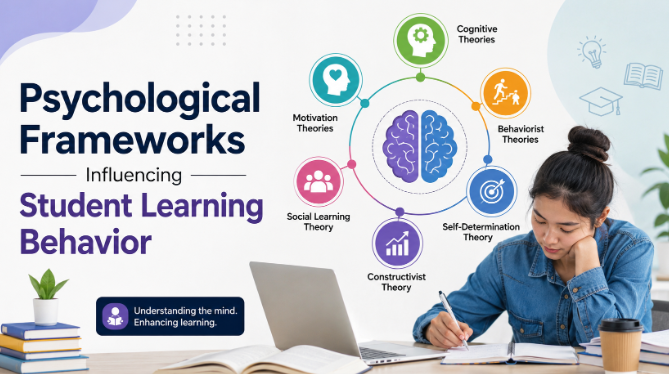
Various psychological frameworks offer valuable insights into the underlying factors that shape student learning behavior. For instance, behaviorist theories emphasize the role of reinforcement and motivation in shaping behaviors, while cognitive theories focus on the internal processes of learning, such as perception, memory, and thinking. Additionally, social learning theory highlights the significance of social interactions and observational learning in developing student behaviors. By examining these frameworks, educators can identify tailored strategies that cater to diverse student needs and enhance engagement.
Moreover, understanding the influence of psychological constructs, such as self-efficacy and motivation, can help educators identify potential barriers to learning and devise effective interventions. The importance of factors like emotional regulation and the social context in which learning occurs further affirms the need for a comprehensive approach to understanding learning behavior. Ultimately, the goal of exploring these psychological frameworks is to provide better support for students, fostering an environment that promotes not only academic success but also personal growth.
Cognitive Theories of Learning
Cognitive theories of learning emphasize the internal processes that facilitate understanding, representation, and recall of information. Among the pioneers in this field are Jean Piaget and Lev Vygotsky, whose theories have fundamentally shaped educators’ approaches to teaching and learning. Piaget’s stages of cognitive development provide a framework for understanding how students acquire knowledge and skills as they progress through distinct developmental stages.
According to Piaget, cognitive development occurs in four stages: the sensorimotor, preoperational, concrete operational, and formal operational stages. Each stage represents a different level of cognitive capability, influencing how students interact with their environment and process information. For instance, during the concrete operational stage, students begin to think logically about concrete events, which informs their ability to grasp mathematical concepts and perform hands-on scientific experiments. Recognizing these stages allows educators to tailor teaching strategies to align with students’ cognitive abilities, thereby enhancing the learning experience.
Vygotsky’s sociocultural theory complements Piaget’s approach by highlighting the role of social interactions and cultural context in learning. Vygotsky posited that knowledge is constructed through shared learning experiences, where collaboration and dialogue between peers and teachers play critical roles. The concept of the Zone of Proximal Development (ZPD) is central to this theory, as it delineates the range of tasks that a learner can perform with guidance but not yet independently. This understanding encourages educators to craft instructional strategies that foster collaborative learning environments, promoting skill development through social interactions.
Together, these cognitive theories underscore the importance of understanding how students process information and develop skills. By applying principles from Piaget and Vygotsky, educators can implement effective teaching strategies that accommodate diverse learning needs and promote deeper comprehension, ultimately enhancing educational outcomes.
Behavioral Theories and Learning
Behavioral theories of learning are grounded in the idea that all behaviors are acquired through conditioning. This theoretical framework emphasizes observable behaviors and the environmental factors that influence them, rather than internal thoughts or feelings. Two primary forms of conditioning are recognized within these theories: classical conditioning and operant conditioning.
Classical conditioning, primarily associated with Ivan Pavlov, involves learning through association. In an educational context, this can manifest when a student associates a specific stimulus, such as the sound of a bell, with a certain outcome, like the start of a lesson. Over time, the student may start to respond to the bell alone, demonstrating that learning has occurred. This principle illustrates how environmental stimuli can shape students’ behavior and set expectations for classroom interactions.
On the other hand, operant conditioning, significantly developed by B.F. Skinner, is focused on how reinforcement and punishment impact behavior and motivation. In a classroom setting, positive reinforcement—rewarding a desired behavior, such as praising a student for completing their homework—can increase the likelihood of that behavior being repeated. Conversely, punishment, whether through negative consequences for poor performance or disruptive behavior, aims to decrease undesirable actions. Understanding the balance between these influences is vital for educators aiming to foster a productive learning environment.
Reinforcement strategies can vary widely, with tangible rewards like stickers or praise being effective for younger students, while older students may respond better to intrinsic motivators, such as personal goal achievement. Thus, incorporating both classical and operant conditioning principles allows educators to devise strategies that enhance student engagement and perseverance. By recognizing the patterns of behavior influenced by environmental contexts, educators can create a more conducive learning atmosphere that taps into students’ motivations.
Constructivist Approaches to Learning
Constructivist theories, notably advanced by educators such as John Dewey and Jerome Bruner, advocate that learners construct knowledge through experiences and reflections. This paradigm shift from traditional rote learning emphasizes the necessity for active engagement that allows students to interact dynamically with the material. Dewey proposed that education should be rooted in real-world experiences, fostering an environment where students are encouraged to explore, question, and derive conclusions based on their observations.
Bruner expanded on these ideas by introducing the concept of discovery learning, which posits that teaching should involve a discovery process. Rather than passively receiving information, students engage in problem-solving scenarios that compel them to think critically and innovate. This approach nurtures a sense of ownership over their educational journey, contrasting sharply with conventional methods that often emphasize memorization over comprehension.
Constructivist strategies underscore the importance of prior knowledge in the learning process. According to Bruner, learners must connect new information to their existing cognitive structures, which enhances retention and understanding. Educators adopting this approach are tasked with assessing students’ backgrounds and individual experiences, tailoring their teaching methods so that each student can build upon what they already know. This personalization not only promotes deeper engagement but also cultivates critical thinking skills necessary for tackling complex problems.
In constructivist classrooms, collaboration plays a pivotal role. Group activities and discussions foster a community of learners working together to explore diverse perspectives. Students are encouraged to articulate their thoughts and challenge each other’s viewpoints, leading to richer discussions and insights. Overall, constructivism lays a solid groundwork for fostering autonomy, critical thinking, and problem-solving abilities in students, preparing them for success in an increasingly complex world.
Social Learning Theory
Social Learning Theory, developed by Albert Bandura, posits that learning occurs within a social context, largely through observation and imitation. Bandura’s theory highlights that individuals can learn new behaviors and attitudes by watching others, particularly in their immediate environment, such as peers and authority figures. This approach underscores the significance of role models in shaping an individual’s approach to learning, suggesting that students often imitate the behaviors of classmates or educators rather than solely relying on direct instruction.
The implications of Social Learning Theory in educational settings are profound. Peer interactions play a critical role in influencing students’ academic behaviors and attitudes. For instance, when students observe their peers engaging effectively in collaborative learning or displaying a positive attitude towards challenging tasks, they are more likely to adopt similar behaviors. This concept is grounded in the idea that students are motivated not just by rewards or punishments, but also by the success and behavior of those around them.
Furthermore, modeling is a crucial component of this theory. Teachers and parents who exemplify effective study habits, persistence in problem-solving, and a positive learning disposition set powerful examples for students. When learners witness such behaviors, they are more inclined to mimic these attitudes, providing a fertile ground for academic success. In classrooms where social learning is emphasized, students are encouraged to engage with one another, participate actively, and develop mutual respect for diverse viewpoints.
This reciprocal social influence fosters not only academic growth but also the development of social skills and emotional intelligence. Through collaborative learning environments, students can build resilience and motivation, ultimately enhancing their learning experiences. Thus, the integration of Social Learning Theory into educational practices can significantly influence students’ behavior, creating a more holistic approach to learning.
Emotional and Motivation Theories
Emotional states and motivation play pivotal roles in shaping learning behaviors among students. Understanding these influences is essential for fostering an environment that promotes effective learning outcomes. Theories such as Self-Determination Theory (SDT) and Maslow’s Hierarchy of Needs provide valuable insights into the interplay between emotions, motivation, and academic performance.
Self-Determination Theory posits that human motivation is driven by the fulfillment of three basic psychological needs: autonomy, competence, and relatedness. When students feel autonomous in their learning—having the capacity to make choices—they are more likely to exhibit intrinsic motivation. This intrinsic motivation, fueled by positive emotional states, encourages deeper engagement with academic tasks. Conversely, external pressures or lack of autonomy can lead to feelings of anxiety or inadequacy, adversely affecting performance.
In conjunction with SDT, Maslow’s Hierarchy of Needs also sheds light on this relationship. According to Maslow’s framework, individuals are motivated by a series of hierarchical needs ranging from basic physiological requirements to the pursuit of self-actualization. In a learning context, if students’ basic needs, such as safety and belonging, are unmet, their emotional well-being could suffer, leading to disengagement in academic pursuits. As students ascend this hierarchy and achieve a sense of belonging, they become more motivated to achieve their academic potential.
Furthermore, the impact of positive emotions—such as joy and excitement—can enhance students’ motivation levels, leading to better academic outcomes. Conversely, negative emotions, such as fear and frustration, can hinder the learning process. Schools and educators have the opportunity to implement strategies that promote positive emotional climates, thus nurturing motivation and improving learning behaviors.
Growth Mindset vs. Fixed Mindset
Psychologist Carol Dweck introduced the concepts of growth mindset and fixed mindset, which refer to the underlying beliefs individuals hold regarding the nature of their intelligence and abilities. A growth mindset reflects the belief that intelligence and talents can be developed through effort, good strategies, and input from others, while a fixed mindset denotes the belief that abilities are static and unchangeable. These differing mindsets significantly impact students’ approach to learning and their overall academic engagement.
Students with a growth mindset are more likely to embrace challenges, persist in the face of setbacks, view effort as a path to mastery, and learn from criticism. Their belief in malleability fosters resilience; they are more inclined to apply themselves in difficult academic tasks and view failure as an opportunity for growth rather than a reflection of their worth. Conversely, students with a fixed mindset often shy away from challenges, feel threatened by the success of others, and are quick to give up when faced with obstacles. This mindset can lead to decreased motivation and limited achievement.
Fostering a growth mindset among students is essential for promoting resilience and persistence in learning. Educators can cultivate this mindset by emphasizing the value of effort, providing constructive feedback, and encouraging risk-taking in learning situations. For instance, praising the process of learning and hard work rather than just innate talent encourages students to value perseverance. Moreover, teaching students that intelligence can evolve through practice and dedication can empower them to face academic challenges with confidence. Ultimately, instilling a growth mindset not only enhances students’ learning behavior but also prepares them for life-long learning and adaptation in ever-changing environments.
Application of Psychological Frameworks in Education
The practical application of psychological frameworks in educational settings significantly enhances the learning experience. One of the most prominent frameworks is the constructivist theory, which posits that students construct knowledge through experiences. Educators can implement this theory by designing learning activities that encourage exploration, problem-solving, and critical thinking. For instance, project-based learning allows students to engage in real-world problems, fostering a deeper understanding of the subject matter.
Another important psychological framework is behaviorism, which focuses on observable behaviors and the ways they are influenced by the environment. Educators can utilize positive reinforcement strategies to encourage desired behaviors. For example, rewarding students for completing assignments on time or demonstrating good behavior can motivate them to repeat these actions. This application of behaviorist principles can create a structured learning environment that reinforces academic discipline.
Moreover, cognitive theories, which emphasize mental processes like memory and motivation, can be integrated into teaching strategies. By employing techniques such as elaborative interrogation or self-explanation, teachers can help students organize and relate new information better. Educators can also promote metacognitive strategies, encouraging students to reflect on their own learning processes, which enhances self-awareness and facilitates deeper engagement with the material.
Furthermore, social learning theory underlines the importance of observational learning and modeling. Teachers can demonstrate desired behaviors and strategies, allowing students to learn through imitation. Group discussions and peer collaborations can also amplify this effect, as students learn from each other’s insights and experiences.
Overall, implementing these psychological frameworks in education allows educators to tailor their strategies to fit diverse student needs, ultimately fostering improved learning outcomes. By understanding and applying these psychological theories, teachers can create a more dynamic, engaging, and effective educational environment.
Conclusion and Future Directions
In examining the various psychological frameworks that influence student learning behavior, it becomes evident that understanding these theories plays a vital role in enhancing educational practices. The theoretical approaches discussed, including behaviorism, constructivism, and social learning theory, provide a comprehensive foundation for analyzing how students engage with content, interact with peers, and develop self-regulation skills. Each framework offers unique insights into the processes that drive learning, highlighting the significance of motivation, context, and social dynamics in educational settings.
The importance of these psychological frameworks cannot be overstated. They not only inform educators about how to design effective learning environments but also equip them with strategies to cater to diverse student needs. For instance, recognizing the role of intrinsic motivation as outlined in self-determination theory can help teachers create lesson plans that promote student autonomy and engagement. Furthermore, acknowledging the influence of peer interactions as highlighted by social learning theory can lead to collaborative learning opportunities that empower students.
Looking ahead, several areas warrant further research and exploration to continue improving student learning behavior. Future studies could focus on the integration of digital technologies and their impact on psychological frameworks, examining how virtual learning environments influence motivation and self-regulation among students. Additionally, interdisciplinary approaches that combine insights from psychology, neuroscience, and education could yield innovative strategies for fostering a positive learning atmosphere. Finally, there is a need for longitudinal studies that assess the effectiveness of psychological interventions over time, providing educators with evidence-based practices that contribute to student success.