
Secondary school is an important stage of education that helps students develop academic knowledge, practical skills, and personal confidence. It usually begins after primary school and prepares young learners for higher education, vocational training, or employment. Understanding what is secondary school can help parents and students make informed decisions about their educational journey.
Secondary education plays a major role in shaping students’ futures by introducing more advanced subjects and encouraging independent thinking. Although school systems differ across countries, most secondary schools focus on preparing students for adult responsibilities and future opportunities. This guide explains secondary school meaning, grade levels, subjects, types, benefits, and how it works in different countries.
What Is Secondary School?
Secondary school is an educational institution that provides formal education to students after they complete primary or elementary school. It generally serves teenagers, although starting ages and grade levels differ between countries. The main purpose of secondary education is to build academic knowledge, develop important life skills, and prepare students for further education or professional training.
In many education systems, secondary schooling includes lower secondary and upper secondary levels. Lower secondary education usually introduces students to more specialized subjects, while upper secondary education provides advanced academic or vocational learning opportunities. These stages help students develop stronger foundations in mathematics, science, languages, social studies, and other important areas of education.
Secondary schools also support personal development through extracurricular activities, teamwork, and social interaction. Students learn to manage their responsibilities, communicate effectively, and make decisions about future educational opportunities. By combining academic learning with personal growth, secondary education helps young people prepare for the challenges and expectations of adulthood.
What Is the Purpose of Secondary Education?
The primary purpose of secondary education is to expand the knowledge and skills students develop during primary school. At this stage, learners explore more complex academic concepts and strengthen their understanding of different subjects. This educational foundation prepares students for higher-level studies while improving their ability to solve problems independently.
Secondary schools also help students discover their interests, abilities, and possible career paths. Through subjects such as science, mathematics, literature, technology, and business studies, learners gain exposure to different professional fields. Teachers may guide students toward suitable educational options based on their strengths, interests, and long-term goals.
Another important purpose is preparing students to participate responsibly in society. Schools encourage communication, teamwork, critical thinking, and respect for different perspectives. These abilities are valuable beyond examinations because they help young people build relationships, understand social responsibilities, and make thoughtful decisions throughout their personal and professional lives.
What Age Do Students Start Secondary School?
The age at which students begin secondary school depends on the education system followed in their country. In many countries, students enter lower secondary education between approximately 11 and 14 years old. However, some systems begin secondary schooling earlier or later depending on primary school duration and national education policies.
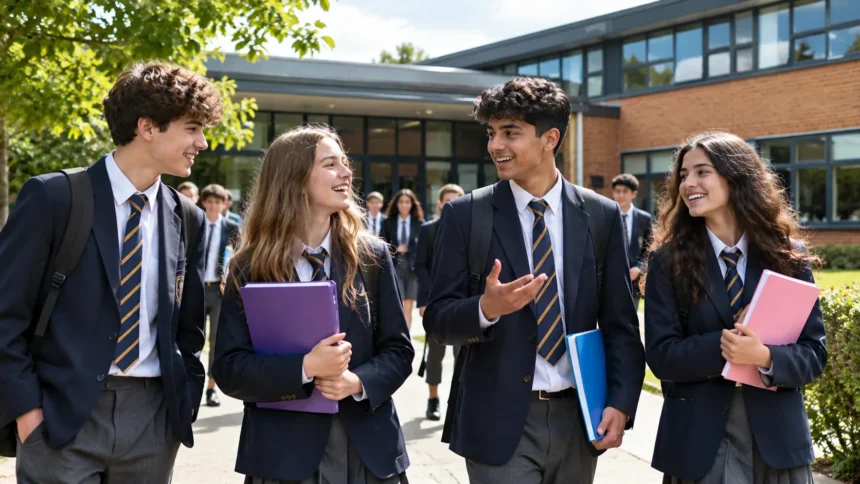
In England, students generally begin secondary school at age 11, entering Year 7 after completing primary education. In the United States, students commonly attend middle school before entering high school around age 14. These arrangements demonstrate why the meaning of secondary school can vary depending on local educational structures.
Students usually complete their secondary education during their teenage years, although the exact graduation age differs. Some countries require compulsory attendance until a certain age, while others have separate requirements for completing particular qualifications. Parents should review their national or regional education system to understand the appropriate enrollment age and progression requirements.
What Grades Are Included in Secondary School?
Secondary school grades vary across countries because educational systems organize learning stages differently. Some institutions include students from Grade 6 or Grade 7, while others begin at Grade 9. The term secondary education may cover several years of schooling divided into lower and upper stages according to local academic structures.
In the United States, high school generally includes Grades 9 through 12, while middle school often covers Grades 6 through 8. In England, secondary schools commonly begin at Year 7 and continue through Year 11. Students who remain in sixth form may continue their education through Years 12 and 13.
In Pakistan, secondary education commonly refers to Grades 9 and 10, which lead to the Secondary School Certificate examination. Grades 11 and 12 are generally classified as higher secondary education. Understanding these differences helps students and parents compare qualifications when considering educational opportunities in other countries.
What Subjects Are Taught in Secondary School?
Secondary schools teach a range of academic subjects designed to strengthen students’ knowledge and reasoning abilities. Common subjects include mathematics, science, English or another language of instruction, history, geography, and physical education. These subjects provide essential foundations for further learning while introducing students to more advanced concepts than those studied in primary school.
Science education may include biology, chemistry, and physics, depending on the grade level and curriculum. Mathematics often progresses from basic arithmetic toward algebra, geometry, statistics, and more complex problem-solving. Language subjects focus on reading comprehension, writing, communication, and literary understanding, helping students express their ideas more clearly and confidently.
Many secondary schools also provide optional subjects such as computer science, business studies, art, music, and additional languages. Some institutions offer technical or vocational courses that introduce practical career-related skills. Subject availability depends on the school’s facilities, educational board, teaching resources, and the national curriculum requirements followed by the institution.
What Are the Different Types of Secondary Schools?
Secondary schools can be classified into different categories based on funding, curriculum, educational approach, and admission requirements. Common types include public schools, private schools, academic schools, and vocational institutions. Each type serves different educational needs while providing students with opportunities to complete important stages of formal learning.
Public secondary schools are generally supported by government funding and follow national or regional educational requirements. Private secondary schools may charge tuition fees and offer different facilities, curricula, or extracurricular programs. However, the quality of education depends on teaching standards, leadership, resources, and student support rather than the school’s funding model alone.
Vocational secondary schools focus more directly on practical skills and career-related education. Students may study subjects connected to technology, engineering, agriculture, hospitality, or other professional fields. Academic secondary schools generally emphasize subjects that support university preparation, although many education systems allow students to combine academic and vocational learning.
What Is the Difference Between Primary and Secondary School?
Primary school provides the first major stage of formal education, focusing on basic reading, writing, mathematics, and social development. Secondary school builds on these foundations by introducing more advanced subjects and learning expectations. Students gradually move from understanding basic concepts toward analyzing information, solving complex problems, and developing independent study habits.
Another difference involves teaching methods and classroom organization. Primary students often spend much of their school day with one main teacher, although arrangements vary. Secondary students usually attend lessons taught by different subject specialists, requiring them to manage several classes, assignments, and academic responsibilities throughout the school week.
Assessment methods may also become more demanding during secondary education. Students often complete subject-specific examinations, research projects, presentations, and practical assignments. This transition encourages greater independence and time management while helping learners prepare for future academic expectations and the responsibilities associated with higher education or employment.
What Is the Difference Between Secondary School and High School?
The terms secondary school and high school are sometimes used interchangeably, but their meanings depend on the country. Secondary school is a broader term describing education that follows primary schooling. High school often refers to a particular stage or institution within secondary education, especially in countries using the American educational system.
In the United States, high school generally serves students in Grades 9 through 12. Earlier secondary-level learning commonly takes place in middle school or junior high school. In England, the term secondary school usually describes institutions serving students from Year 7, although individual schools may have different age ranges.
Other countries use different names and classifications for similar educational stages. Some refer to junior secondary, senior secondary, or higher secondary education. When comparing international qualifications, it is more useful to examine completed grades, curriculum content, and recognized certificates rather than relying entirely on the name of the institution.
How Does Secondary School Work in Pakistan?
In Pakistan, secondary school generally includes Grades 9 and 10, which are also commonly called matriculation classes. Students typically enter this stage after completing middle school education. The curriculum follows the requirements of the relevant educational board, and students usually complete examinations leading to the Secondary School Certificate, commonly called SSC.
Students may follow science or humanities-related study pathways depending on their interests and the subjects offered by their schools. Common subjects include English, Urdu, mathematics, Pakistan Studies, Islamiat or applicable alternatives, and selected science or humanities subjects. Exact subject combinations and examination arrangements depend on the board and curriculum regulations.
After completing Grade 10, students can continue into higher secondary education through intermediate colleges or institutions offering Grades 11 and 12. Common pathways include FSc, FA, ICS, and ICom, depending on the institution and educational board. These qualifications can support entry into university programs, technical education, and other learning opportunities.
What Is Lower Secondary and Upper Secondary Education?
Lower secondary education is the stage that generally follows primary school and introduces more structured, subject-focused learning. It often serves students during their early teenage years. The curriculum usually includes compulsory subjects designed to develop academic foundations before students choose more specialized educational pathways at later stages.
Upper secondary education typically serves older teenagers and provides opportunities for more advanced academic or vocational study. Students may select subjects based on their interests, future career plans, or university admission requirements. This stage often leads to recognized qualifications that demonstrate readiness for higher education, technical training, or employment.
Not every country uses the same terminology or separates these educational stages in an identical way. Some institutions combine lower and upper secondary education within one school, while others operate them separately. Understanding both stages helps families navigate educational pathways and recognize how different qualifications relate to international systems.
What Are the Benefits of Secondary Education?
One of the main benefits of secondary education is the development of stronger academic knowledge and practical learning skills. Students improve their understanding of important subjects while learning to evaluate information and solve problems. These abilities support future educational opportunities and help learners approach everyday situations with greater confidence.
Secondary school also provides valuable opportunities for social and emotional development. Students interact with classmates from different backgrounds, participate in group activities, and learn how to communicate effectively. School clubs, sports, and creative programs can encourage teamwork, leadership, responsibility, and greater awareness of personal interests and abilities.
Completing secondary education can improve access to further study and future employment opportunities. Many colleges, universities, and vocational training programs require specific secondary qualifications for admission. Although educational pathways differ, a strong secondary school foundation gives students more options when deciding how to continue their learning and professional development.
What Skills Do Students Learn in Secondary School?
Secondary education helps students develop transferable skills that are useful in academic, professional, and personal settings. Critical thinking allows learners to examine information rather than accepting every statement without question. Problem-solving activities encourage students to identify challenges, compare possible solutions, and make informed decisions using evidence and logical reasoning.
Communication skills also develop through classroom discussions, presentations, writing assignments, and collaborative projects. Students learn how to explain their opinions, listen to others, and present information clearly. These experiences can improve confidence and prepare learners for future situations involving interviews, teamwork, public speaking, and professional communication.
Time management and personal responsibility become increasingly important as students progress through secondary school. Managing homework, preparing for examinations, and participating in activities requires planning and organization. Learning these habits during adolescence can make the transition to higher education or employment more manageable and support greater independence.
How Are Students Assessed in Secondary School?
Secondary schools use different assessment methods to measure student progress and understanding. Common approaches include written examinations, classroom tests, homework, presentations, and practical assignments. These assessments help teachers identify learning strengths and areas where students may need additional explanation, practice, or academic support.
Some education systems emphasize national examinations at the end of particular secondary stages. Others combine continuous assessment with final examinations to determine academic achievement. The grading system may use percentages, letters, points, or descriptive performance levels depending on the educational board and national requirements.
Assessment is most useful when it supports learning rather than focusing entirely on examination scores. Teacher feedback helps students understand their mistakes and improve their performance over time. Parents can also support progress by encouraging consistent study habits, discussing school experiences, and maintaining communication with teachers when additional assistance is needed.
How Does Secondary School Prepare Students for College?
Secondary school prepares students for college or university by developing the academic foundations required for advanced study. Subjects such as mathematics, science, languages, and social studies introduce concepts that may become more specialized at higher levels. Successful completion of relevant secondary qualifications can also satisfy important admission requirements for further education.
Students often begin exploring their future interests during the later years of secondary schooling. Teachers and academic counselors may provide guidance about subject combinations, examination requirements, and available educational pathways. Choosing appropriate courses can be particularly important when students plan to enter specialized fields such as engineering, medicine, business, or technology.
Preparation also involves developing independent learning habits and greater responsibility. College students generally need to organize their schedules, research unfamiliar topics, and complete assignments with less direct supervision. Secondary school provides opportunities to practice these skills while students still have access to structured guidance and regular academic feedback.
What Challenges Do Secondary School Students Face?
Moving into secondary school can be challenging because students encounter new subjects, teachers, schedules, and academic expectations. Some learners initially struggle with increased homework or more demanding examinations. Supportive teaching, realistic study plans, and opportunities to ask questions can make the transition easier and help students develop confidence.
Social changes can also affect students during their teenage years. Building friendships, managing peer pressure, and balancing personal interests with academic responsibilities may require additional guidance. Schools and families can help by encouraging respectful relationships, open communication, and access to appropriate support when challenges become difficult to manage.
Students may also experience uncertainty about future educational and career decisions. Choosing subjects can feel complicated when interests are still developing or available options are unclear. Career guidance, discussions with teachers, and exposure to different professional fields can help students make thoughtful decisions without feeling pressured to determine their entire future immediately.
How Can Parents Support Students in Secondary School?
Parents play an important role in helping students adjust to secondary school expectations. Creating a suitable learning environment, encouraging regular attendance, and discussing academic progress can support consistent study habits. Showing interest in school experiences also helps parents recognize when their children may need additional educational or emotional support.
Communication between parents and teachers can improve understanding of student performance and classroom expectations. Attending school meetings, reviewing academic feedback, and discussing learning difficulties can help identify practical solutions. Parents should encourage effort and gradual improvement while recognizing that students have different strengths, interests, and learning needs.
Supporting balanced development is just as important as encouraging academic success. Students benefit from opportunities to participate in sports, creative activities, friendships, and adequate rest. A supportive environment helps teenagers develop independence, confidence, and responsibility while maintaining a healthy relationship with education and personal achievement.
Conclusion
Understanding what is secondary school helps students and parents recognize its role in the education system. Secondary education follows primary schooling and provides more advanced academic learning, practical skills, and opportunities for personal development. Although grades and school structures vary internationally, the overall purpose is to prepare students for further education and adult responsibilities.
Secondary schools introduce important subjects while encouraging critical thinking, communication, teamwork, and independent learning. Students can also explore their interests through extracurricular programs and specialized educational pathways. These experiences help learners discover their strengths and make more informed decisions about college, vocational training, and future careers.
Choosing a suitable secondary school involves considering curriculum quality, teaching standards, student support, and available learning opportunities. Parents and students should also understand local qualification requirements and educational progression routes. With appropriate guidance and consistent effort, secondary education can provide a valuable foundation for lifelong learning and personal success.
Frequently Asked Questions (FAQs)
What is secondary school in simple words?
Secondary school is the stage of education that comes after primary school. It teaches students more advanced subjects, develops important life skills, and prepares them for college, vocational training, or future employment.
What grades are considered secondary school?
Secondary school grade levels differ between countries. In Pakistan, secondary education usually covers Grades 9 and 10, while American high schools generally include Grades 9 through 12.
Is secondary school the same as high school?
Secondary school and high school are related terms, but they are not always identical. High school commonly refers to later secondary grades, while secondary education may include both lower and upper levels.
What is the main purpose of secondary school?
The main purpose of secondary school is to develop academic knowledge, critical thinking, communication, and practical skills. It also prepares students for higher education, vocational training, employment opportunities, and responsible participation in society.
What happens after completing secondary school?
After completing secondary school, students may enter higher secondary education, college, vocational training, or other recognized learning pathways. Available options depend on their qualifications, interests, national education system, and future career goals.